The Red Sox have shown more consistent offensive production through the early season, but the moneyline price still reflects preseason expectations rather than current form. There is a gap between what Fenway’s dimensions should do to this total and where the market has landed.
Shane Drohan vs Sonny Gray: Milwaukee Brewers at Boston Red Sox Betting Preview
The market is pricing this game like Boston deserves home favoritism despite mounting evidence that Milwaukee is simply the superior team. Yes, the Red Sox just snapped their three-game skid with Tuesday’s 3-2 victory, and Fenway carries emotional weight in April. But strip away the noise and focus on what drives outcomes: Milwaukee’s offense has produced 70 runs compared to Boston’s 36, their pitching staff carries a 3.43 ERA versus Boston’s 4.84, and they’ve built an 8-2 record with a +30 run differential.
The Brewers are getting plus money at +113 despite being demonstrably better across every meaningful category. Boston’s 2-8 start represents one of the worst franchise beginnings in decades, avoided only by Tuesday’s late rally. When a clearly superior team is getting paid as an underdog, that’s where edges live.
Game Info & Betting Lines
- Date/Time: Wednesday, April 8, 2026 | 1:35 PM ET
- Venue: Fenway Park (Park Factor: 1.08)
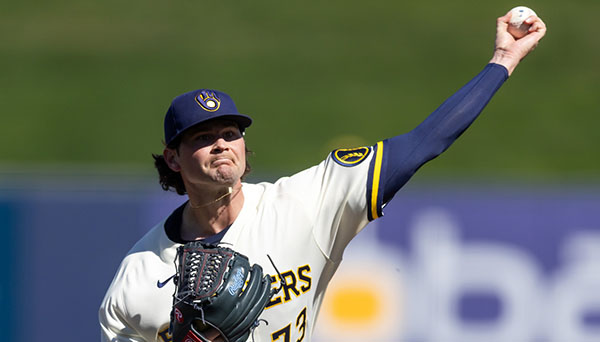
- Probable Starters: Shane Drohan (MIL) vs Sonny Gray (BOS)
- Moneyline: Milwaukee +113 / Boston -136
- Run Line: Boston -1.5 (+159) / Milwaukee +1.5 (-194)
- Total: 7.5 (O -110 / U -110)
Why This Number Is Too Close
The market is balancing Boston’s home field advantage and their momentum from Tuesday’s victory against Milwaukee’s superior season-long performance. Fenway’s 1.08 park factor creates a legitimate run environment edge for Boston, and there’s historical context suggesting home teams bounce back after extended struggles. The Red Sox showed fight in their recent losses to Milwaukee (3-2 and 8-6), indicating they’re not completely broken.
But the line overweights these surface factors while undervaluing Milwaukee’s massive production gap. The Brewers’ .782 OPS dwarfs Boston’s .682 mark, and their +30 run differential tells the story of consistent dominance. Boston’s pitching staff has posted a 1.454 WHIP that screams vulnerability against Milwaukee’s patient approach (59 walks drawn through their 8-2 start). Getting plus money on a team with this substantial an edge in both run production and prevention represents a clear market miscalculation.
What Separates the Pitching
The starting pitching comparison heavily favors Milwaukee, though not in the way you’d expect. While we lack comprehensive data on Shane Drohan, Boston’s Sonny Gray enters with concerning early-season numbers: a 4.50 ERA and 1.10 WHIP through 10 innings. Gray has already surrendered one home run and his 7.2 K/9 rate suggests he’s not missing bats at his typical rate.
More importantly, this matchup highlights the broader pitching gap between these clubs. Milwaukee’s staff ERA of 3.43 represents elite run prevention, while Boston’s 4.84 ERA exposes a unit that’s been consistently vulnerable. The Brewers have struck out 118 batters through their 10 games with excellent control (46 walks), creating the type of innings that suffocate opposing offenses.
Gray’s early-season struggles mirror Boston’s broader pitching problems. When a starter posts a 1.10 WHIP against a Milwaukee lineup that’s drawn 59 walks and posted an .782 OPS, the recipe for a long afternoon becomes clear. The Brewers have shown they can work counts and capitalize on mistakes — exactly the type of approach that could exploit Gray’s current form.
The Pushback
The strongest case against Milwaukee centers on their injury list, which has stripped away key offensive pieces and creates legitimate concerns about their depth. Jackson Chourio remains on the 10-day IL with a hand injury, removing a significant offensive weapon from their lineup just when they need maximum production. Andrew Vaughn is also sidelined with a hand injury, further limiting Milwaukee’s offensive flexibility. Brice Turang is day-to-day with an ankle issue, potentially affecting their infield stability.
These aren’t minor role players — Chourio and Vaughn represent meaningful production that’s simply unavailable. When you’re already getting plus money, the market might be properly accounting for these absences in ways that create genuine betting friction. Boston also just demonstrated they can compete with Milwaukee, taking Tuesday’s game 3-2 and showing fight in Monday’s 8-6 loss. Trevor Story’s clutch two-run double proved this lineup can deliver when needed, and there’s legitimate momentum building after avoiding a historically poor 2-9 start.
That said, competing in close games isn’t the same as being the better team. Milwaukee’s superior metrics and season-long consistency suggest Tuesday’s result was more aberration than indication. The fundamental gap in talent and execution remains, and getting plus money on the demonstrably superior club overcomes these injury concerns.
Run Environment & Game Shape
Fenway’s 1.08 park factor creates a slightly hitter-friendly environment that should benefit Milwaukee’s superior offensive production. The 7.5 total suggests the market expects a moderate-scoring game, which aligns with both teams showing capable pitching staffs despite Boston’s early struggles.
This environment actually amplifies Milwaukee’s edge rather than diminishes it. In a game likely to be decided by 2-3 runs, the Brewers’ significant advantages in OPS (.782 vs .682) and run production (70 vs 36) become magnified. Boston’s 4.84 team ERA suggests they’ll struggle to match Milwaukee’s offensive output even with Fenway’s slight boost. The likely scoring range of 4-6 runs per team favors the club that’s already proven they can consistently produce runs.
Joe Jensen’s Pick
JENSEN’S PICK: Milwaukee Brewers Moneyline (+113) — 2 Units
Projected Score: Milwaukee Brewers 6, Boston Red Sox 4