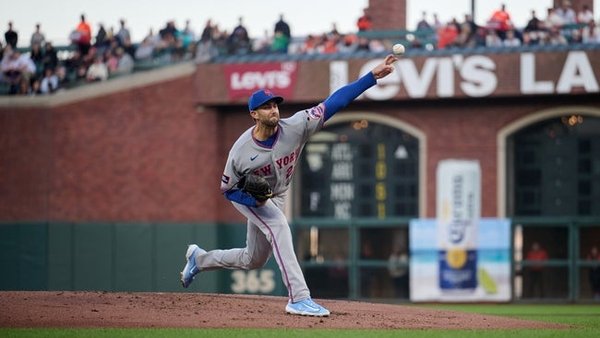
Arizona’s bullpen depth screams value — yet the moneyline still prices this like a toss-up. The market’s slow reaction to New York’s rotation concerns creates a rare edge in what looks like an even matchup on paper.
Ryne Nelson vs David Peterson: Arizona Diamondbacks at New York Mets Betting Preview
Wednesday’s afternoon matchup at Citi Field sets up as a battle between two pitchers searching for their first win, but the market is treating this as more balanced than it should be. Ryne Nelson brings a troubling 5.79 ERA and four home runs allowed in just 9.1 innings to face a Mets lineup that’s shown more life than Arizona’s struggling offense.
The Mets are laying -136 juice here, which requires them to win 57.6% of the time to break even. That number reflects Opening Day noise and natural skepticism about both starters, but the underlying team metrics suggest the market hasn’t fully accounted for Arizona’s early-season struggles and extensive injury list.
Game Info & Betting Lines
- Date/Time: Wednesday, April 8, 2026 | 4:10 PM ET
- Venue: Citi Field (Park Factor: 0.97 — slightly pitcher-friendly)
- Probable Starters: Ryne Nelson (0-1, 5.79 ERA) vs David Peterson (0-1, 4.66 ERA)
- Moneyline: Arizona Diamondbacks +113 / New York Mets -136
- Run Line: New York Mets -1.5 (+149) / Arizona Diamondbacks +1.5 (-181)
- Total: 7.5 (Over -112 / Under -108)
Why This Number Is Close But Flawed
The market sees two teams with similar records — Arizona at 5-6, New York at 7-4 — and two pitchers with ugly early numbers. That creates the appearance of balance that justifies keeping the Mets’ price reasonable. The oddsmakers are also factoring in natural regression expectations for David Peterson, whose 1.97 WHIP looks unsustainable.
But the market is missing the magnitude of the team-level gaps here. The Mets’ 2.54 team ERA versus Arizona’s 4.07 represents a massive pitching infrastructure advantage that extends beyond just the starter. More importantly, Arizona’s injury list reads like a who’s who of their projected lineup — Jordan Lawlar, Carlos Santana, Merrill Kelly, and Pavin Smith all unavailable.
The line reflects Opening Day uncertainty, but eleven games provide enough data to identify which early trends have substance. The Diamondbacks’ -18 run differential against the Mets’ +18 isn’t random variance — it’s a reflection of roster construction gaps that the market is still pricing as temporary.
What Separates the Pitching
While neither starter inspires confidence, Nelson’s early struggles show specific warning signs that Peterson’s don’t. Nelson’s four home runs allowed in 9.1 innings translates to a catastrophic 3.86 HR/9 rate — the kind of number that suggests fundamental command issues rather than bad luck. His 1.18 WHIP might look manageable, but it’s built on a foundation of hard contact that’s found the seats too frequently.
Peterson presents his own concerns with that 1.97 WHIP, but his profile shows different problems. He’s walking batters (4 in 9.2 innings) and creating traffic, but he hasn’t surrendered a home run yet. That’s significant in an era where solo shots often decide close games. His 7.45 K/9 also edges Nelson’s 6.75, suggesting slightly better swing-and-miss stuff when he needs it.
The gap isn’t in dominance — neither pitcher will dominate — but in the type of damage they allow. Peterson creates messy innings with baserunners but limits explosive contact. Nelson has shown he can get torched quickly, which creates a different risk profile in a low-scoring environment. When you’re laying juice on a team, you want the pitcher who’s less likely to implode in a single inning.
The Pushback
The honest concern here is that Peterson’s 1.97 WHIP suggests he’s been fortunate to post a 4.66 ERA. That kind of traffic typically leads to bigger innings, and regression could hit hard against Arizona’s patient approach — they’ve drawn 28 walks in 11 games despite their offensive struggles. If Peterson can’t find the strike zone consistently, Arizona’s ability to work counts could flip this game.
There’s also the juice concern. Laying -136 means you’re getting short money on a pitcher with his own obvious flaws. Peterson’s negative WAR (-0.19) shows he’s been replacement-level at best, and asking him to justify favorite status feels aggressive. The line might already reflect most of Nelson’s struggles, leaving little edge for the home side.
But I keep coming back to the team context around these pitchers. The Mets’ bullpen has posted a 2.54 ERA compared to Arizona’s 4.07, which matters when neither starter figures to work deep. The offensive gap (.711 OPS vs .632 OPS) gives New York more margin for error. Even if Peterson struggles, the infrastructure around him provides more support than Nelson will receive.
Run Environment & Game Shape
The 7.5 total suggests the market expects a pitcher-driven game where runs come at a premium. Citi Field’s 0.97 park factor reinforces that environment, slightly favoring pitchers in what should be a tight, low-margin contest. This run environment actually amplifies the pitching edge because individual mistakes carry more weight.
In a game where three or four runs might win it, Nelson’s home run vulnerability becomes a decisive factor. One bad pitch for a two-run homer could determine the outcome, while Peterson’s contact-management approach fits better in a game where preventing big innings matters more than dominating hitters. The scoring range likely falls between 6-8 total runs, making this a game where the starter who avoids disasters has a significant advantage.
Joe Jensen’s Pick
JENSEN’S PICK: New York Mets Moneyline -136 — 2 Units
Projected Score: Arizona Diamondbacks 4, New York Mets 5
I looked at the run line here, but this low-total environment suggests most games stay close regardless of who wins. Peterson’s own struggles prevent confidence in multi-run separation, even with the pitching edge. The moneyline captures the core thesis without requiring margin that might not materialize in a 7.5-total game.
This isn’t a max-bet situation because Peterson carries real risk, but the team-level advantages — better bullpen, superior offense, healthier roster — support the home favorite at this price. The combination of Nelson’s home run vulnerability and Arizona’s depleted lineup creates enough edge to justify the juice, though I’m not going heavier given the early-season uncertainty around both starters’ true talent levels.