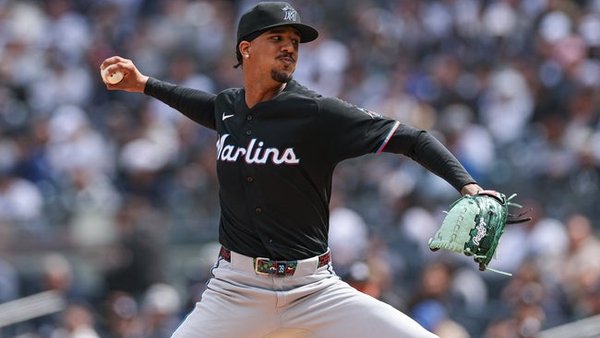
Looking at the starter profiles for this Monday night clash, Grant Holmes brings a sturdy 1.07 WHIP to the mound against a Miami lineup currently missing three of its top power threats. This situational spot tests whether Eury Perez can find his command after a rocky start to April, making the home side a strong prediction for those tracking the gap between Atlanta’s depth and Miami’s mounting injury list.
Eury Perez vs Grant Holmes: Miami Marlins at Atlanta Braves Betting Preview
The market has priced Atlanta as a clear favorite at -149, and frankly, it’s hard to argue with the logic. Grant Holmes brings superior command and a more reliable arsenal to the mound, while Eury Perez continues to struggle with his control and has been getting hit hard through his first three starts. Miami arrives at Truist Park missing three of their most productive hitters to the injured list, while Atlanta’s offense has been clicking at a much higher level.
The pitching gap tells most of the story here. Holmes owns a 1.075 WHIP compared to Perez’s troubling 1.375 mark, and that difference in command should be amplified by Atlanta’s deeper lineup. But at this price, we’re not talking about a slam dunk – we’re weighing whether the talent edge justifies laying nearly 1.5-to-1 odds on a Monday night in April.
Game Info & Betting Lines
- Date/Time: Monday, April 13, 7:15 PM ET
- Venue: Truist Park (Park Factor: 1.01 – neutral)
- Probable Starters: Eury Perez (1-1, 5.06 ERA) vs Grant Holmes (1-1, 2.55 ERA)
- Moneyline: Miami +123 / Atlanta -149
- Run Line: Miami +1.5 (-171) / Atlanta -1.5 (+141)
- Total: 8 (O -116 / U -104)
Why This Number Is Steep But Not Wrong
The market is balancing Miami’s scrappy reputation against Atlanta’s clear talent advantages, and that -149 price reflects genuine respect for how competitive the Marlins have been despite their struggles. Miami has shown fight in losses and could easily keep this game within a run or two, which makes the moneyline price feel inflated even if you believe Atlanta should win.
But here’s where the market might be slightly off: it’s not fully accounting for how depleted Miami’s offense has become with Kyle Stowers (.912 OPS), Christopher Morel, and Maximo Acosta all on the injured list. Those aren’t just depth pieces – they represent Miami’s best power threats and run producers. What’s left is a lineup that’s been struggling to score consistently, managing just 70 runs through 16 games compared to Atlanta’s 90.
The line also seems to give Perez more credit for his strikeout stuff (10.1 K/9) than it should, considering his command issues have been glaring. When you’re walking batters at his rate and allowing hard contact at this level, the strikeouts become less meaningful against a patient Atlanta lineup that works counts.
What Separates the Pitching
The control differential here is stark and should drive the outcome. Holmes deploys his slider 36.2% of the time at 85.1 mph with a devastating 52.9% whiff rate, giving him a reliable out pitch that Perez simply doesn’t possess. While Perez throws harder with his four-seamer sitting at 98.1 mph, he’s only generating a 25.0% whiff rate and allowing a .314 xwOBA against it.
Holmes’ approach creates different types of innings entirely. His slider dominance allows him to attack the zone more aggressively, evidenced by his superior WHIP and fewer free passes. Perez, meanwhile, has been caught between his weapons – his changeup shows promise with a 61.1% whiff rate, but he’s only thrown it 13% of the time, suggesting he doesn’t fully trust it yet.
The concerning trend for Perez is how hitters are sitting on his fastball. At 46.1% usage, it’s become predictable, and major league hitters are starting to time up that 98 mph velocity. Holmes’ more balanced approach with his 35.4% fastball usage keeps hitters off-balance and allows his slider to play up as the primary weapon.
In this run environment, Holmes’ ability to limit baserunners becomes crucial. Perez’s walks have been setting up bigger innings for opposing offenses, while Holmes has been more effective at working around the occasional mistake pitch.
The Pushback
Here’s what’s really nagging me about this spot: Perez’s changeup is posting elite whiff rates at 61.1%, but he’s barely using it. If he leans on that pitch more heavily tonight, it could completely flip the script on Atlanta’s aggressive hitters. We’re talking about a weapon that’s generating swings and misses at an elite level, yet it’s buried in his arsenal at just 13% usage. Sometimes young pitchers figure things out mid-game, and that changeup could be his breakthrough pitch.
The other troubling element is Holmes’ sinker, which has been getting crushed with a .439 xwOBA against. Granted, he’s only thrown it 5.3% of the time, but if he needs to expand his arsenal or gets behind in counts, that pitch could get him in trouble quickly. Miami’s top-of-order hitters like Otto Lopez (.389 xwOBA) and Ronald Acuña Jr. facing Perez (.451 xwOBA vs RHP) have shown they can capitalize on mistake pitches.
What’s really bothering me is this price movement. We’ve seen the line drift toward Atlanta throughout the day, which typically signals sharp action, but it’s also pushed us past optimal value territory. Even with a clear talent edge, paying -149 on a road favorite in a divisional game feels like we’re betting into the market consensus rather than finding an edge.
Run Line Analysis: Why I’m Staying Away
The +141 on Atlanta -1.5 looks tempting given the talent gap, but the numbers don’t support laying the runs here. Holmes’ strikeout rate of 7.13 K/9 isn’t dominant enough to blow Miami away, and his changeup has generated zero whiffs in limited usage, suggesting he doesn’t have a reliable third pitch when his slider isn’t working.
Miami’s bullpen ERA of 3.92 isn’t elite, but it’s respectable enough to keep games close in the middle innings. More importantly, their offensive profile shows they can scratch across runs – they’ve stolen 19 bases already this season compared to Atlanta’s six, indicating they’re built to manufacture runs in small-ball situations.
The concerning element for run line backers is that Atlanta’s projected 4.7-4.2 scoring advantage doesn’t provide enough cushion. We need Atlanta to win by two or more, and these teams have shown they play competitive games even when there’s a talent disparity.
Run Environment & Game Shape
The 8-run total suggests the market expects a moderate-scoring affair, which actually favors the more reliable pitcher. Truist Park’s neutral 1.01 park factor means we’re looking at a true pitching and hitting matchup without environmental factors skewing the results.
Holmes’ profile suggests he can keep this game in the 3-4 run range for Miami, while Atlanta’s offensive depth should be able to manufacture enough runs against Perez’s shaky command. The projected game shape favors teams that can capitalize on mistakes and limit free passes – exactly what separates these clubs.
The Bottom Line
This feels like a clear case where the right team is favored, but the price has been pushed past its sweet spot. Atlanta should win this game more often than not, but at -149, we’re not getting compensated appropriately for the risk involved. The injury situation tilts heavily toward the Braves, and Holmes’ arsenal advantage is real, but Monday night games in April can produce unexpected results.
I’m passing on the moneyline and looking for better spots later in the week. When a line moves this much toward the favorite, it’s usually telling us the market has already found and bet the value.
Recommendation: 0 units