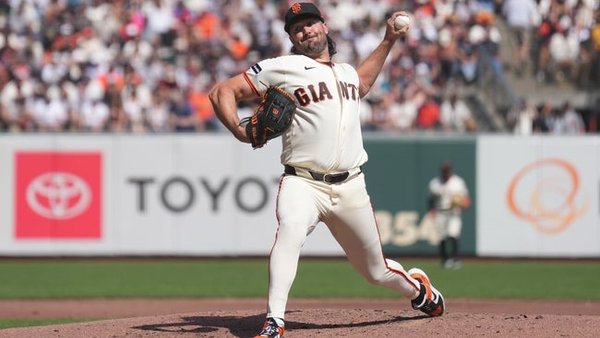
The moneyline at -112 treats this like a coin flip, but Robbie Ray’s 2.08 ERA facing Brady Singer’s 7.71 ERA represents a legitimate mismatch. Great American Ball Park’s run environment makes the pitching gap even more decisive.
Robbie Ray vs Brady Singer: San Francisco Giants at Cincinnati Reds Betting Preview
The market is stuck between two narratives here — the Giants’ miserable 6-10 start with a -21 run differential against the Reds’ more respectable 9-7 record at home. But that surface-level tension misses what actually drives individual game outcomes in baseball: starting pitching quality. Robbie Ray brings a 2.08 ERA and 0.98 WHIP into Great American Ball Park to face Brady Singer, who’s posting a ghastly 7.71 ERA through his first three starts.
The price reflects some Giants skepticism, but not nearly enough to account for the massive gulf between these two arms. When you have this stark of a pitching advantage, team records become secondary noise.
Game Info & Betting Lines
- Date/Time: Tuesday, April 14, 2026, 6:40 PM ET
- Venue: Great American Ball Park (1.10 run factor)
- Probable Starters: Robbie Ray (2-1, 2.08) vs Brady Singer (0-1, 7.71)
- Moneyline: San Francisco Giants -112 / Cincinnati Reds -108
- Run Line: Cincinnati Reds +1.5 (-175) / San Francisco Giants -1.5 (+144)
- Total: 9 (Over -105 / Under -115)
Why This Number Is Too Close
The market is giving Cincinnati proper credit for home field and better team context, but it’s undervaluing how much starting pitching dominates early-season outcomes. Ray’s 0.67 WAR versus Singer’s -0.26 WAR represents replacement-level versus quality production. The legitimate case for Cincinnati rests on their 9-7 record, 6-4 form over their last 10 games, and the fact that Great American Ball Park’s 1.10 run factor should help their struggling offense.
But here’s where the market is getting this wrong: individual game outcomes in April aren’t about season-long team strength — they’re about which starter can execute over six innings. The Giants’ -21 run differential looks ugly until you realize most of that damage came from games Ray didn’t start. At -112, you’re getting fair value on a clear pitching advantage rather than paying heavy juice for what should be a bigger gap.
What Separates the Pitching
This isn’t a close pitching matchup disguised by early-season noise — it’s a legitimate mismatch. Ray’s four-seam fastball sits at 93.8 mph for 53.1% of his arsenal and holds hitters to a .261 xwOBA, while his slider generates a devastating 40.2% whiff rate. He’s struck out 18 batters across 17.1 innings while maintaining excellent command with just six walks.
Singer’s arsenal tells a completely different story. His sinker accounts for 52.7% of his pitches but generates only an 11.4% whiff rate while allowing a brutal .421 xwOBA against. That’s batting practice territory. His secondary offerings aren’t much better — the sweeper shows promise with a 37.0% whiff rate, but hitters are crushing it to the tune of a .591 xwOBA when they make contact. Singer’s 2.06 WHIP reflects a pitcher who can’t locate consistently, creating high-leverage situations that Cincinnati’s offense can’t consistently capitalize on.
The head-to-head matchup data reveals where this game gets decided. Elly De La Cruz presents the biggest threat with a .491 xwOBA and 10.4% barrel rate, but even Cincinnati’s hottest hitter faces an uphill battle against Ray’s slider. Meanwhile, Matt Chapman’s .700 career average against Singer with two home runs in just 10 plate appearances suggests the Giants’ offense has already solved his approach.
The Pushback
The concern here is obvious — you’re backing a Giants team that’s been genuinely terrible, not just unlucky. That -21 run differential isn’t random variance; it reflects real offensive struggles (.641 OPS) and defensive lapses. Cincinnati’s home environment should provide some boost, and their 6-4 record over the last 10 games suggests they’re finding their rhythm.
The flip side is that Singer might be due for positive regression. A 7.71 ERA often comes with some bad luck mixed in with poor execution. The risk is that one crooked inning from Ray — who’s allowed two home runs already — cuts into this edge significantly. That said, the gap between these two pitchers is so wide that Singer would need his best start of the season while Ray has his worst to flip this outcome. The line already accounts for most of the Giants’ team-level struggles, but not enough for the individual matchup disparity.
Run Environment & Game Shape
The market expects a moderate-scoring game with the total set at 9, and Great American Ball Park’s 1.10 run factor supports offensive production. But this isn’t likely to be a slug-fest — it’s more probable that one starter gets knocked around while the other cruises. Ray’s 2.08 ERA suggests he can navigate six innings of quality work, while Singer’s struggles point toward an abbreviated outing that forces Cincinnati’s bullpen into early action.
This run environment amplifies the pitching edge rather than neutralizing it. In a park that slightly favors offense, the starter who can command the zone and avoid hard contact gains even more separation. The likely scoring range sits between 8-11 runs, meaning the game stays competitive enough for the moneyline to matter rather than turning into a blowout that makes the run line the sharper play.
Joe Jensen’s Pick
JENSEN’S PICK: San Francisco Giants Moneyline -112 — 2 Units
I looked at the run line here, but both teams have negative run differentials and struggling offenses — there’s no credible path to multi-run separation in what projects as a tight, low-scoring affair. The moneyline captures the pitching edge without requiring a margin that these lineups can’t consistently produce.
This comes down to trusting that starting pitching drives April outcomes more than team records suggest. Ray’s 2.08 ERA and elite arsenal create a significant advantage over Singer’s 7.71 ERA struggles, and the -112 price provides fair value rather than the heavy juice you’d expect for such a clear mismatch. I’m confident enough in the pitching gap to go two units, but not confident enough in the Giants’ overall team quality to push heavier in what remains an early-season evaluation period.