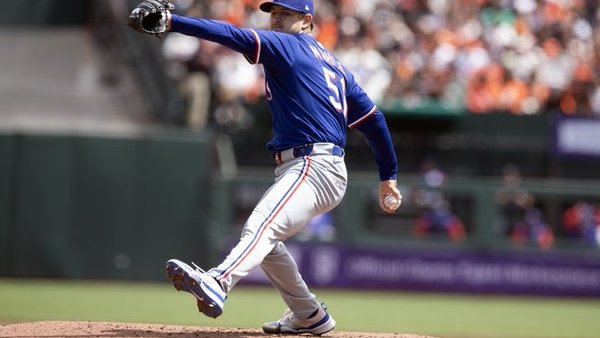
Cincinnati holds a clear pitching advantage with Lowder’s superior command — and while the Giants have enough offense to keep this competitive, the underlying game dynamics point toward a tighter margin than the run line implies.
Tyler Mahle vs Rhett Lowder: San Francisco Giants at Cincinnati Reds Betting Preview
After yesterday’s 2-1 defensive struggle, this pitching matchup shifts significantly in Cincinnati’s favor. Tyler Mahle brings a 4.30 ERA and 1.57 WHIP to Great American Ball Park, where Rhett Lowder has been far more efficient with a 3.31 ERA and 1.22 WHIP. The Giants are 6-11 overall with a -22 run differential, while the Reds protected home field with solid pitching from Brady Singer.
But here’s where the market needs context: the run line is offering the Reds at +1.5 (-168), requiring heavy juice for what profiles as a tight game. While Cincinnati holds the pitching edge, the overall game script doesn’t strongly support a multi-run margin. San Francisco has enough lineup depth with Willy Adames (.869 OPS) and Luis Arraez (.780 OPS) to remain competitive, even in a difficult road environment. The model projects this as essentially a one-run game, which reinforces the value of run-line protection rather than chasing separation.
Game Info & Betting Lines
- Date/Time: Wednesday, April 15, 6:40 PM ET
- Venue: Great American Ball Park (Park Factor: 1.10)
- Probable Starters: Tyler Mahle (SF) vs Rhett Lowder (CIN)
- Moneyline: San Francisco Giants -115 / Cincinnati Reds -105
- Run Line: Cincinnati Reds +1.5 (-168) / San Francisco Giants -1.5 (+139)
- Total: 9 (Over -110 / Under -110)
Why This Number Is Close
The market is correctly identifying Cincinnati’s pitching advantage with Lowder’s superior command and home field edge in a park that plays 10% above neutral for run scoring. The Reds get Sal Stewart (.310 average, 1.068 OPS) and Elly De La Cruz (.284, .912 OPS) in an environment that should favor their approach.
But the structure of the run line tells a different story. Laying -1.5 with San Francisco at +139 requires them to win by multiple runs despite the pitching disadvantage and recent form. That’s a difficult ask given their 6-11 record and -22 run differential. On the other side, Cincinnati doesn’t need to dominate — they simply need to avoid a multi-run loss to cash +1.5. In a projected one-run game, that cushion carries value even at a higher price.
The key insight: this isn’t about picking the better lineup — it’s about who controls the game. Cincinnati’s pitching gives them that edge, while San Francisco’s offense is good enough to keep the margin tight.
What Separates the Pitching
The control gap here is significant. Lowder’s 1.22 WHIP versus Mahle’s 1.57 WHIP tells the story of two pitchers heading in opposite directions. Mahle’s arsenal centers around a 92.2 mph four-seamer that he throws 47% of the time, but hitters are posting a .469 xwOBA against it — that’s concerning territory. His 85.0 mph split-finger provides relief with a 28.6% whiff rate, but when your primary pitch is getting hammered, you’re constantly pitching from behind.
Lowder operates differently, mixing four pitches more evenly and commanding the strike zone. His 92.6 mph sinker (31.2% usage) generates weak contact, while his changeup (22% usage) produces a 34% whiff rate and holds hitters to .230 xwOBA. The slider component (23.6% usage) has been particularly effective with a 30.8% whiff rate. Where Mahle creates stress with walks and hard contact, Lowder creates easier innings through location and pitch mix diversity.
But here’s the critical factor for the run line: Mahle’s 9.2 K/9 gives him swing-and-miss upside that can limit big innings. His split-finger creates a 28.6% whiff rate, and when he’s locating, he can navigate traffic. The Giants don’t need Mahle to outpitch Lowder — they just need him to keep it close enough to stay within the number.
The Pushback
The biggest concern with backing Cincinnati on the run line is price and volatility. Mahle’s walk issues can create traffic, but they also introduce randomness — something that favors tighter game distributions. Elly De La Cruz shows a massive .517 xwOBA and has already launched five homers in 17 games. Sal Stewart leads NL rookies with five homers and posts a .666 xwOBA against lefties, which plays well in this matchup.
The park factor amplifies these dynamics — Great American Ball Park’s 1.10 run environment increases the chance of quick scoring swings. That introduces risk to any margin-based bet, particularly one requiring a multi-run result.
There’s also the psychological factor of San Francisco’s struggles. When a team is 6-11 with a -22 run differential, confidence becomes an issue. Yesterday’s 2-1 loss exemplified their offensive frustrations, and facing another quality pitcher on the road could compound those problems. If they fall behind early, their recent track record suggests they struggle to mount comebacks — but they’ve still shown enough offensive resistance to keep games within reach.
Run Environment & Game Shape
The total sits at 9 with Great American Ball Park’s 1.10 run factor baked in, suggesting the market expects roughly 4-5 runs per side. That aligns with both teams’ profiles and reinforces a competitive, margin-sensitive game.
This shapes up as a contest where small edges matter — a two-run homer, a missed location, or a defensive miscue could swing the outcome. That type of environment naturally favors taking run-line protection rather than laying runs.
The bet: Cincinnati Reds +1.5 (-168) as part of a two-team parlay. The model projects a one-run game, and backing the team with the pitching advantage while holding a run-and-a-half cushion aligns with the most likely outcome distribution. The price is too steep for a standalone play, but it fits cleanly as a parlay anchor.