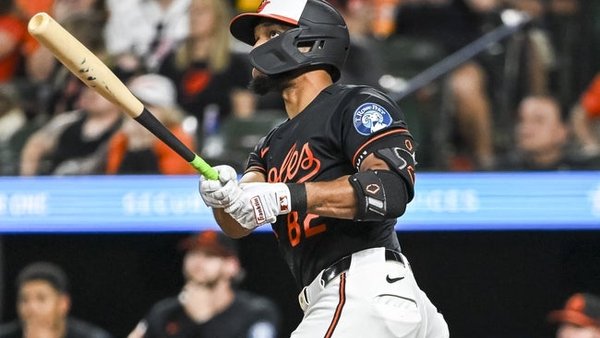
Baltimore’s offense arrives missing three core contributors while Parker Messick’s microscopic 0.91 WHIP creates a mismatch the market hasn’t fully priced. The pitching profiles say one thing — the -126 number suggests the market sees this closer than it is.
Parker Messick vs Shane Baz: Baltimore Orioles at Cleveland Guardians Betting Preview
The market has this pitching matchup priced close to even, with Cleveland favored at -126, but that line doesn’t capture the true gap between these starters. Parker Messick enters with a microscopic 0.51 ERA and 0.91 WHIP through 17.2 innings, while Shane Baz has struggled to a 4.50 ERA and 1.56 WHIP across 16 innings. Baltimore arrives from a series loss to Arizona where they allowed 19 runs in three games, and they’re doing it without catcher Adley Rutschman, outfielder Tyler O’Neill, and first baseman Ryan Mountcastle.
Cleveland’s offense sits at just .228 as a team, which explains why this isn’t priced as a blowout spot. But when you’re backing the significantly better pitcher at reasonable odds, sometimes that’s enough in a sport where starting pitching drives outcomes more than any other factor. The fact that this line hasn’t moved more aggressively toward Cleveland tells me the market is still sleeping on what Messick brings to the table.
Game Info & Betting Lines
- Date/Time: Thursday, April 16, 2026, 6:10 PM ET
- Venue: Progressive Field (Park Factor: 0.98)
- Probable Starters: Shane Baz (BAL) vs Parker Messick (CLE)
- Moneyline: Baltimore +104 / Cleveland -126
- Run Line: Cleveland -1.5 (+163) / Baltimore +1.5 (-199)
- Total: 8 (Over -108 / Under -112)
Why This Number Is Close
The -126 price reflects the market’s reasonable skepticism about Cleveland’s offense and Baltimore’s talent level when healthy. The Guardians are hitting .228 as a team with just 19 home runs in 19 games, and they’ve scored only 72 runs through their first 18 contests. Baltimore, despite their injuries, still has legitimate threats like Gunnar Henderson (.822 OPS) and Jeremiah Jackson (.949 OPS), plus legitimate middle-of-the-order production from guys like Jordan Westburg.
The market is also pricing in some regression risk with Messick’s early-season numbers. A 0.51 ERA over 17.2 innings screams small sample, and Cleveland’s home field advantage at Progressive Field is minimal in baseball terms. But what the line doesn’t fully account for is how depleted Baltimore’s lineup actually is right now, and how Baz’s underlying metrics suggest his struggles aren’t just bad luck.
What Separates the Pitching
This matchup comes down to control and command, where Messick holds a significant edge. His four-seam fastball sits at 92.8 mph with a 13.8% whiff rate and generates a .262 xwOBA against, while his changeup has been devastating at 42.9% whiffs and .207 xwOBA. The left-hander’s 21.2% usage of that changeup gives him a legitimate out pitch, and his overall 0.91 WHIP reflects pinpoint location.
Baz, meanwhile, is struggling with his signature offerings. His four-seam fastball, thrown 36% of the time at 96.7 mph, is getting hammered for a .372 xwOBA despite the velocity. His knuckle curve shows promise with 31.2% whiffs, but his changeup has been a disaster at .882 xwOBA. The right-hander’s 1.56 WHIP indicates he’s constantly pitching from behind in counts, which explains the elevated ERA despite decent strikeout numbers.
The handedness split also favors Cleveland. Baz faces a Guardians lineup that includes left-handed hitters like Steven Kwan and Angel Martínez, while Messick gets to attack several right-handed bats where his changeup has been most effective. The xwOBA differences are telling: Cleveland’s top hitters like Chase DeLauter (.451 xwOBA) and José Ramírez (.389 xwOBA) project better against Baz than Baltimore’s depleted order does against Messick.
The Pushback
The concern here is obvious: Cleveland’s offense is genuinely struggling to score runs. They’re averaging 4.0 runs per game with a .699 OPS as a team, and even excellent pitching means nothing if you can’t plate two or three runs. Messick’s 0.51 ERA feels unsustainable over a full season, and early April numbers carry massive variance – one bad inning could completely flip this game script.
Baltimore also has better individual talent when you look at their top hitters. Henderson’s .822 OPS and Jackson’s .949 OPS represent legitimate threats that could take advantage if Messick’s command wavers even slightly. Baz’s velocity advantage with that 96.7 mph fastball gives him upside if he can locate better than his season numbers suggest. Am I really going to trust a Cleveland offense that just scored 3 runs in St. Louis and has been held under 5 runs in five of their last seven games?
But the injury situation keeps bringing me back to Cleveland. When you remove Rutschman’s steady production, O’Neill’s power, and Mountcastle’s run production from Baltimore’s lineup, you’re left with a significantly weaker offensive unit facing a pitcher who’s shown elite control early in the season.
Run Environment & Game Shape
The total sits at 8 runs, reflecting the market’s expectation of a lower-scoring affair driven by pitching. Progressive Field’s 0.98 park factor slightly suppresses offense, and both teams have shown they can struggle to generate consistent run production. This environment actually amplifies the pitching edge, as games decided by one or two runs favor the team with the more reliable starter.
With Baltimore averaging 4.24 runs per game but missing key contributors, and Cleveland averaging 4.0 runs per game with their offensive struggles, this projects as a tight game where starting pitching becomes the primary differentiator. The kind of game where Messick’s control advantage and Baz’s command issues get magnified over six or seven innings.
I’m staying away from the run line at +163. Cleveland’s offensive struggles make it hard to trust them to win by multiple runs, even with the pitching advantage. But the moneyline at -126 offers reasonable value on the better starter in a pitcher-friendly environment against a depleted lineup.
The Play
Cleveland Guardians Moneyline (-126) – 2 Units
This comes down to backing elite control against questionable command while Baltimore deals with significant lineup holes. Messick’s 0.91 WHIP and devastating changeup give him multiple ways to attack a struggling Baltimore offense missing three key contributors. Baz’s 1.56 WHIP and .372 xwOBA against his primary fastball suggest his problems aren’t variance-driven.
The -126 price doesn’t fully account for the gap in pitching quality or the impact of Baltimore’s injuries. In early season baseball where small samples amplify individual performance differences, backing the superior starter at reasonable odds remains the most reliable edge available.