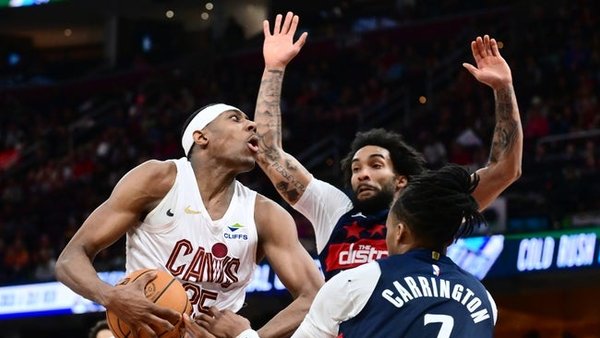
Bryan Bash sees a playoff opener where the market is overrating home court and underestimating a Toronto team that’s owned this matchup all season long.
The Setup: Raptors at Cavaliers
Cleveland opens as an 8.5-point home favorite Saturday night against a Toronto team that went 3-0 against them in the regular season. The Cavaliers haven’t seen the Raptors since November 24th — that’s nearly five months of separation, and the market is pricing this like Cleveland’s the same team that got swept in the season series. They’re not, but 8.5 points is still too many.
The Raptors just clinched their first playoff berth in four years by dismantling Brooklyn 136-101 in the regular-season finale. Scottie Barnes posted his third triple-double of the season — 18 points, 12 rebounds, 12 assists — and RJ Barrett dropped 26. This is a confident group walking into Rocket Mortgage FieldHouse, not a scared five-seed happy to be here.
Cleveland rested most of their rotation in Sunday’s finale against Washington, getting Max Strus 18 minutes in his return from a broken foot. That’s the story here: the Cavaliers are healthier and more dangerous than they were in November, but the projection suggests this game lands around a 2.6-point margin. That’s a six-point gap to the posted number.
Game Info & Betting Lines
When: Saturday, April 18, 2026 | 7:30 PM ET
Where: TBD
Watch: Prime Video
Current Odds (Bovada):
- Spread: Cleveland Cavaliers -8.5 (-105) | Toronto Raptors +8.5 (-115)
- Total: 220.0 (Over -110 / Under -110)
- Moneyline: Cleveland -370 | Toronto +285
Why This Line Exists
The market is giving Cleveland 8.5 points for three reasons: home court in a playoff opener, a six-game regular-season win advantage, and the assumption that the Raptors’ 3-0 season series edge is ancient history. Fair enough — Cleveland is 35-14 since December 29 and won 11 of their last 14. They’ve been the better team for months.
But the efficiency gap isn’t backing up this spread. Cleveland’s net rating sits at +4.1 per 100 possessions; Toronto’s at +2.9. That’s a 1.2-point edge for the Cavaliers in season-long efficiency, and even with a standard two-point home-court adjustment, you’re looking at a projected margin around three points. The market is adding another five or six points on top of that for playoff intensity and recent form, and I’m not buying it.
The total at 220.0 is another story entirely. Both teams play in the high 90s to low 100s in pace — the blended expectation is right around 100 possessions. Cleveland’s offensive rating is 118.3, Toronto’s defensive rating is 112.1. That’s a 6.2-point mismatch when Cleveland has the ball, which is the strongest edge in this game. On the flip side, Toronto’s offense at 115.0 against Cleveland’s defense at 114.1 is basically within noise. This game should move, and 220 feels light.
Raptors Breakdown
Toronto’s 46-36 record doesn’t tell the full story of how dangerous they can be when their top guys are clicking. Brandon Ingram leads the way at 21.5 points per game on 47.7% shooting and 38.2% from three. RJ Barrett (19.3 PPG, 49.1% FG) and Scottie Barnes (18.1 PPG, 7.5 RPG, 5.9 APG) give them multiple creators, and Immanuel Quickley — listed as questionable — adds another 16.4 points and 5.9 assists when healthy.
The Raptors are 22-19 on the road, and their clutch record of 21-14 suggests they don’t fold in tight spots. They shoot 41.5% in clutch situations, which isn’t elite, but they’ve been good enough to win more than they lose when it matters. The offensive rating of 115.0 ranks middle-of-the-pack, but their true shooting percentage at 58.1% and effective field goal percentage at 54.6% show they’re taking quality shots.
Defensively, they’re solid at 112.1, and they force turnovers at a decent clip (12.2% turnover rate). They’re not going to shut down Donovan Mitchell and James Harden, but they can make Cleveland work for everything.
Cavaliers Breakdown
Cleveland’s 52-30 record is built on elite offense — 118.3 offensive rating, 59.5% true shooting, 56.1% effective field goal percentage. Donovan Mitchell (27.9 PPG, 48.3% FG, 36.4% from three) is the primary engine, and James Harden (23.6 PPG, 8.0 APG) runs the offense with surgical precision. Evan Mobley (18.2 PPG, 9.0 RPG) and Jarrett Allen (15.4 PPG, 8.5 RPG, 63.8% FG) give them size and rim pressure.
The Cavaliers are 27-14 at home, and their clutch record of 24-18 shows they’re comfortable in tight games. They shoot 44.0% in clutch situations and 34.0% from three when the game’s on the line — better than Toronto across the board. Their defensive rating of 114.1 isn’t elite, but it’s good enough when paired with their offensive firepower.
Max Strus returning from a broken foot adds another shooter to the rotation, though it’s unclear how much run he’ll get in a playoff opener. Thomas Bryant remains out with a left calf strain, but that’s not affecting the rotation. The Cavaliers are healthy where it matters.
The Matchup
This is a pace-and-space game that should favor Cleveland’s offensive efficiency, but the gap isn’t wide enough to justify 8.5 points. The blended pace sits around 100 possessions, which means both teams will have plenty of chances to score. Cleveland’s 6.2-point offensive mismatch when they have the ball is real — that’s the kind of edge that can push a game into the 230s if both teams are executing.
Toronto’s offense against Cleveland’s defense is basically a wash — 0.9 points per 100 possessions in Toronto’s favor, which is within noise. That means this game comes down to whether Cleveland can exploit their offensive advantage consistently, and whether Toronto can keep it close with timely shotmaking from Ingram, Barrett, and Barnes.
The shooting quality edge favors Cleveland by 1.4 percentage points in both true shooting and effective field goal percentage. The offensive rebounding gap is another 1.4 points in Cleveland’s favor. These are small edges, not game-breakers, and they don’t add up to 8.5 points.
The clutch performance is roughly even — Toronto wins 60% of their clutch games, Cleveland wins 57.1%. If this game comes down to the final five minutes with the score within five, neither team has a clear edge based on the numbers. That’s important, because playoff openers in tight matchups tend to stay tight.
Bash’s Best Bet & The Play
I’m on Toronto +8.5 and Over 220.0. The spread is the sharper play — my model projects this game around a 2.6-point margin, and the market is giving us six extra points to work with. Toronto went 3-0 against Cleveland in the regular season for a reason: they match up well, they have multiple creators, and they don’t back down. Cleveland’s the better team right now, but 8.5 is too many.
The total at 220.0 feels like the market is pricing in playoff tension and slower pace, but the projection lands closer to 229.7. Both teams are efficient offensively, and the pace blend at 100 possessions gives them enough chances to push this over. Cleveland’s offensive rating against Toronto’s defense is a strong mismatch, and if both teams are making shots, this game sails over the number.
Risk note: If Immanuel Quickley is ruled out, that takes 16.4 points and 5.9 assists off the floor for Toronto. Monitor his status before tip. If he’s out, the spread still holds value, but the total becomes shakier. Play accordingly.