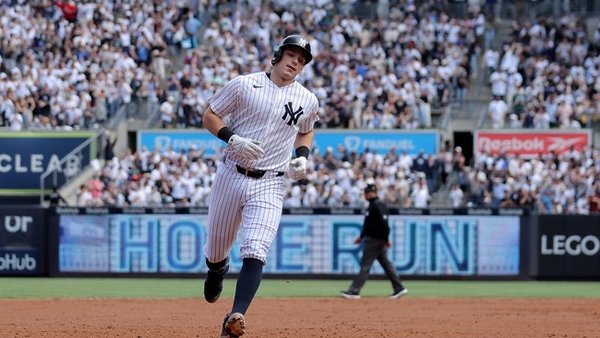
Gil’s four home runs allowed in nine innings creates a sharp contrast against Early’s dominant form. The market prices this at Red Sox -108 — the pitching profiles suggest the gap should be wider.
Luis Gil vs Connelly Early: New York Yankees at Boston Red Sox Betting Preview
The market is essentially pricing this rivalry matchup as a pick’em game, with the Red Sox sitting at -108 on the moneyline. What that line doesn’t adequately reflect is the stark contrast between these starting pitchers through the season’s first month. Luis Gil has been hammered for a 7.00 ERA and four home runs allowed in just nine innings, while Connelly Early has emerged as a legitimate weapon with a 2.29 ERA across 19.2 innings.
Yes, there’s noise here — the Yankees arrive red-hot after scoring 20 runs in their last two games, and Boston’s offense has been anemic with just 89 runs scored. But good pitching neutralizes hot hitting, and getting the better starter at essentially even money creates a clear edge.
Game Info & Betting Lines
- Date/Time: Tuesday, April 21, 2026 | 6:45 PM ET
- Venue: Fenway Park (Park Factor: 1.08)
- Probable Starters: Luis Gil vs Connelly Early
- Moneyline: New York Yankees -112 / Boston Red Sox -108
- Run Line: Boston Red Sox +1.5 (-175) / New York Yankees -1.5 (+144)
- Total: 8.5 (O -105 / U -115)
Why This Number Is Close
The market is balancing legitimate factors that favor New York. The Yankees just completed a dominant sweep of Kansas City, outscoring them 24-6 over the final two games. Ben Rice has been scorching with homers in four straight games, while Aaron Judge continues his early-season power surge with six homers in eight games. Their offense looks explosive right now.
Boston, meanwhile, has managed just four runs across the first three games of their series with Detroit. The Red Sox rank near the bottom of the league with a .663 team OPS and only 13 home runs. The market sees a hot Yankees offense against struggling Red Sox bats and prices accordingly.
But here’s where I think the line is slightly off: it’s not accounting for just how poor Gil has been or how effective Early has looked. The Yankees’ recent offensive surge is real, but it came against Kansas City pitching — not against a starter who’s been dominant.
What Separates the Pitching
This matchup presents a classic example of early-season regression waiting to happen versus sustainable excellence. Gil’s struggles aren’t fluky — his 95.8 mph four-seam fastball, thrown 47.5% of the time, is getting crushed with a .513 xwOBA against and just a 12.9% whiff rate. That’s batting practice velocity without the deception to make it play up.
His slider has been more effective with a 31.7% whiff rate, but when hitters are sitting dead-red on his fastball and making contact at will, secondary pitches become less valuable. The four home runs allowed in nine innings tell the story — Gil is living in the zone and getting punished for it.
Early presents a completely different challenge. His 94.1 mph four-seam sits at 32.4% usage with a more respectable .455 xwOBA against, but it’s his diverse arsenal that creates problems. The changeup (.289 xwOBA) and sweeper (.175 xwOBA) give him weapons against both righties and lefties. Early’s 20.2% whiff rate on his fastball is nearly double Gil’s, creating a foundation for his secondary stuff to work.
The gap in command is equally telling. Early has walked 10 batters in 19.2 innings while Gil has walked five in just nine frames. In a tight ballgame at Fenway, that difference in strike-throwing ability becomes magnified.
The Pushback
The concern here is obvious — you’re betting against an offense that just erupted for 20 runs in two games. Ben Rice’s .583 xwOBA this season isn’t a fluke, and his matchup against Early could be problematic given his power from the left side. Judge carries a .593 xwOBA and has been particularly dangerous in first innings this year.
Boston’s offensive struggles are real and documented. They’ve managed just 89 runs in 22 games, and key hitters like Masataka Yoshida (.270 xwOBA) have been completely ineffective. Even against Gil’s struggles, can this Red Sox lineup generate enough offense to support Early?
The sample sizes also create uncertainty. Gil’s nine innings and Early’s 19.2 frames are small enough that one bad outing could completely flip the narrative. That said, the underlying metrics support what we’re seeing on the surface — Gil’s getting hit hard, Early’s missing bats. The edge remains clear despite these concerns.
Run Environment & Game Shape
Fenway’s 1.08 park factor creates a slightly run-friendly environment, but not enough to dramatically alter game shape. The market expects a moderate-scoring contest with the total sitting at 8.5, suggesting roughly 4-5 runs per side in a typical outcome.
This environment actually amplifies the pitching edge. In a game projected for single-digit runs, the difference between a starter who’s giving up home runs at an alarming rate versus one who’s been stingy becomes the deciding factor. Early’s ability to limit big innings while Gil’s propensity for allowing crooked numbers creates separation in these tighter contests.
The likely scoring range of 7-10 total runs means both starters need to be effective through five or six innings. Early has shown that capability; Gil hasn’t.
Joe Jensen’s Pick
JENSEN’S PICK: Boston Red Sox Moneyline -108 — 2 Units
I considered the run line at Boston Red Sox +1.5, but this Red Sox offense is too weak to trust laying significant juice.
The Yankees’ recent hot streak is real, but good pitching beats hot hitting more often than not. Early has the arsenal and command to neutralize this Yankees lineup, while Gil continues to serve up home run balls to power hitters. At -108, we’re getting fair value on the superior starter in a matchup that should be closer to -130 or -140.
This feels like a strong two-unit play rather than going heavier. Early-season samples create inherent uncertainty, but the underlying metrics support the surface numbers strongly enough to warrant confidence in this spot.