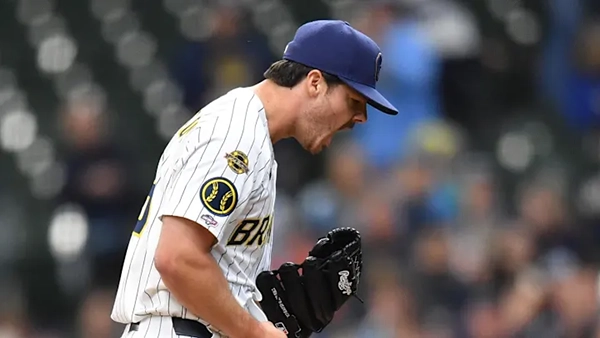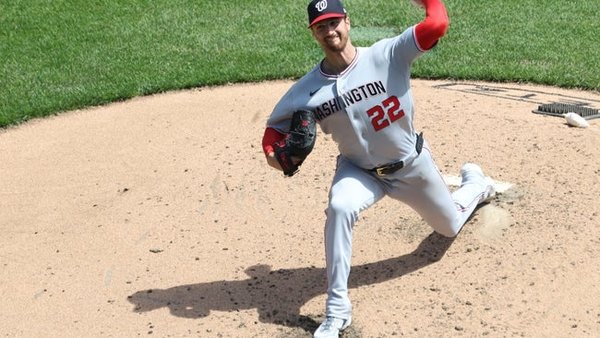
Hudson’s arsenal shows elite swing-and-miss ability — but his 1.63 WHIP and 11.2-inning sample size create uncertainty against a Washington offense that just scored 10 runs in two games against Chicago pitching.
Foster Griffin vs Bryan Hudson: Washington Nationals at Chicago White Sox Betting Preview
Something feels off about Chicago being this cheap after getting outscored 10-8 in the first two games of this series. Yes, Bryan Hudson’s 1.54 ERA with 11.57 K/9 looks elite, but I keep coming back to those 11.2 innings of work. That’s less than two full starts. Meanwhile, Foster Griffin has quietly posted a 3.38 ERA across 26.2 innings — not spectacular, but proven over a larger sample that included quality starts.
The more I dig into the numbers, though, the more Hudson’s dominance looks sustainable. His four-seam fastball generates a 28.2% whiff rate at 91.8 mph with just a 0.297 xwOBA against — those are legitimate swing-and-miss numbers. Griffin’s cutter-heavy approach is getting hammered to the tune of a 0.409 xwOBA, and when your most-used pitch (28.1% usage) is allowing that kind of contact, you’re asking for trouble.
But what almost changed my mind was seeing Washington put up six runs yesterday off Chicago pitching. James Wood with his 0.642 xwOBA looks like he could take any pitcher deep, and this offense has shown it can solve whatever Chicago throws at them. That’s where my internal conflict sits — Hudson’s stuff versus Washington’s proven ability to score in this park.
Game Info & Betting Lines
- Date/Time: Sunday, April 26, 2:10 PM ET
- Venue: Guaranteed Rate Field (Park Factor: 0.98)
- Probable Starters: Foster Griffin (3-0, 3.38 ERA) vs Bryan Hudson (0-0, 1.54 ERA)
- Moneyline: Washington +104 / Chicago -126
- Run Line: Chicago +1.5 (-197) / Washington -1.5 (-161)
- Total: 8 (Over -119 / Under -101)
Building the White Sox Case
Here’s what’s pulling me toward Chicago despite the sample size concerns: Hudson’s arsenal shows legitimate major league quality that Griffin simply can’t match. That 54% four-seam fastball usage with a 28.2% whiff rate isn’t fluky — it’s a hitter missing a good pitch. Compare that to Griffin’s scattered approach where his most reliable offering (that cutter) is getting crushed.
Griffin’s best pitch is actually his split-finger (40.0% whiff rate, 0.135 xwOBA), but he’s only throwing it 9.8% of the time. His changeup works too (30.4% whiff rate), but that’s just 11.9% usage. He’s leaning on his worst pitch while burying his best ones. Hudson doesn’t have that problem — his money pitch is also his most-used pitch.
The home run differential bothers me too. Griffin has allowed five longballs in 26.2 innings while Hudson hasn’t given up one. Against a White Sox lineup with Munetaka Murakami leading MLB with 11 home runs and hitting bombs in six of his last seven games, Griffin’s tendency to allow hard contact feels like playing with fire.
What really convinced me was looking at the strikeout numbers. Hudson’s 11.57 K/9 versus Griffin’s 7.43 K/9 means different types of innings. Hudson creates clean frames with punchouts. Griffin pitches to contact and hopes for the best. In this park (0.98 run factor), I’ll take the guy who doesn’t have to rely on his defense.
But I’d be lying if I said Hudson’s 1.63 WHIP didn’t concern me. That suggests some command issues even with the strikeouts. And watching Washington score 10 runs in two games against Chicago pitching makes me wonder if this line should be closer to pick ’em.
Why This Number Exists
The market is essentially asking: do you believe in 11.2 innings over 26.2 innings? Washington’s hot bats and proven ability to score in this series explain why Chicago isn’t a bigger favorite. The Nationals lineup features genuine threats — Wood’s 10 homers and 0.642 xwOBA, CJ Abrams with seven bombs — and they’ve already solved Chicago twice.
Chicago’s 4.83 team ERA also suggests their pitching depth beyond Hudson remains questionable. If Hudson struggles early, Washington could feast on the White Sox bullpen like they have all series. The -126 price reflects that uncertainty around Hudson’s small sample and Chicago’s overall pitching quality.
What Separates the Pitching
The Statcast breakdown shows why I’m leaning toward trusting Hudson’s early dominance. His four-seam fastball sits at 91.8 mph and holds hitters to just a 0.297 xwOBA — that’s elite contact suppression. His sweeper works as a quality secondary offering at 80.7 mph with a 17.4% whiff rate.
Griffin’s arsenal tells a different story. That 88.0 mph cutter he throws 28.1% of the time is getting demolished (0.409 xwOBA). His four-seamer at 91.6 mph isn’t missing bats (14.6% whiff rate) and allows similar hard contact (0.412 xwOBA). When your two most-used pitches are both getting hit hard, you’re fighting uphill.
The velocity differential isn’t massive, but Hudson’s command and location appear superior. Griffin’s 3.38 ERA feels like it’s being propped up by some good fortune — those underlying Statcast numbers suggest harder contact is coming. Hudson’s 1.54 ERA might be unsustainable, but the quality of contact he’s allowing suggests the skills are legitimate.
The Doubt That Almost Stopped Me
Here’s what nearly killed this bet: Washington has scored in every inning from the 4th through the 10th over the last two games. That’s not a fluke — that’s an offense that’s seeing the ball well and making adjustments. Wood looks locked in, Abrams is driving balls, and they’re working counts against Chicago pitching.
Hudson’s 1.63 WHIP also suggests he’s been fortunate. Walking 8 batters in 11.2 innings isn’t sustainable dominance — it’s smoke and mirrors. If he starts nibbling and falling behind hitters against this Washington offense, those strikeout numbers won’t matter.
The sample size issue is real too. Eleven innings is nothing. Griffin has faced 109 batters this season versus Hudson’s 51. That’s more than double the exposure, and Griffin’s done it while maintaining a 3-0 record. There’s value in proven durability over small-sample excellence.
But what kept me on Chicago was Murakami’s current tear. Six home runs in his last seven games against pitching that’s allowing five longballs in 26.2 innings feels like a collision course. Griffin’s contact-heavy approach could get expensive quickly against a hitter this locked in.
Run Environment & Game Shape
The 8-run total in a pitcher-friendly park (0.98 factor) suggests both teams expect scoring opportunities. Washington’s proven they can put up runs here, but Hudson’s strikeout ability could limit the big innings that defined the first two games.
Griffin’s pitch-to-contact approach in this environment feels risky. With Murakami swinging a hot bat and Chicago’s lineup showing signs of life, clean innings favor the home side. Hudson projects to work quicker and cleaner, while Griffin might labor through traffic and elevated pitch counts.
Joe Jensen’s Pick
JENSEN’S PICK: Chicago White Sox Moneyline -126 — 1 Unit
Projected score: Chicago White Sox 5, Washington Nationals 4
I went back and forth on this more than I’d like to admit. Hudson’s sample size is tiny, Washington’s offense is proven in this park, and the -126 price means I need Chicago to win 55.8% of the time for this to be profitable long-term. That’s not a gimme with 11.2 innings of data.
But the arsenal quality gap feels real. Hudson’s fastball misses bats, Griffin’s gets hit hard. In a game where both offenses have shown they can score, I’ll take the pitcher with the better swing-and-miss stuff. The small sample cuts both ways — it also means Washington hasn’t seen Hudson’s best yet. I’m betting they struggle to solve him like they have Chicago’s other arms.