Bash identifies a total that may not reflect the playoff intensity and defensive pressure both teams showed in their Game 7 wins—this number deserves scrutiny before tip.
The Setup: Cleveland Cavaliers at Detroit Pistons
Detroit is laying 3 points at home in Game 1 of the Eastern Conference semifinals, and the total sits at 216. Both teams just survived grueling seven-game series—Cleveland outlasted Toronto, Detroit rallied from 3-1 down against Orlando—and now they meet on short rest with the winner taking control of this Central Division showdown.
The projection here sees Detroit by 4.1 points, which gives the Pistons a small edge against the spread. But the real conversation is on the total. The market posted 216, and my model projects 230. That’s a 14-point gap, and it’s built on pace, efficiency, and the offensive firepower both teams showed all season long. This isn’t a grind-it-out defensive battle—both squads can score, and the pace blend sits right around 100 possessions. The question is whether the market is overreacting to playoff defense or underestimating the offensive talent on the floor.
Cleveland brings Donovan Mitchell, James Harden, and a supporting cast that averaged 119.5 points per game during the regular season. Detroit counters with Cade Cunningham, who just dropped 32 and 12 assists in a closeout game, plus a home crowd that’s seen this team win 31 of 40 at Little Caesars Arena. The Pistons’ defensive rating of 108.9 is elite, but Cleveland’s offensive rating of 118.3 is the highest in this matchup. Something has to give.
Game Info & Betting Lines
Matchup: Cleveland Cavaliers at Detroit Pistons
Date: Tuesday, May 5, 2026
Time: 7:30 PM ET
Location: TBD
TV: NBCSN, Peacock
Current Betting Lines (MyBookie.ag):
- Spread: Detroit Pistons -3.0 (-110)
- Moneyline: Detroit Pistons -147 | Cleveland Cavaliers +120
- Total: 216.0 (Over/Under -110)
Records:
Cleveland Cavaliers: 52-30 (Road: 25-16)
Detroit Pistons: 60-22 (Home: 31-9)
Why This Line Exists
The market is giving Detroit 3 points at home, and that makes sense on the surface. The Pistons won 60 games, they’re the top seed, and they just showed serious grit coming back from 3-1 down. Cleveland is the 4 seed, and they needed seven games to get past a Raptors team that hadn’t been in the playoffs since 2022. The home court advantage and the seed differential justify a short number.
But the total at 216 feels like an overreaction to playoff basketball. Both teams played tense, physical Game 7s on Sunday, and the market may be pricing in defensive intensity and fatigue. Detroit’s defensive rating of 108.9 is legitimately strong, and Cleveland’s defense tightened up late in the Toronto series. The expectation is that playoff rotations shorten, possessions slow down, and scoring gets harder.
Here’s the problem with that logic: these teams don’t play slow. Cleveland’s pace sits at 100.7, Detroit’s at 99.9, and the pace blend projects 100.3 possessions. That’s not a crawl—it’s an up-tempo game with two teams that can push the ball and create in transition. Cleveland’s offensive rating of 118.3 is elite, and Detroit’s offensive rating of 117.3 isn’t far behind. The market is pricing defense, but the matchup math points to offense.
The spread feels tight because the teams split their four regular-season meetings, and the Pistons’ net rating edge of 4.3 points per 100 possessions over Cleveland suggests a margin closer to 4 than 3. The total, though, is where the real gap lives. The projection sits at 230, and that’s a 14-point difference from the posted number. That’s not noise—that’s a meaningful edge.
Cleveland Cavaliers Breakdown
Cleveland just survived a seven-game war with Toronto, and the home team won every single game in that series. Jarrett Allen tied his playoff career high with 22 points and 19 rebounds in the closeout, and Donovan Mitchell added 22 points to push the Cavaliers through. James Harden chipped in 18, and the offensive balance was enough to hold off a scrappy Raptors squad.
The Cavaliers averaged 119.5 points per game during the regular season, and their offensive rating of 118.3 ranks as the best in this matchup. Mitchell averaged 27.9 points, Harden ran the offense at 8.0 assists per game, and the supporting cast—Evan Mobley, Jarrett Allen, Jaylon Tyson—provided scoring and rebounding depth. Cleveland’s true shooting percentage of 59.4% and effective field goal percentage of 56.1% show they can score efficiently from all three levels.
The concern for Cleveland is the quick turnaround. They played Sunday night, and now they’re on the road Tuesday for Game 1 against a rested, motivated Detroit team. Mitchell said immediately after the buzzer that the team had already moved on to focusing on Detroit, which shows the right mindset, but the physical toll of a Game 7 is real. Cleveland’s clutch record of 24-18 and a clutch plus/minus of 1.4 suggest they can handle tight moments, but this is a different level of competition.
Defensively, Cleveland’s rating of 114.1 is solid but not elite. They’ll need to slow down Cade Cunningham and limit Detroit’s offensive rebounding, which sits at 30.9% compared to Cleveland’s 26.8%. That’s a 4.1 percentage point gap, and it could lead to second-chance opportunities that swing possessions.
Detroit Pistons Breakdown
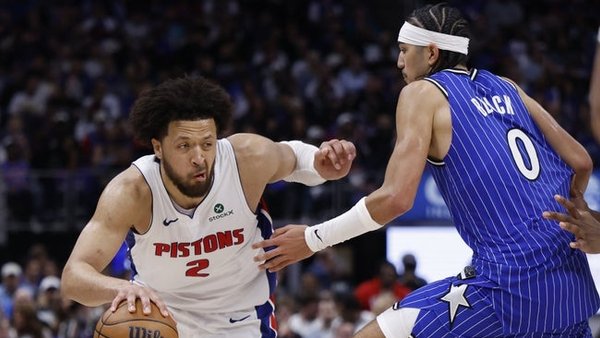
Detroit just completed one of the most impressive comebacks in recent playoff history, rallying from 3-1 down to beat Orlando in Game 7. Cade Cunningham put up 32 points and 12 assists in the closeout, Tobias Harris added 30, and the Pistons became the 15th team in NBA history to overcome that deficit. J.B. Bickerstaff called it a reflection of the team’s belief and resiliency, and the home crowd at Little Caesars Arena was a factor all series long.
The Pistons won 60 games during the regular season, and their net rating of 8.4 points per 100 possessions was one of the best in the league. Cunningham averaged 23.9 points and 9.9 assists, Jalen Duren provided interior scoring and rebounding at 19.5 points and 10.5 boards per game, and the supporting cast—Tobias Harris, Duncan Robinson—gave Detroit the spacing and shooting to keep defenses honest.
Detroit’s defensive rating of 108.9 is elite, and they ranked first in the conference for a reason. They force turnovers, protect the rim, and control the glass. The offensive rebounding edge of 4.1 percentage points over Cleveland is a real advantage, and it could lead to extra possessions in a game that’s expected to be played at a faster pace. Detroit’s clutch record of 27-15 and a clutch plus/minus of 1.2 show they can close games, and the home court advantage at 31-9 is a legitimate factor.
The one question mark is Kevin Huerter, who is questionable with a left adductor strain and has missed three straight games. If Huerter can’t go, Javonte Green could see more minutes off the bench, but the rotation depth is strong enough to absorb the loss. Detroit’s shooting quality—58.3% true shooting, 54.6% effective field goal percentage—remains intact even without Huerter.
The Matchup
This game comes down to pace, efficiency, and how both teams handle the offensive pressure. Cleveland’s offensive rating of 118.3 is the best in this matchup, and when you put that against Detroit’s defensive rating of 114.1, you get a mismatch edge of 9.4 points per 100 possessions in Cleveland’s favor. That’s a strong edge, and it suggests the Cavaliers can score even against Detroit’s elite defense.
Detroit’s offensive rating of 117.3 against Cleveland’s defensive rating of 114.1 gives the Pistons a mismatch edge of 3.2 points per 100 possessions. That’s a medium edge, and it means Detroit can score, but not as efficiently as Cleveland. The net rating gap of 4.3 points per 100 possessions in Detroit’s favor sets the baseline for the margin projection, but the offensive firepower on both sides is what drives the total.
The pace blend of 100.3 possessions is critical here. That’s an up-tempo game, and it means more scoring opportunities for both teams. Cleveland’s true shooting percentage edge is minimal—just 1.1 percentage points—and the effective field goal percentage gap is 1.4 points in Cleveland’s favor. Those are small differences, and they’re basically within noise. The real separation comes from Detroit’s offensive rebounding edge of 4.1 percentage points, which could lead to second-chance points and extend possessions.
The turnover edge is within noise—just 0.8 percentage points in Detroit’s favor—so ball security isn’t a major factor. Both teams take care of the ball well enough, and the game will be decided by shot quality, rebounding, and pace. The clutch edge leans slightly toward Detroit with a 64.3% win rate compared to Cleveland’s 57.1%, but that’s a 7.2% gap, and it’s not decisive.
The market posted 216 for the total, and the projection sits at 230. That’s a 14-point edge, and it’s built on the pace blend, the offensive ratings, and the shooting quality on both sides. This isn’t a defensive slog—it’s a playoff game between two teams that can score, and the pace supports more possessions than the market is pricing in.
Bash’s Best Bet & The Play
The spread at Detroit -3 feels tight, and the projection of 4.1 points gives the Pistons a small edge. But the real value is on the total. The market posted 216, and the projection sits at 230. That’s a 14-point gap, and it’s a strong edge built on pace, offensive efficiency, and the talent on both sides. Cleveland’s offensive rating of 118.3 against Detroit’s defense, Detroit’s offensive rating of 117.3 against Cleveland’s defense, and a pace blend of 100.3 possessions all point to a higher-scoring game than the market expects.
Both teams just played Game 7s, and the market may be overreacting to playoff defense and fatigue. But these teams don’t play slow, and the offensive firepower is real. Donovan Mitchell, James Harden, Cade Cunningham, and Jalen Duren can all create scoring opportunities, and the pace supports more possessions than a typical playoff grind.
The play: Over 216 (-110). The projection gap is too wide to ignore, and the matchup math supports scoring. The risk is playoff intensity and shortened rotations slowing the game down, but the pace blend and offensive ratings suggest this number is too low. Take the over and expect both teams to push the tempo.