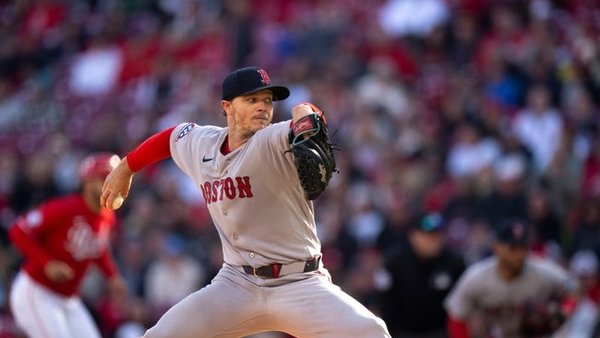
Sonny Gray has allowed just 16 home runs all season — and he’s pitching at home in a playoff-pressure spot against a Cleveland lineup that stranded 15 runners in Tuesday’s 3-2 game. The books have set the total at 7.0 with only -103 juice on the under, signaling over action is expected, but Boston’s four-man injury absence and Gray’s elite contact suppression tell a different story than the number implies.
Foster Griffin vs. Sonny Gray: Cleveland Guardians at Boston Red Sox Betting Preview
Yesterday’s game in this exact matchup finished 3-2, Cleveland. Two quality starters, depleted lineups, and a Fenway Park crowd watching a pitcher’s duel instead of a slugfest. Nothing that happened Tuesday night suggests tonight plays dramatically different — and yet the market has this total set at 7.0, with the juice sitting at -103 on the under, signaling that the books expect most action to flow toward the over side.
That mild lean toward the over is exactly where the value opens up. Sonny Gray (17-5, 2.82 ERA, 1.16 WHIP) is the class of this pitching matchup — one of the better arms in the American League, pitching at home in a close-game environment with playoff implications hanging over both clubs. On the other side, Foster Griffin (15-5, 3.67 ERA, 1.19 WHIP) is a legitimate quality starter, not a pushover, but he’s allowed 23 home runs in 166.2 innings — a rate that matters at Fenway’s short porch.
The under at -103 isn’t a heavy investment. It’s a lean backed by Gray’s elite contact suppression, Cleveland’s historically poor situational hitting (15 runners stranded Tuesday), and a Boston lineup that has been thinned by injuries. The projection discrepancy is real and deserves serious attention — but the under still holds up when you work through the pieces.
Game Info & Betting Lines
- Date/Time: Wednesday, September 23, 2026 — 7:00 PM ET
- Venue: Fenway Park (Park Factor: 1.08 — modest hitter-friendly)
- TV: ESPN
- Probable Starters: Foster Griffin (CLE, 15-5, 3.67 ERA) vs. Sonny Gray (BOS, 17-5, 2.82 ERA)
- Moneyline: Cleveland Guardians +113 / Boston Red Sox -136
- Run Line: Boston Red Sox -1.5 (+162) / Cleveland Guardians +1.5 (-198)
- Total: 7.0 (Over -117 / Under -103)
Why This Number Is Close — But Slightly Off
The books have set 7.0 with deliberate care. Fenway’s 1.08 park factor adds a small but real inflation to run scoring. Griffin’s 23 home runs allowed is a legitimate concern at a park with one of the shortest right-field distances in baseball. And Boston’s lineup, even injury-depleted, features Willson Contreras (.905 OPS, 27 HR) and Wilyer Abreu (.784 OPS, 24 HR) — two bats capable of punishing a mistake pitch over the Monster.
The case for the over is not manufactured. The underlying numbers project a combined 9.5 runs because both offenses have real quality. Cleveland’s Chase DeLauter (.826 OPS) and Nathaniel Lowe (.408 xwOBA) can cause damage, and Boston’s run differential of +79 versus Cleveland’s +3 tells you there’s a meaningful offensive gap favoring the home side.
But here’s the problem with accepting the over at face value: Boston is missing Rafaela (CF), Yoshida (DH), Mead (3B), and Anthony Seigler (2B) — four lineup contributors who compress the run-producing depth significantly. Cleveland stranded 15 baserunners in Tuesday’s 3-2 loss, a season-high for a nine-inning game, which isn’t random noise — it reflects a contact-dependent lineup that doesn’t manufacture big innings. Gray’s contact suppression metrics add another structural barrier to Cleveland scoring freely. The market is slightly wrong to price the under with only modest juice when the injury toll and situational hitting data both argue for a sub-7 total.
What Separates the Pitching
The gap between Gray and Griffin is real, even if the surface stats suggest a closer contest than it actually is. Gray’s 2.82 ERA over 163 innings pairs with a WHIP of 1.16 and — most critically — only 16 home runs allowed all season. At Fenway, where the short right-field porch is a genuine variable, Gray’s ability to keep the ball in the park stands as one of the most underappreciated edges in this matchup.
His arsenal supports it. Gray’s sweeper generates a 36.9% whiff rate with an xwOBA-against of just .187 — among the most dominant put-away pitches in the data. His sinker at 92.0 mph sits at a .277 xwOBA, and his curveball draws a 29.3% whiff rate. Against a Cleveland lineup that relies on contact over power — Steven Kwan (.303 xwOBA, 0.3% barrel rate) leads off, and the lineup broadly grades as a low-barrel group — Gray’s profile is nearly ideal. Kwan holds just a .259 average in 28 PA against Gray with zero home runs and only 2 strikeouts — a contact-heavy but low-damage profile that fits Gray’s suppression perfectly. Ramírez holds just a .250 mark in 27 PA against him as well.
Griffin is solid but structurally different. His cutter leads his mix at 32.2% usage and 88.5 mph, generating a 16.2% whiff rate — serviceable, not dominant. His best weapon is his split-finger at a .215 xwOBA, but it’s used sparingly at just 6.1% of pitches. The concern is Boston’s lineup against him: Roman Anthony carries a .426 xwOBA overall and a .467 mark versus right-handed pitchers. Contreras at a .452 xwOBA and Abreu at .413 xwOBA versus righties are live bats. Griffin’s 23 home runs allowed over 166.2 innings is an above-average rate, and Fenway amplifies that risk. The key distinction between the two starters is simple: Gray actively suppresses hard contact and home runs; Griffin allows them at a higher clip. That gap matters in a 7.0-total environment.
The Pushback — Why the Over Has a Case
I’m not going to pretend the over case doesn’t exist. The 9.5-run combined projection isn’t noise — it reflects real underlying offense from both sides. Boston’s Contreras (.452 xwOBA) and Abreu (.401 xwOBA) are legitimate power threats at a hitter-friendly park. Fenway’s 1.08 park factor is modest but real. If Griffin leaves a cutter over the middle to Contreras in the third inning, that’s a two-run shot and suddenly you’re pricing in a crooked number.
Griffin’s sweeper generates a 27.2% whiff rate and his curveball sits at 21.7% whiff — he’s not a soft-tossing contact-manager. And the Cleveland lineup, even with its contact-dependent profile, features Lowe (.408 xwOBA) and DeLauter (.362 xwOBA) — hitters capable of damaging Griffin’s cutter if he loses his command. Tuesday’s 3-2 game was close. A slight tilt in Griffin’s command or Gray’s sharpness and this goes over 7.
The rebuttal to all of that: Boston’s injury toll is structural, not game-to-game variance. Kwan’s zero-homer, low-strikeout profile against Gray (28 PA, .259 average, 0 HR, 2 K) illustrates exactly how Gray neutralizes Cleveland’s contact hitters — he doesn’t blow them away, he takes away their upside. And Cleveland’s bullpen, while serviceable, is also without Shawn Armstrong and Colin Holderman. The run-prevention floor for both teams is higher than 9.5 suggests.
Run Environment & Game Shape
Fenway’s 1.08 park factor is real, but it’s a seasonal average — it weights heavily on high-offense environments and warm-weather blowouts. A late-September night game in Boston, with two quality starters and thinned lineups, does not behave like the average Fenway game. The conditions compress the run environment further than the park factor alone implies.
Gray throwing at home in a playoff-pressure spot, where his 16 home runs allowed all season underscores his ability to navigate exactly this kind of setting, is the single biggest structural advantage the under holds. Cleveland stranded 15 runners Tuesday and still only scored 3. That’s not a fluke — it’s a lineup that generates baserunners but can’t cash them at a premium rate against elite pitching. Boston’s offense, at full strength, would stress Griffin enough to push toward 7. At two-thirds strength, with four contributors on the IL, the lineup’s run-producing depth simply isn’t there.
What the market is pricing is a pitcher-driven game — and for once, that pricing is right. The 9.5-run combined projection reflects best-case offensive scenarios for both clubs. Gray’s elite contact suppression, Boston’s injury toll removing meaningful lineup depth, and Cleveland’s demonstrated inability to convert baserunners against quality pitching all argue the same direction. The total lands below 7, not above it.
Bet: Under 7.0 (-103) — 2 units, moderate confidence.