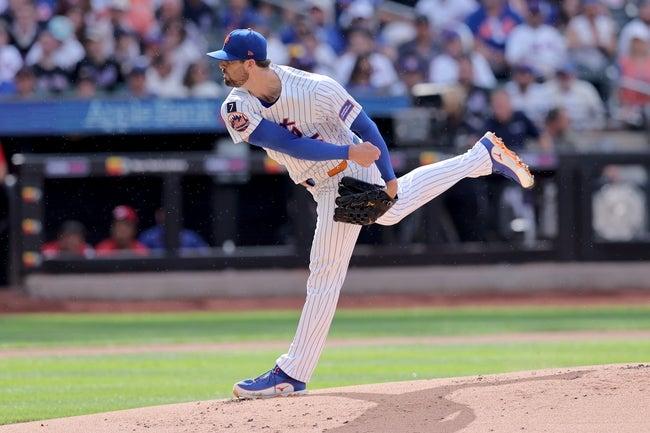
Alec Gamboa’s 1.16 ERA over just 31 innings is the kind of number that draws skepticism for a reason — a Cubs lineup carrying 218 home runs and a .768 OPS is exactly the test that exposes thin samples. Holmes brings 97 innings of proven contact suppression to Boston’s depleted roster, but a Cubs bullpen missing six arms on the IL makes the under anything but a stress-free hold.
Clay Holmes vs. Alec Gamboa: Chicago Cubs at Boston Red Sox Betting Preview
I’m leaning under here, and the pitching matchup is the reason — not the momentum story coming out of Chicago. The Cubs arrive at Fenway off a clincher — they punched their playoff ticket Thursday with a 2-1 win over Miami — and now travel to Boston for a Friday afternoon start where the pitching matchup, not the narrative, should drive the betting decision. Alec Gamboa takes the mound for the Red Sox with a surface-level ERA that looks almost too clean to trust over 31 innings, while Clay Holmes provides the Cubs a 97-inning workhorse who has been consistently solid all season. The market has priced this as a near coin-flip — Cubs -120, Red Sox -101 — and set the total at a lean 6.5.
The case for the under starts with the pitching matchup and is reinforced by what’s missing from both lineups. Boston is without Yoshida, Mead, White, and Seigler — four contributors on IL — leaving a lineup that posts a .718 OPS on the season, below the league average baseline. The Cubs carry a more potent offense, but they’ll face a Boston starter whose underlying suppression numbers are legitimate even if the sample is thin. The edge here isn’t picking a winner — it’s betting that both starters do their jobs long enough to keep the score under a modest threshold.
The total of 6.5 is already a low number. For the over to cash, you need both offenses to produce in a game where the numbers project only 9.8 combined runs — a figure that already clears 6.5 by less than three and a half runs with significant variance built in. That margin is thin enough that one starter having a clean outing tips the result under.
Game Info & Betting Lines
- Date/Time: Friday, September 25, 2026 | 1:05 PM ET
- Venue: Fenway Park | Park Factor: 1.08 (mildly hitter-friendly)
- Probable Starters: Clay Holmes (CHC) vs. Alec Gamboa (BOS)
- Moneyline: Cubs -120 / Red Sox -101
- Run Line: Boston Red Sox +1.5 (-182) / Chicago Cubs -1.5 (+150)
- Total: 6.5 (Over -105 / Under -115)
Why This Number Is Close
The market is balancing two legitimate forces here. On the over side: Fenway Park has a 1.08 run factor, the Cubs are one of the more dangerous offenses in the NL at .768 OPS with 218 home runs on the season, and Gamboa’s 1.16 ERA over 31 innings is the kind of small-sample number that has historically attracted regression. The books aren’t setting 6.5 arbitrarily — they see the Cubs’ lineup as a real scoring threat against a pitcher with limited track record.
But here’s the problem with the over case: Boston’s lineup is genuinely undermanned. With four regulars on IL, the Red Sox are running out a lineup that bottoms out quickly, and their season OPS of .718 is not an offense that easily generates crooked numbers against a competent starter. Holmes has allowed only 6 home runs over 97 innings — that’s an elite contact-suppression profile, not luck. His 3.25 ERA and 1.16 WHIP over a meaningful sample tell you what kind of innings he creates: soft contact, limited damage, no big innings.
Where I think the market is slightly elevated: the Cubs’ recent cold stretch (scoring just 2 runs in their clincher on Thursday, playing with Bregman in day-to-day status with facial fractures) and Boston’s thinned-out roster create a game shape that leans toward pitcher-dominant, not offense-driven. The 6.5 total may be reflecting full roster strength on both sides rather than the actual personnel available today.
What Separates the Pitching
The gap between these two starters is real, but it cuts in an interesting direction. Gamboa has the better surface numbers — 1.16 ERA, 1.06 WHIP over 31 IP — but Holmes has proven it over a much larger canvas. The honest read is that Gamboa’s numbers are impressive and may reflect genuine ability, but 31 innings is not enough to establish a firm baseline, and today could be the day the regression arrives.
What makes Gamboa interesting from a Statcast standpoint is his pitch mix. His four-seamer sits at 95.5 mph and generates an xwOBA of just .238 against, with a 41.5% usage rate that gives him a clear primary weapon. His slider at 88.5 mph (35.0% usage) holds hitters to a .309 xwOBA with a 20.4% whiff rate, and the sinker fills in at 20.6% usage with an xwOBA of .237. He’s a fastball/slider-dominant pitcher — and that combination, without elite swing-and-miss stuff (his four-seamer whiffs just 11.5% of the time), is not the ideal matchup profile against a Cubs lineup loaded with right-handed power. Crow-Armstrong carries a .502 xwOBA vs. right-handers and represents the clearest single threat to Gamboa’s approach.
Holmes operates differently. His sinker (48.0% usage, 93.2 mph) is the primary pitch, generating a 10.5% whiff rate but an xwOBA of .364 against — he’s not a swing-and-miss arm, he’s a weak-contact machine. His sweeper (18.6%, 81.4 mph) and changeup (14.5%, 88.1 mph) are the put-away weapons, with the changeup holding hitters to a .208 xwOBA and a 32.8% whiff rate. Against Boston’s lineup — Sogard (.327 xwOBA vs. right-handers), Monasterio (.285 xwOBA vs. right-handers), Durbin (.281 xwOBA vs. right-handers) — Holmes should generate exactly the soft, low-damage at-bats that keep scoring suppressed.
The net: Gamboa has the cleaner numbers but the smaller sample and a Cubs lineup with more power upside. Holmes has the track record and the profile to limit Boston’s depleted order inning after inning.
The Crow-Armstrong Problem
I’d be lying if I said this was a comfortable under. Pete Crow-Armstrong is the single most dangerous variable in this game, and he deserves his own section. The man just joined the 40-40 club and leads the majors with 45 home runs. His .502 xwOBA vs. right-handed pitching and .948 OPS on the season make him a legitimate one-swing game-changer against any arm, including one with Gamboa’s profile.
Here’s the math that keeps me honest: if Crow-Armstrong goes deep twice — which is improbable but not absurd given his .948 OPS and 45-homer pace — that’s two runs right there. Add in one crooked inning from either bullpen and the over cashes without either offense doing anything particularly impressive. That’s a real scenario, not a tail risk.
What keeps me on the under side of it: Gamboa’s four-seamer at 95.5 mph combined with his 35.0% slider usage gives him a genuine two-pitch attack to work with. And Crow-Armstrong’s 25.7% strikeout rate and 24.3% whiff rate mean he can be gotten out. The threat is real — I’m just not pricing it high enough to flip off the under entirely.
The Bullpen Problem Nobody’s Talking About
The Cubs’ relief corps situation is the most concrete reason to hesitate before hammering the under. Chicago is missing Porter Hodge, Ben Brown, Riley Martin, Hunter Harvey, Phil Maton, and Gavin Hollowell — six relievers on the IL simultaneously. That’s not a bullpen depth issue; that’s a structural problem. If Holmes exits after five or six innings, the Cubs are asking whatever’s left to protect a low-run lead against a Boston lineup that, even undermanned, has Willson Contreras (.452 xwOBA, .905 OPS) lurking.
This is the main friction point with the under, and I want to be transparent about it: you’re betting that the starters go deep enough to limit bullpen exposure, or that the Cubs’ patchwork relief corps holds anyway. That’s not a certainty. It’s a risk you’re accepting at -115.
A Bet I Looked At and Passed On
I spent time on the Cubs moneyline at -120 before landing here. Chicago’s offense is the better unit on paper, Holmes has the more established track record, and -120 isn’t punishing juice for a team that clinched its playoff spot yesterday. But -120 on a road team in a pitching-dominant spot at Fenway — where the park factor still tilts 1.08 — didn’t give me enough margin to justify it as a standalone play. If the Cubs win this game, it’s likely going to be 2-1 or 3-2, and backing the moneyline at -120 just to collect a modest return on a low-scoring win isn’t efficient. I want the number, not the team. That’s why I’m on the total instead.
The Pick
Two starters who suppress contact, one significantly depleted Boston lineup, a Cubs offense that just scored two runs in their most recent game, and a total priced at 6.5 where the under is available at -115. The bullpen situation is real risk, and Crow-Armstrong is a genuine wrecker — I’ve accounted for both. But the game shape points toward a pitcher-dominant afternoon where neither side does enough damage to clear this number with comfort.
Bet: Under 6.5 at -115, 2 units. Both starters are built to limit crooked innings, Boston’s lineup is too short-handed to carry the over on its own, and the Cubs’ recent offensive output doesn’t suggest they’re about to break out at Fenway. Back the pitching, take the number, collect at the end of seven.