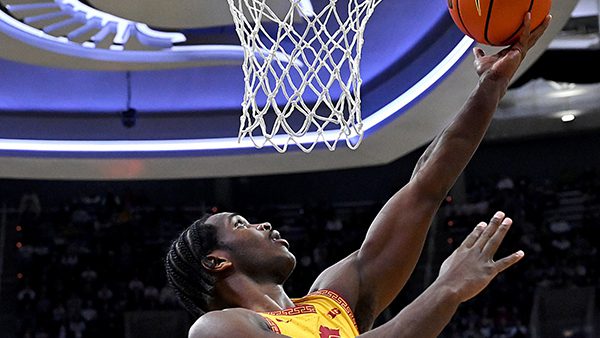
Indiana heads to the Galen Center as a 1.5-point underdog after an epic 2OT win over UCLA. Bash analyzes the efficiency metrics and USC’s lack of perimeter shooting to find the sharpest prediction for Tuesday night.
The Setup: Indiana at USC
Indiana’s getting a point-and-a-half on the road at USC, and honestly? This number feels about three points too low. The Hoosiers are 7-2 but sitting at #20 nationally in adjusted net rating, while USC’s 8-1 record masks some serious defensive flaws that show up when you dig into the collegebasketballdata.com efficiency metrics. Indiana’s adjusted defensive rating of 97.0 ranks 20th in the country—USC’s 105.8 ranks 137th. That’s not a small gap, folks. That’s the difference between a legitimate defensive outfit and a team that’s been outscoring its problems. The market’s giving you a chance to back the better team getting points in a late-night road spot, and I’m not about to overthink this one.
Game Info & Betting Lines
Matchup: Indiana at USC
Date: February 3, 2026
Time: 10:00 PM ET
Venue: Galen Center, Los Angeles, CA
DraftKings Spread: Indiana -1.5
Total: 152.5
Moneyline: USC -110, Indiana -110
Why This Number Makes Sense (or Doesn’t)
Let’s start with what the market got right: this should be close. Both teams play at similar tempos—Indiana at 70.7 possessions per game (#112) and USC at 69.6 (#143). Neither squad is trying to turn this into a track meet. The total at 152.5 makes sense when you project roughly 70 possessions with offensive ratings in the 115-120 range.
But here’s where I split from the oddsmakers: Indiana should be favored by more than a field goal on a neutral court, which means laying 1.5 on the road feels like a gift. The adjusted efficiency gap tells the story. Indiana’s adjusted net rating of 19.7 ranks 20th nationally. USC’s 13.1 ranks 52nd. That’s a seven-point swing in true quality, and while home court matters, the Galen Center isn’t exactly Cameron Indoor.
The offensive numbers look similar on the surface—Indiana’s adjusted offensive efficiency at 116.7 (#47) versus USC’s 118.9 (#28). But defensively? It’s not even close. Indiana’s 97.0 adjusted defensive rating is elite territory. USC’s 105.8 is mediocre at best, ranking outside the top 135 teams nationally. When one team can get stops and the other can’t, I’ll back the defense every time in a tight game.
Indiana Breakdown: The Analytical Edge
The Hoosiers do two things exceptionally well: they take care of the basketball and they defend. Indiana’s turnover rate is absurd—just 9.8 per game (#25) with a 0.1 turnover ratio (#17). That’s top-25 nationally in ball security, and it’s led by guards Tucker DeVries and Lamar Wilkerson who combine for 33.8 points per game without forcing the issue.
Defensively, Indiana holds opponents to 38.5% shooting from the field (#28) and generates a 93.9 defensive rating (#29). They’re not a shot-blocking team—just 3.1 blocks per game (#234)—but they don’t need to be. They force bad shots through positioning and pressure, which is sustainable against quality competition.
The assist numbers jump off the page too: 19.3 per game (#14). That’s elite ball movement, with Tayton Conerway running the show at 4.4 assists per game (#117). When you combine low turnovers with high assist rates and elite shooting percentages—56.9% effective field goal percentage (#44)—you get an offense that doesn’t beat itself.
USC Breakdown: The Counterpoint
USC’s got firepower, no question. Chad Baker-Mazara is a legitimate star at 20.9 points per game (#18), and Rodney Rice is right behind him at 20.3 (#28) while dishing 6.0 assists per game (#24). That’s a dynamic backcourt that can score in bunches, and USC’s 37.8% three-point shooting (#36) keeps defenses honest.
The Trojans also dominate the glass on the offensive end—31.7% offensive rebound rate (#156)—and they protect the rim with 6.6 blocks per game (#5). Jacob Cofie’s 7.0 rebounds per game (#175) provides interior toughness.
But here’s the problem: USC’s defense is leaky. They allow 78.2 points per game (#278) and opponents shoot 41.6% from the field (#106). That’s not going to cut it against an Indiana offense that ranks 44th in effective field goal percentage and rarely turns it over. USC’s recent form is concerning too—they’ve dropped three of their last five, including home losses to Northwestern and Purdue where the defensive issues were glaring.
The Matchup: Where This Gets Decided
This comes down to whether USC’s offensive firepower can overcome Indiana’s defensive discipline. I’m betting it can’t. Indiana’s perimeter defense should give Rice and Baker-Mazara fits—the Hoosiers hold opponents to 32.8% from three (#185), which isn’t elite but it’s solid. More importantly, Indiana doesn’t foul—76.1% opponent free throw rate (#49)—so they’re not going to bail out USC’s scorers with cheap trips to the line.
The tempo favors Indiana’s style. Both teams want to play in the high 60s to low 70s in possessions, which means fewer opportunities for USC to outscore their defensive problems. In a game with 70 possessions, every stop matters, and Indiana’s proven they can get those stops consistently.
Indiana’s also battle-tested. That 98-97 win at UCLA showed they can win tight games in hostile environments. The losses to Michigan and Iowa aren’t concerning—both are quality opponents, and Indiana’s kept every game close except the Iowa blowout. USC’s losses to Iowa, Northwestern, and Purdue all came at home or on neutral courts, which suggests they’re not as tough as their record indicates.
The X-factor is Indiana’s ball movement against USC’s shot-blocking. The Trojans rank 5th nationally in blocks, but Indiana’s 19.3 assists per game suggests they’ll find the open man rather than force contested shots into Cofie and Ausar. Smart offensive teams beat shot-blockers by making the extra pass, and Indiana’s got the personnel to do exactly that.
Bash’s Best Bet
Give me Indiana +1.5 all day. I’d play this to a pick’em and feel great about it. The Hoosiers are the better team by every meaningful efficiency metric, and they’re getting points in a late-night road spot because of USC’s inflated record. This is exactly the kind of line the market hangs out there when casual bettors see 8-1 versus 7-2 and assume the home team should be favored.
I also like the under 152.5 as a secondary play. Two teams playing at similar slow tempos with Indiana’s elite defense should keep this in the 145-148 range. USC needs to score in the 80s to cover their defensive issues, and I don’t see Indiana letting that happen. Lock in the Hoosiers plus the points and watch them grind out a 76-73 type win that never feels as close as the final score suggests.