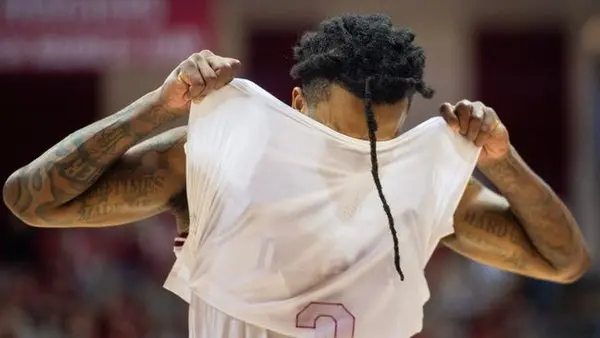
Purdue has dropped two straight, and star guard Braden Smith is nursing a banged-up ankle. Now, the Boilermakers head into a hostile Assembly Hall where the Hoosiers are hungry for a signature win. Is this a “trap game” for the Boilers, or is another Purdue prediction of dominance in order?
The Setup: Purdue at Indiana
Purdue’s getting 4.5 to 5.5 points on the road at Indiana, and if you’re scanning the records—8-1 versus 7-2—you’re probably wondering why the Boilermakers aren’t favored. Here’s the thing: this isn’t about wins and losses in a vacuum. When you dig into the collegebasketballdata.com efficiency numbers, Indiana’s defensive foundation at Assembly Hall makes this spread perfectly reasonable. Purdue ranks 7th nationally in adjusted offensive efficiency at 123.8, but they’re walking into a buzz saw. Indiana checks in at 20th in adjusted defensive efficiency at 97.0, and that’s not some fluky number built on cupcakes. The Hoosiers have allowed just 66.3 points per game—49th nationally—while holding opponents to 38.5% shooting, which ranks 28th in the country. This is a classic clash between elite offense and stout defense, and the market’s telling you Indiana’s home court and defensive identity are worth nearly a touchdown.
Game Info & Betting Lines
Matchup: Purdue at Indiana
Date: January 27, 2026
Time: 9:00 PM ET
Venue: Simon Skjodt Assembly Hall, Bloomington, IN
DraftKings: Purdue -4.5 | Total: 151.5
Bovada: Purdue -5.5 | Total: 152 | ML: IND +180, PUR -220
Why This Number Makes Sense (or Doesn’t)
The spread landed between 4.5 and 5.5, and when you run the adjusted efficiency numbers, you see exactly why. Purdue’s adjusted net rating sits at 23.4 (11th nationally), while Indiana checks in at 19.7 (20th). That four-point gap in adjusted efficiency translates almost perfectly to this spread when you factor in home court advantage, which typically runs around three points in college basketball. So you’re looking at roughly a seven-point differential on a neutral floor, subtract three for the road environment, and you land right around four or five. Makes sense on paper.
But here’s where it gets interesting: the total of 151.5 to 152 suggests the market expects a moderately paced, defensive-minded affair. Purdue plays at a 66.7 pace (248th nationally), while Indiana runs slightly faster at 70.7 (112th). Split the difference and you’re looking at roughly 68-69 possessions. With Purdue’s offensive rating at 127.6 and Indiana’s defensive rating at 93.9, something’s gotta give. The market is essentially betting that Indiana’s defense slows down Purdue’s elite ball movement—remember, Braden Smith ranks 2nd nationally in assists at 8.7 per game—and forces the Boilermakers into a halfcourt grind. That total feels a touch low given Purdue’s offensive firepower, but Indiana’s defensive metrics at home support the number.
Purdue Breakdown: The Analytical Edge
Purdue’s offensive profile is absolutely gorgeous. The Boilermakers rank 10th nationally in three-point shooting at 40.2%, and they’re 8th in assists per game at 20.2. That’s not isolation basketball—that’s a well-oiled machine with Smith orchestrating everything. When you combine that with Trey Kaufman-Renn’s presence inside—he’s 11th nationally in rebounds at 10.7 per game—you’ve got balance that’s tough to defend. The effective field goal percentage of 57.7% (33rd nationally) tells you they’re getting quality looks.
But here’s the concern: Purdue’s lost two of their last three, including an 88-82 home loss to Illinois and a 69-67 road defeat at UCLA. The defensive rating of 103.7 ranks just 144th nationally, and the adjusted defensive efficiency of 100.4 (42nd) isn’t terrible, but it’s not elite. They’re allowing 41.7% shooting from the floor (111th), and their steal rate is abysmal at 5.1 per game (329th). Against an Indiana team that’s balanced offensively with Tucker DeVries scoring 17.8 per game (99th nationally) and multiple weapons, Purdue’s defensive limitations could get exposed.
Indiana Breakdown: The Counterpoint
Indiana’s identity is built on defense, and the numbers back it up. That 97.0 adjusted defensive efficiency (20th nationally) is legit, and they’ve held opponents to just 32.8% from three (185th). The problem? Indiana’s lost four of their last five games, and three of those losses came by double digits. The 81-60 beatdown at Michigan State and the 74-57 home loss to Iowa reveal a troubling pattern: when Indiana faces elite competition, their offense disappears.
The Hoosiers rank 47th in adjusted offensive efficiency at 116.7, which is solid but not spectacular. They’re 14th in assists at 19.3 per game, and Tayton Conerway (4.4 assists, 117th nationally) provides secondary playmaking alongside DeVries. But here’s the red flag: Indiana ranks 343rd in offensive rebound percentage at just 25.7%. They’re not generating second-chance points, which means they need to be efficient in the halfcourt. Against a Purdue defense that allows 103.7 points per 100 possessions, Indiana should be able to score, but their recent offensive struggles—57 points against Iowa, 60 at Michigan State—raise serious questions about execution.
The Matchup: Where This Gets Decided
This game comes down to one simple question: can Indiana’s defense disrupt Purdue’s ball movement and force the Boilermakers into contested shots? Purdue turns the ball over just 10.1 times per game (43rd nationally), and their turnover ratio of 0.1 (38th) suggests they take care of the basketball. Indiana generates only 6.6 steals per game (240th), so they’re not creating chaos through pressure. Instead, they’ll need to execute in the halfcourt, stay disciplined on rotations, and make Purdue work for every basket.
The flip side is Purdue’s ability to exploit Indiana’s offensive rebound weakness. With Kaufman-Renn and Oscar Cluff (8.9 rebounds per game, 49th nationally) controlling the glass, Purdue should dominate possessions. If the Boilermakers can limit Indiana to one shot per possession, they’ll grind this game down to their preferred pace and control tempo.
The X-factor is three-point shooting. Purdue’s 40.2% from deep is elite, while Indiana allows 32.8%. If Fletcher Loyer (14.4 PPG) and Smith get clean looks from the perimeter, Purdue’s spacing will break down Indiana’s defense. But if Indiana can run shooters off the line and force Purdue inside, the Hoosiers’ length—Sam Alexis and Reed Bailey provide size on the wings—could make this a dogfight.
Bash’s Best Bet
I’m laying the points with Purdue -4.5 to -5.5. Yeah, Indiana’s defense is legit, and Assembly Hall is a tough environment. But this Indiana team has lost four of five, and three of those losses weren’t competitive. Purdue’s adjusted offensive efficiency (7th nationally) is too overwhelming, and Braden Smith’s ability to orchestrate—2nd in the country in assists—gives the Boilermakers too many weapons. Indiana’s offensive rebound percentage (343rd) means they’re not generating extra possessions, and against a Purdue team that controls tempo at 66.7 pace, the Hoosiers will struggle to create enough scoring opportunities.
The total of 151.5 to 152 is tempting to go under given the pace and Indiana’s defensive metrics, but I’m not confident enough in Indiana’s offense to trust that number. Give me Purdue to win by six or seven on the road. The Boilermakers are the better team, and the efficiency gap is real.