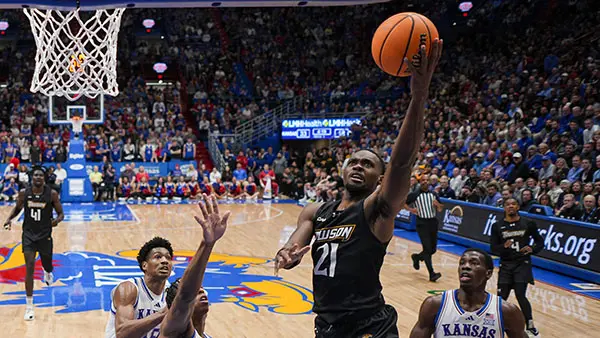
Drexel has been a covering machine at home with a 9-4 record, but they are walking into a buzzsaw against a Towson team that has historically solved the Drexel puzzle. Locking in the Tigers as our ATS pick is a play on head-to-head dominance and a stylistic mismatch that typically leaves the Dragons gasping for air by the under-four timeout.
The Setup: Towson at Drexel
Towson’s laying 2 to 2.5 points on the road at Drexel on Sunday afternoon, and if you’re scratching your head wondering why a road favorite exists in a CAA slugfest between two .500 teams, you’re not alone. But when you dig into the collegebasketballdata.com efficiency numbers, this line starts making sense. The Tigers check in at #173 in adjusted net rating while Drexel sits at #219—a gap that’s bigger than these mirror-image records suggest. More importantly, Towson owns a legitimate defensive foundation ranked 83rd nationally in adjusted defensive efficiency, while Drexel’s defense sits 142nd. That’s not a massive chasm, but it’s enough to flip a coin game into a small road favorite situation when you factor in Towson’s 7-2 dominance in this head-to-head series. The market’s telling us this isn’t the home court advantage game it appears to be on paper.
Game Info & Betting Lines
Game Time: Sunday, February 22, 2026 at 2:00 PM ET
Location: Daskalakis Athletic Center, Philadelphia, PA
Spread: Towson -2 to -2.5
Total: 131.5 to 132.5
Moneyline: Towson -130 to -135, Drexel +110 to +115
Why This Number Makes Sense (or Doesn’t)
The spread sits at Towson -2 to -2.5, and the efficiency model actually projects this tighter than the market—Towson by just 0.4 points after factoring in home court and conference context. That’s essentially a pick’em in model terms, which means the market is giving Towson slightly more credit than the raw numbers suggest they deserve. Here’s why: Towson’s adjusted offensive efficiency ranks 267th nationally while posting a 103.9 offensive rating. Drexel checks in even worse at 277th with a 103.3 rating. Neither team can score consistently, which explains why both offenses rank in the bottom third nationally. The pace projection blends to 65.7 possessions—slow but not glacial for modern college basketball. When you’ve got two teams ranked 244th and 229th in tempo, you’re not getting transition fireworks. The total sitting at 131.5 to 132.5 feels light compared to the model’s 136.1 projection, creating a 4.6-point gap that’s worth exploring. These teams combined for 137 points in their first meeting this season when Towson escaped with a 59-58 win, and the historical over/under split in this series sits at 4-5. This number screams grind-it-out CAA basketball, but the shooting percentages suggest more scoring potential than the market’s pricing in.
Towson Breakdown: The Analytical Edge
The Tigers bring one elite skill to Philadelphia: offensive rebounding. Their 34.9% offensive rebound rate ranks 30th nationally, giving them a massive 4.2-percentage-point edge over Drexel in the second-chance game. Tyler Tejada leads the way at 18.8 points per game while Dylan Williamson adds 15.6, but the real story is how Towson generates offense when the initial possession breaks down. They’re pulling down 13.78 offensive boards per game, and against a Drexel team that grabs just 10.79, those extra possessions will add up. The defensive foundation checks out too—opponents shoot just 42.3% from the field and 31.4% from three against Towson’s 60th-ranked defensive unit. The problem? Towson can’t shoot. They’re 318th in field goal percentage at 42.4%, 355th from three at 29.4%, and 346th in true shooting percentage at 51.2%. Jack Doumbia Jr. provides some interior presence at 12.1 points and 5.4 boards, but this offense lives and dies on getting second chances because the first ones rarely go in cleanly.
Drexel Breakdown: The Counterpoint
Drexel’s 9-4 ATS record at home tells you they know how to defend their building, and that 14-11-2 overall ATS mark suggests they’re consistently undervalued by the market. The Dragons shoot it better than Towson—44.4% from the field and 35.0% from three—which creates a 3.7-percentage-point effective field goal advantage. Shane Blakeney leads a balanced attack at 13.2 points, with four other players averaging between 8.4 and 9.8 points. That distribution matters in close games when you need someone to step up. The assist-to-turnover ratio favors Drexel at 1.08 compared to Towson’s 0.95, meaning the Dragons take better care of the ball and create better shots for each other. The defensive numbers check out at 107.4 adjusted defensive efficiency, but that’s 142nd nationally—not good enough to consistently stop teams in this league. The real concern is the rebounding deficit. Drexel grabs just 35.1 boards per game compared to Towson’s 39.5, and that 4.2-percentage-point offensive rebounding gap could be the difference in a game projected for 66 possessions.
The Matchup: Where This Gets Decided
This game comes down to whether Drexel’s superior shooting can overcome Towson’s rebounding dominance and defensive edge. The model projects 65.7 possessions, which means every extra possession Towson generates off the offensive glass carries significant weight. If Towson pulls down even five or six offensive rebounds, that’s potentially 10-12 extra points in a game where the spread is 2.5 points. Drexel’s 57.14% shooting performance in their last game against Northeastern shows they’re capable of getting hot, but they’ve also shot under 50% in four of their last five. The three-point battle matters here—Drexel’s hitting 35% compared to Towson’s dreadful 29.4%, but Towson’s perimeter defense ranks 55th nationally in opponent three-point percentage at 31.4%. If Drexel goes cold from deep, they don’t have the offensive rebounding to generate second chances. The pace favors neither team dramatically, but Towson’s ability to control the defensive glass while crashing the offensive boards could turn this into a war of attrition that favors the more physical team.
Bash’s Best Bet
I’m taking Towson -2.5 and playing the over 131.5. The spread feels tight, but Towson’s 7-2 dominance in this series isn’t a fluke—they match up well against Drexel’s weaknesses. The Tigers’ offensive rebounding edge is real and sustainable, and in a 66-possession game, those extra chances will matter more than Drexel’s slightly better shooting percentages. Towson’s defense ranks 83rd in adjusted efficiency compared to Drexel’s 142nd, and that 60-point gap in national ranking is significant in a conference game between evenly-matched teams. On the total, the model projects 136.1 points while the market sits at 131.5—that 4.6-point difference is too large to ignore. Both teams have gone over in recent games when the shooting’s been decent, and Drexel’s 70-61 win at Northeastern plus Towson’s 82-50 demolition of Hampton show these teams can score when the matchup’s right. Give me the physical road favorite and the over in a game that should produce more offense than this number suggests.