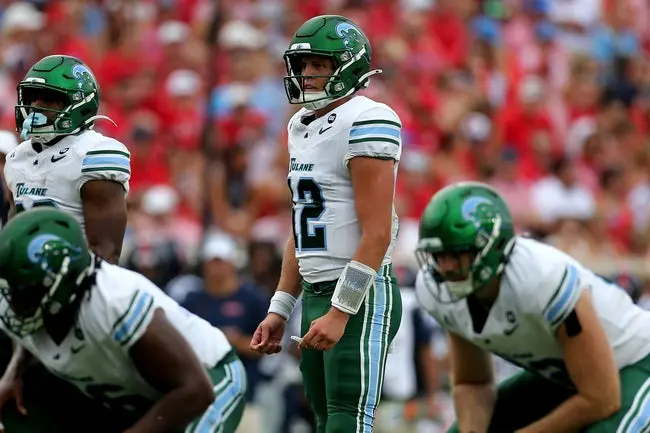
Tulane at Ole Miss: CFP First Round Rematch Analysis
Market Read
The market isn’t overthinking this rematch — and that’s telling. Ole Miss opened -17 and now sits at -17.5, essentially parked on a key number with very little resistance. That tells you the books respect Tulane more than the September score suggests, but they’re also not willing to come off Ole Miss as the clear power side.
The total slipping from 57 to 56 is the quieter move, and arguably the more important one. That’s sharp Under money in a spot where the spread is large but the total isn’t. That combination almost always points toward a slower, more controlled game script.
Ole Miss is being asked to win by nearly three touchdowns against a Tulane team that has quietly been one of the most reliable road covers in the country. That’s a tough ask in December, especially if weather plays any role at all. The Rebels need sustained dominance — not just talent — to justify this number.
Game Dashboard
Matchup: #11 Tulane (11-2) at #6 Ole Miss (11-1)
Date: Saturday, December 20th, 3:30 PM ET
Venue: Vaught-Hemingway Stadium
Consensus Spread: Ole Miss -17.5 (-110)
Consensus Total: 56 (O -110 / U -110)
Moneyline: Ole Miss -850, Tulane +550
Tulane Green Wave Profile
Tulane comes in averaging 29.1 points per game while allowing 22.6, good for a +6.5 differential. That’s been enough to fuel an 11–2 season, but the efficiency tells a more nuanced story. The Green Wave rank 32nd in total offense and 26th in yards per play — solid, not explosive.
Where Tulane separates is possession control. A +0.8 turnover margin per game ranks 13th nationally, and that has flipped more than a few close games. Defensively, they allow just 5.3 yards per play and are especially strong against the run, giving up only 3.5 yards per carry. That part of the profile is real.
The concern is on the back end. Tulane allows 7.5 yards per attempt and a 66.7% completion rate through the air, which is exactly where Ole Miss wants to attack. Still, recent form is encouraging — five straight wins and four Unders in their last five games suggest a team tightening up defensively at the right time.
And then there’s the road angle. Tulane is 18-7 ATS over their last 25 road games. That’s not noise — that’s a program that travels well and doesn’t get rattled by environment.
Ole Miss Rebels Profile
Ole Miss brings the offensive ceiling. The Rebels average 36.2 points per game and nearly 490 yards, ranking top-three nationally in total offense. Trinidad Chambliss has unlocked another level in the passing game, and 9.1 yards per attempt tells you just how explosive this offense can be.
Defensively, Ole Miss is fine — but not dominant. Allowing 21.9 points and 5.3 yards per play puts them squarely in the middle tier. The run defense is the soft spot, surrendering 4.7 yards per carry, which ranks outside the top 90. That’s the opening Tulane needs to stay on schedule.
The Rebels have won five straight, but context matters. Three of those wins came by single digits, and while they’ve covered more often than not, asking them to repeat September’s margin is a different challenge entirely. Their 6-6 O/U record also suggests games land close to expectation rather than running away.
Head-to-Head Comparison Matrix
| Category | Tulane | Ole Miss | Edge |
|---|---|---|---|
| Run Offense | 4.6 YPC | 4.7 YPC | Push |
| Run Defense | 3.5 YPC allowed | 4.7 YPC allowed | Tulane |
| Pass Offense | 8.1 YPA | 9.1 YPA | Ole Miss |
| Pass Defense | 7.5 YPA allowed | 6.3 YPA allowed | Ole Miss |
| Turnover Margin | +0.8 | -0.1 | Tulane |
Primary mismatch: Ole Miss’ passing game against Tulane’s pass defense. That’s the lever that can break this open. The counter is Tulane’s ability to defend the run and create turnovers.
Matchup Breakdown
This game comes down to discipline and explosives. Tulane needs to keep the top on the defense and force Ole Miss to drive the length of the field. Their run defense gives them a chance to do that, but the secondary is still the weak link.
If Tulane can force third-and-long situations, their turnover profile comes into play. Ole Miss has shown a willingness to stay aggressive on fourth down, and while that works most of the time, it also introduces volatility against a defense that thrives on mistakes.
The September meeting swung on explosive plays and protection breakdowns. Tulane’s pass rush has improved since then, and their sack rate advantage over what they allow suggests better timing disruption. That alone changes the texture of this game.
Trends & Patterns
Tulane enters on a clear Under trend, while Ole Miss has also tightened defensively of late. The Green Wave’s recent ATS numbers are average, but the long-term road profile stands out.
Ole Miss has covered more often than not, though not overwhelmingly so at home. Totals trends on both sides point toward adjustment rather than fireworks. This looks more like a December playoff game than a September non-conference mismatch.
Advanced Betting Metrics & Projection
Efficiency suggests a game far more competitive than the earlier blowout. Tulane’s ability to protect the football and generate takeaways introduces variance that wasn’t present in Week 4, while Ole Miss’ run-defense issues keep the door open.
Possession count projects into the low 60s, which naturally favors the Under. Ole Miss needs early separation to avoid Tulane bleeding clock in the second half.
Rich’s Recommendation
Primary Play: Under 56 (playable to 55)
The matchup supports it. Tulane’s run defense and improved pass rush push Ole Miss into longer drives, while the Rebels’ own defensive issues limit explosive counterpunches. Recent Under trends on both sides reflect real adjustment.
December conditions in Oxford only reinforce that angle. The September result was misleading — Tulane was undermanned up front, and their defensive playmaking wasn’t where it is now.
Risk Note: Short fields change everything. If Ole Miss manufactures multiple early turnovers, the script flips fast. But Tulane’s ball security has been a season-long strength.
Bottom Line: Trust defensive progression and game control over a September score that no longer reflects the matchup.