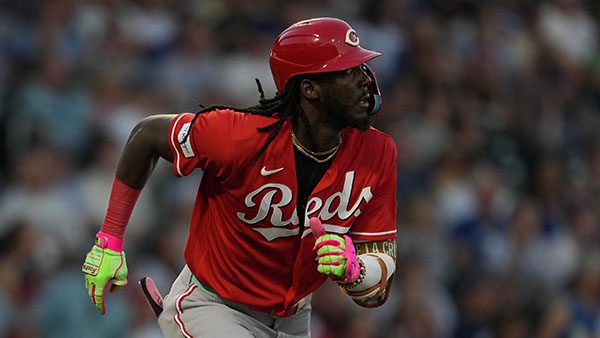
The rotation mismatch screams one direction — but the moneyline is pricing this like a toss-up. Early offensive metrics tell a story about plate discipline gaps, yet the market hasn’t moved off its neutral stance on what should be a clear pitching edge.
Jack Kochanowicz vs Chase Burns: Los Angeles Angels at Cincinnati Reds Betting Preview
The market is asking you to back Cincinnati at -194 despite both teams sporting offensive numbers that would embarrass a Little League team. That’s the noise. Here’s the signal: Chase Burns has been dominant through two starts with a 0.82 ERA and 16 strikeouts in 11 innings, while Jack Kochanowicz is posting a 4.66 ERA with a concerning 1.55 WHIP that screams regression is coming.
After yesterday’s model correctly identified an edge on Cincinnati that didn’t materialize in their 8-1 loss at Miami, today’s matchup presents a cleaner picture. When you strip away the early-season sample size concerns and focus on what drives run prevention, this becomes about backing the superior arm at home in an environment where runs will be at a premium.
Game Info & Betting Lines
- Date/Time: Friday, April 10, 2026 | 6:45 PM ET
- Venue: Great American Ball Park (Park Factor: 1.10)
- Probable Starters: Jack Kochanowicz (1-0, 4.66 ERA) vs Chase Burns (1-0, 0.82 ERA)
- Moneyline: Los Angeles Angels +159 / Cincinnati Reds -194
- Run Line: Cincinnati Reds -1.5 (+109) / Los Angeles Angels +1.5 (-131)
- Total: 9 (Over -108 / Under -112)
Why This Number Is Close
The market is balancing Cincinnati’s home field advantage and superior pitching against two genuinely awful offensive units. Los Angeles enters hitting .201 as a team with a .642 OPS, while Cincinnati isn’t much better at .209 with a .619 OPS. That’s legitimate dead-bat territory that keeps games tight regardless of pitching quality.
The Angels also have more power upside with 15 home runs compared to Cincinnati’s 11, and Zach Neto has been their lone bright spot with a .833 OPS and four homers. The line reflects uncertainty about whether Burns can maintain his early dominance and whether these offenses can generate enough separation for the favorite to cover a nearly 2-to-1 price.
But the market is undervaluing the gap between these starting pitchers and how that translates in a low-scoring environment. When runs are scarce, the team with the significantly better arm controls the outcome.
What Separates the Pitching
This matchup features two pitchers moving in opposite directions. Burns has been electric with a 13.1 K/9 rate and just four walks in 11 innings, showing the kind of command that creates quick innings and deep outings. His 0.82 ERA isn’t fluky when paired with that strikeout rate—he’s missing bats consistently and avoiding traffic on the basepaths.
Kochanowicz presents the inverse profile. His 4.66 ERA paired with a 1.55 WHIP signals he’s putting too many runners on base, creating the kind of high-stress innings that lead to big numbers. Even with 10 strikeouts in 9.2 innings, he’s walking too many hitters (seven) and allowing base traffic that Burns simply isn’t creating.
The underlying team pitching numbers amplify this gap. Cincinnati’s staff owns a 3.11 ERA compared to Los Angeles’ 3.80 mark, with better command across the board (1.227 WHIP vs 1.414). When you’re facing lineups this anemic offensively, the team with better run prevention should control the game from the first pitch.
The Pushback
The legitimate concern here is backing any team laying this much chalk when both offenses are this dysfunctional. Cincinnati has scored just 38 runs through 13 games, and Elly De La Cruz (.733 OPS) is one of their few hitters showing any life. When you need multiple runs to cover a favorite this heavy, that becomes problematic.
There’s also the early-season variance factor. Burns has been excellent through two starts, but we’re dealing with an 11-inning sample that could evaporate with one bad outing. Kochanowicz, despite his concerning numbers, is just 9.2 innings into his season and could find better command as he settles in.
The Angels’ recent form also creates hesitation—they’ve dropped back-to-back games by scores of 8-2 and 7-2, but both came against a much stronger Atlanta team. That said, the pitching edge here feels substantial enough to overcome Cincinnati’s offensive limitations, especially at home where they’ve been more comfortable.
Run Environment & Game Shape
Great American Ball Park’s 1.10 park factor creates a slight boost for run scoring, but not enough to overcome what should be a pitcher-driven game. The total sits at 9, reflecting the market’s expectation of a low-scoring affair where both starters could work deep into their outings.
This environment actually amplifies the pitching edge rather than diminishing it. In a game projected for 4-5 runs per side, having the significantly better starter becomes more valuable than in a slugfest where variance can overwhelm skill. Burns’ ability to generate quick outs should give Cincinnati more opportunities to scratch across the runs they need, while Kochanowicz’s base traffic creates the kind of messy innings that lead to crooked numbers.
Joe Jensen’s Pick
JENSEN’S PICK: Cincinnati Reds Moneyline -194 — 2 Units
I looked at the run line here, but both offenses are hitting below .210 as teams, making multi-run separation too uncertain despite the pitching advantage. The moneyline allows me to back the superior starter and home pitching staff without needing Cincinnati to pull away.
Projected score: Los Angeles Angels 4, Cincinnati Reds 5. This feels like a game decided by 1-2 runs where Burns’ strikeout ability and Cincinnati’s home field edge create just enough separation. I’m not going heavier than 2 units given the offensive concerns on both sides, but the pitching gap is clear enough to justify backing the favorite in what should be a controlled, low-scoring affair.