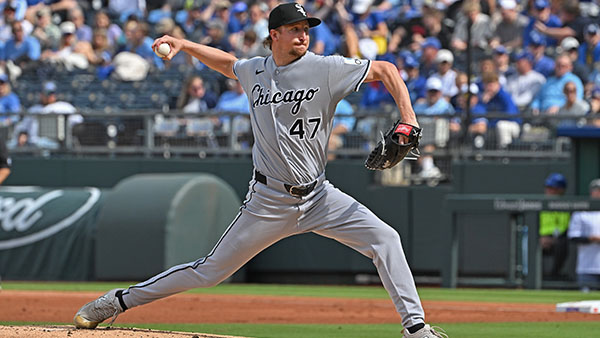
Fedde’s 3.42 ERA sits nearly three runs better than Kikuchi’s 6.21 mark — yet the market still favors the Angels despite their brutal 1-9 slide. The price is banking on talent over current form.
Yusei Kikuchi vs Erick Fedde: Los Angeles Angels at Chicago White Sox Betting Preview
The market is pricing this matchup close to even money, with the Angels as slight road favorites at -120 despite their recent collapse. Chicago sits at +102 at home, which creates an interesting dynamic when you consider the Angels have managed just one win in their last 10 games while the White Sox have gone 6-4 over that same stretch.
The core question here is whether Erick Fedde’s superior control and recent form can exploit Yusei Kikuchi’s early-season struggles. Kikuchi has been getting hit hard with a 6.21 ERA and 1.586 WHIP, while Fedde has posted a respectable 3.42 ERA and much tighter 1.139 WHIP despite an 0-3 record. The Angels’ talent edge with players like Mike Trout keeps this line honest, but their systematic struggles suggest the market hasn’t fully adjusted to their current state.
Game Info & Betting Lines
- Date/Time: Wednesday, April 29, 1:10 PM ET
- Venue: Guaranteed Rate Field (Park Factor: 0.98)
- Probable Starters: Yusei Kikuchi (0-3, 6.21 ERA) vs Erick Fedde (0-3, 3.42 ERA)
- Moneyline: Los Angeles Angels -120 / Chicago White Sox +102
- Run Line: Chicago White Sox +1.5 (-162) / Los Angeles Angels -1.5 (+134)
- Total: 8.5 (Over -114 / Under -106)
Why This Number Is Close
The market is balancing several conflicting signals that keep this line tight. The Angels still possess superior individual talent across their lineup, with Trout’s .976 OPS and Jorge Soler’s power threat providing legitimate run-scoring upside. Their season-long .736 OPS trumps Chicago’s .700 mark, and that talent gap typically translates to road favoritism.
However, the recent form tells a different story. Los Angeles enters with a brutal 1-9 record over their last 10 games and a -10 run differential that suggests their struggles aren’t just bad luck. The White Sox, meanwhile, have found some offensive rhythm recently, scoring 8 runs Monday and 5 runs Tuesday in their series wins. The concern is whether Chicago’s recent surge represents genuine improvement or just a temporary hot streak against inferior pitching. That uncertainty keeps the Angels favored despite their obvious struggles.
What Separates the Pitching
The mound matchup heavily favors the home side, with Fedde holding significant advantages in control and consistency. While both pitchers enter winless at 0-3, Fedde’s 3.42 ERA sits nearly three runs lower than Kikuchi’s 6.21 mark. More importantly, Fedde’s 1.139 WHIP suggests he’s been getting better results than his record indicates, while Kikuchi’s 1.586 WHIP confirms he’s been hit hard consistently.
The Statcast data reveals why Kikuchi has struggled. His arsenal relies heavily on a 95.5 mph four-seam fastball (32% usage) that hitters are finding with a .317 xwOBA against. His split-finger and slider show promise with solid whiff rates (27.4% and 26.6%), but his cutter has been absolutely crushed to a .467 xwOBA. Fedde presents a completely different profile, featuring a sweeper as his primary weapon (36.8% usage) that’s generated a microscopic .236 xwOBA against with a 27.2% whiff rate. His sinker-cutter combination provides effective contact management, though neither pitch dominates.
The control differential matters most in this environment. Kikuchi has walked 13 batters in 29 innings (4.0 BB/9), while Fedde’s 11 walks in 26.1 innings (3.8 BB/9) represents better command despite similar rates. Against a White Sox lineup that’s shown recent patience, Kikuchi’s tendency to fall behind in counts could create extended innings.
Run Line Analysis: Why -162 Doesn’t Work
I initially considered the White Sox +1.5 at -162, but that juice is too steep for this type of matchup. The run line requires Chicago to either win outright or lose by just one run, but both scenarios feel less likely than a closer straight-up result. The Angels’ offensive limitations during their recent slide suggest they’re more likely to lose 4-2 or 5-3 than get blown out, which means we’d likely push on many Chicago wins.
More concerning is what happens if the Angels do manage to score. Despite Kikuchi’s struggles, Trout’s .574 xwOBA and the Angels’ .736 OPS indicate they can still generate multi-run innings against average pitching. If Los Angeles plates 5-6 runs, we need Chicago to keep pace within one, which asks a lot from a .700 OPS offense. The White Sox have scored well recently, but their 38 home runs in 30 games and .225 batting average suggest their recent offensive surge might not be sustainable against quality opponents.
The -162 price essentially requires a 61.8% win probability for profitability, but I’m not confident enough in Chicago’s offensive consistency to lay that much juice on a team that could easily lose 6-3 or 7-4. The straight bet at +102 offers better value for what should be a competitive game.
The Pushback: Real Concerns About Backing Chicago
I’m genuinely wrestling with whether to back the White Sox here, and it’s not just obligatory counterargument thinking. The offensive numbers are concerning – Chicago’s .225 batting average ranks among the worst in baseball, and their 282 strikeouts in just 30 games suggest they’ll struggle against any pitcher with decent stuff. Kikuchi might be having problems, but his 9.93 K/9 rate indicates he can still generate swings and misses when needed.
The sample size issue also bothers me. The White Sox are 6-4 in their last 10, but that includes series against Washington and the struggling Angels. Have they actually improved as a team, or are they just beating up on inferior competition? Their .700 OPS still ranks in the bottom third of baseball, and Munetaka Murakami carrying much of their recent offensive load feels unsustainable. When he cools off – which power hitters always do – where does Chicago’s production come from?
Then there’s Trout. Even with the Angels’ team struggles, he’s still producing at an elite level with a .976 OPS and .574 xwOBA. Elite individual talent has a way of overcoming team-wide issues, especially in baseball where one swing can change everything. If Trout gets hot for even one game, the pitching advantage becomes irrelevant. The Angels might be struggling systematically, but they’re not devoid of talent – guys like Soler (.801 OPS) and Zach Neto (.788 OPS) can still contribute to multi-run innings.
That said, form matters in baseball, and the Angels’ current state is legitimately concerning. Their 1-9 stretch isn’t just bad luck – they’ve been outscored badly and haven’t shown the ability to string together competitive at-bats. When you combine that with a clear pitching mismatch and plus money at home, I’m leaning toward trusting the recent trends over the talent differential.
Run Environment & Game Shape
Guaranteed Rate Field’s neutral park factor (0.98) sets up a pitcher-friendly environment that should keep this game in the 7-9 run range. Both bullpens carry high WHIPs (Angels 1.445, White Sox 1.448) that suggest late-game vulnerabilities, but the starting pitching matchup points toward Fedde providing more length and stability.
The market total of 8.5 feels about right given both teams’ offensive limitations and the park environment. I’m more interested in the side than the total, as the run environment should create the type of close game where recent form and starting pitching matter most.
My Pick: Chicago White Sox +102 (1 Unit)
I’m backing the White Sox moneyline at +102 for one unit. This comes down to form over talent, with Chicago’s recent surge coinciding with the Angels’ complete collapse. Fedde’s significant advantage on the mound should allow the White Sox to stay close, and their recent offensive rhythm gives them enough scoring potential to capitalize on Kikuchi’s struggles.
The plus money feels like an overcorrection by the market, which seems to be pricing the Angels’ talent rather than their current performance. Baseball is ultimately about execution, and right now Chicago is executing while Los Angeles isn’t. In a close game, I’ll take the team playing better baseball and getting the better starting pitching performance, especially when I’m getting plus money to do it.