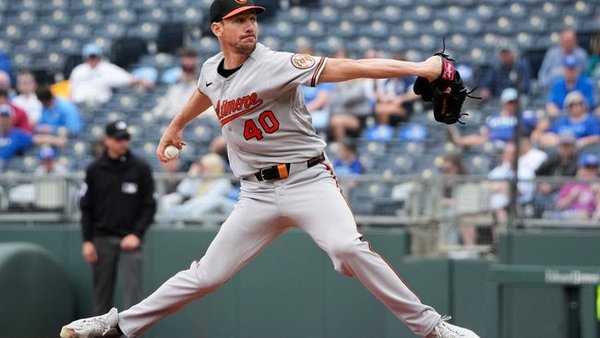
Peter Lambert’s strikeout dominance collides with Chris Bassitt’s 2.06 WHIP in a pitching mismatch the market has not fully recognized. The even money price on Houston treats this like a coin flip when the starter profiles suggest otherwise.
Peter Lambert vs Chris Bassitt: Houston Astros at Baltimore Orioles Betting Preview
The market is pricing this game like a coin flip, but the pitching matchup tells a completely different story. Peter Lambert brings a 13.09 K/9 rate and pristine control to Camden Yards against Chris Bassitt, whose 2.06 WHIP and command issues have created real problems through his first 21.1 innings. Houston getting +100 on the moneyline feels like the market is stuck on narrative — the Astros’ poor record, Baltimore’s home field — rather than focusing on today’s most important factor.
This is about identifying value where the market has overcorrected. Houston sits at 11-19, but that record doesn’t change the fact that Lambert’s strikeout ability and Bassitt’s walk rate create a meaningful gap the price doesn’t reflect.
Game Info & Betting Lines
- Date/Time: Thursday, April 30, 2026 | 12:35 PM ET
- Venue: Oriole Park at Camden Yards (Park Factor: 1.01)
- Probable Starters: Peter Lambert (HOU) vs Chris Bassitt (BAL)
- Moneyline: Houston Astros +100 / Baltimore Orioles -118
- Run Line: Houston Astros -1.5 (+162) / Baltimore Orioles +1.5 (-196)
- Total: 9.0 (Over -105 / Under -115)
Why This Number Is Close
The market is balancing legitimate concerns about Houston’s season-long struggles against Baltimore’s home field edge and recent success. The Orioles just beat these same Astros 5-3 two days ago, and Houston’s 3-7 record in their last 10 games creates an obvious narrative for the betting public. Baltimore’s superior record (14-15 vs 11-19) and the comfort of playing at Camden Yards provides the foundation for their moneyline favoritism.
But I think the market is putting too much weight on season-long records and not enough on the stark contrast between these two starters. The even money price on Houston suggests the market sees this as essentially a pick-em game, which undervalues the pitching edge Lambert brings. When you have a starter with a 13+ K/9 rate facing a pitcher walking nearly six batters per nine innings, that gap should be reflected more aggressively in the price.
What Separates the Pitching
The difference between these starters isn’t subtle — it’s a canyon. Lambert has struck out 16 batters in 11 innings while walking just four, creating a strikeout-to-walk ratio that gives him complete control of at-bats. His sinker sits at 91.7 mph with a 14.8% whiff rate, while his sweeper generates a devastating 29.6% whiff rate at 82.5 mph. Most importantly, he’s allowed zero home runs this season, showing an ability to limit hard contact.
Bassitt presents the opposite profile. His 4.22 K/9 rate is concerning enough, but the 13 walks in 21.1 innings tell the real story — he’s lost his command. His sinker, which he throws 38.7% of the time, produces just a 9.2% whiff rate and a troubling 0.441 xwOBA against. When your primary pitch isn’t missing bats or preventing hard contact, you’re relying on defense and luck. He’s already given up three home runs, and against a Houston lineup with a .784 OPS, those command lapses become expensive.
The run creation environments these pitchers produce couldn’t be more different. Lambert creates clean innings with strikeouts and minimal baserunners, while Bassitt’s walks put constant pressure on his defense and create scoring opportunities even when the Astros aren’t hitting well.
The Pushback
Here’s what makes me pause: Houston has been genuinely bad this season, and their extensive injury list creates real depth concerns. They’re missing key players like Jeremy Pena, Hunter Brown, and Cristian Javier, which affects both their lineup quality and pitching depth. This isn’t just a slump — it’s a team dealing with significant roster holes.
Baltimore also just demonstrated they can score against Houston, putting up five runs in their recent meeting. The Orioles’ offensive improvements, particularly from Adley Rutschman (.345 average, 1.018 OPS) and Taylor Ward (.312 average), show they’re capable of capitalizing on opportunities. If Lambert’s control wavers even slightly, this Baltimore lineup has shown it can make teams pay.
The other concern is bullpen uncertainty. Houston’s bullpen carries a 5.96 ERA, which means Lambert needs to provide length to avoid exposing a shaky relief corps. But that’s exactly why his strikeout ability becomes more valuable — he can work deeper into games than Bassitt, whose walk rate forces higher pitch counts and earlier exits.
Run Environment & Game Shape
Camden Yards’ neutral park factor (1.01) suggests a standard run environment, and the market total of 9.0 expects a moderate-scoring game. This environment actually amplifies Lambert’s edge — in a game where both teams might struggle to score consistently, having the pitcher who controls the strike zone and limits free baserunners becomes crucial.
The projected scoring range sits right around that total, meaning we’re likely looking at a game decided by 1-2 runs. In those tight margins, the difference between a starter who gives you six innings with minimal walks and one who puts constant traffic on the bases becomes the deciding factor.
Joe Jensen’s Pick
JENSEN’S PICK: Houston Astros Moneyline +100 — 2 Units
As fot the norm, I considred the run line here, but Houston’s bullpen questions and Baltimore’s ability to score late make laying 1.5 runs too risky in what should be a close game. The moneyline captures the pitching edge without requiring multi-run separation that these Astros might not be able to maintain.
This comes down to a stark talent differential between starters that the market hasn’t properly priced. Lambert’s strikeout ability gives him multiple ways to get out of trouble, while Bassitt’s walk rate creates problems he can’t solve. Getting even money on the clearly superior pitcher feels like the market is stuck on win-loss records rather than focusing on today’s matchup. I’m confident enough in the pitching gap to back Houston, but not enough to chase the higher payout on the run line given the bullpen concerns.