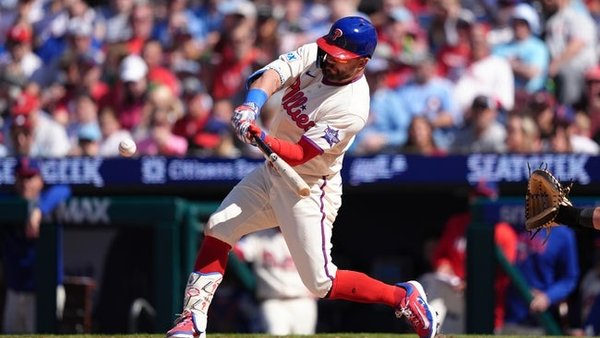
Philadelphia’s -16 run differential contradicts their home favorite status — the market is pricing yesterday’s offensive explosion rather than these teams’ actual pitching profiles.
Riley Martin vs Aaron Nola: Chicago Cubs at Philadelphia Phillies Betting Preview
The market is giving Philadelphia home favorite status after yesterday’s offensive eruption, but that 13-7 slugfest masks some fundamental pitching advantages that favor the visiting Cubs. Aaron Nola brings experience and a 3.63 ERA through three starts, but his underlying metrics suggest vulnerability — particularly a 1.096 WHIP and three home runs allowed in just 17.1 innings. Meanwhile, Riley Martin represents complete unknown upside for Chicago, and honestly, that’s what keeps me awake at night about this bet.
The Cubs enter with superior team pitching metrics (3.43 ERA vs 4.16) despite similar offensive production, while Philadelphia sits at -16 run differential compared to Chicago’s +10. Yesterday’s offensive showcase aside, this looks like a market overreaction to small-sample noise rather than sustainable team construction. But am I just talking myself into backing a rookie who’s never faced major league hitting?
Game Info & Betting Lines
- Date/Time: Tuesday, April 14, 2026 | 6:40 PM ET
- Venue: Citizens Bank Park (Park Factor: 1.02 — slight hitter boost)
- Probable Starters: Riley Martin (CHC, 0-0, 0.00) vs Aaron Nola (PHI, 1-1, 3.63)
- Moneyline: Chicago Cubs +123 / Philadelphia Phillies -149
- Run Line: Philadelphia -1.5 (+139) / Chicago +1.5 (-168)
- Total: 9.5 (O -112 / U -108)
Why This Number Is Too Wide
The market is balancing Philadelphia’s home field advantage and Nola’s veteran presence against a completely unproven rookie starter, which explains the -149 price. The Phillies also just scored 13 runs, creating recency bias that inflates their perceived offensive ceiling. Fair arguments exist for Philadelphia — they’re at home, they have the experienced starter, and they just demonstrated explosive offensive capability.
But here’s what gnaws at me: this line feels like it’s pricing the Phillies as a better team than they’ve actually shown. Chicago has outpitched Philadelphia significantly (3.43 vs 4.16 ERA), and the Phillies’ -16 run differential suggests yesterday was more outlier than trend. The Cubs getting plus money despite superior pitching metrics and better run prevention creates value that the market hasn’t properly calibrated. When you can get the better pitching staff as an underdog, that typically signals an overreaction. Still, what if Martin crumbles in the third inning and makes all these team stats irrelevant?
What Separates the Pitching
Riley Martin arrives with zero MLB experience but promising Statcast indicators — his four-seam fastball sits at 94.4 mph with a 55.1% usage rate and generates a microscopic .117 xwOBA against. His slider shows devastating potential, posting a 40% whiff rate and .036 xwOBA, suggesting he can miss bats when he locates. The changeup appeared only 2.2% of the time but showed a perfect 100% put-away rate in limited exposure.
The problem is sample size — these metrics come from extremely limited exposure, and what happens when Bryce Harper steps in with runners on base? Martin’s curveball showed pedestrian results (.421 xwOBA), and if he can’t command his breaking balls for strikes, those fastball metrics won’t matter.
Aaron Nola brings the experience edge but shows troubling contact management early in 2026. His four-seam fastball velocity has dipped to 91.4 mph (31.5% usage) while allowing a .359 xwOBA — hitters are finding it. His knuckle curve remains his best weapon at 78.0 mph with a 36.5% whiff rate, but his sinker has been problematic (.569 xwOBA allowed). The three home runs in 17.1 innings suggest Nola’s struggling to keep the ball in the park, particularly concerning at Citizens Bank Park’s 1.02 park factor.
The matchup dynamics create interesting tension. Kyle Schwarber carries a .601 xwOBA with 14.9% barrel rate, but facing an unknown commodity like Martin could disrupt timing. Meanwhile, Cubs hitters face Nola with mixed recent history — Alex Bregman shows general struggles in their head-to-head matchups, while Ian Happ has been completely shut down in their encounters.
The Inexperience Problem
Let’s be honest about the elephant in the room — Riley Martin’s complete inexperience isn’t just a footnote, it’s the entire bet. A 0.00 ERA means nothing when it’s based on minimal MLB exposure. Rookie pitchers can get overwhelmed quickly, particularly on the road against lineups that just scored 13 runs. What if those beautiful Statcast numbers evaporate the moment Schwarber gets his timing down?
The Cubs also enter with significant bullpen concerns. They have six players on the IL, including multiple relievers like Phil Maton, Porter Hodge, and Hunter Harvey. If Martin struggles early, Chicago’s depth behind him becomes questionable. Julian Merryweather is day-to-day with a hamstring issue, further limiting options.
But here’s the counterargument that keeps pulling me back: Philadelphia’s offensive explosion yesterday came against Javier Assad, who got shelled for nine runs in 4.1 innings. That performance tells us more about Assad’s struggles than Philadelphia’s sustainable offensive ceiling. The Phillies’ -16 run differential suggests they’ve been getting outplayed more often than not.
The Cubs have also shown resilience this season, including Sunday’s comeback from five runs down against Pittsburgh. Their superior pitching metrics (3.43 vs 4.16 ERA, 1.119 vs 1.254 WHIP) aren’t fluky — they reflect better execution across their staff when healthy.
Run Line Alternative: A Safer Landing Spot?
If Martin’s inexperience concerns outweigh the moneyline value, the run line offers a different approach. Chicago +1.5 at -168 provides cushion against early rookie struggles while still capitalizing on the Cubs’ pitching advantages. Even if Martin gets roughed up early, the Cubs have shown offensive life this season — they’ve scored seven runs twice in their last three games.
The run line also accounts for game script scenarios where Philadelphia takes an early lead but can’t extend it. Nola’s contact management issues (.359 xwOBA on his fastball) suggest he’s vulnerable to sustained offensive pressure, and the Cubs have multiple hitters with solid contact metrics like Nico Hoerner (.316 average, .912 OPS).
But the moneyline still feels like the superior play. If you’re betting on Chicago’s pitching advantage, why not take the full value? The run line hedge reduces upside without eliminating the core risk of backing an unproven starter.
Run Environment & Game Shape
Despite yesterday’s 20-run explosion, the underlying metrics suggest a more controlled environment tonight. Both teams rank near league average offensively (.224 vs .221 batting averages), and Citizens Bank Park’s 1.02 factor provides only minimal offensive boost. The total sitting at 9.5 reflects market expectations for more normal run production.
This environment amplifies the pitching edge — in tight, low-scoring games, having the better staff becomes more valuable than in slugfests where individual mistakes get magnified. Chicago’s team ERA advantage (3.43 vs 4.16) should matter more in a normalized run environment, assuming Martin can provide adequate innings.
The question becomes whether Martin can give Chicago five competitive innings. His Statcast data suggests the stuff is there — 94.4 mph fastball with elite contact suppression (.117 xwOBA), devastating slider metrics (40% whiff rate). If he can command the zone early, the Cubs’ underlying pitching advantages take over.
The Bet
Chicago Cubs +123 — The market is overreacting to yesterday’s offensive explosion while undervaluing Chicago’s pitching advantages. Martin represents unknown upside rather than guaranteed downside, and the Cubs’ superior team metrics (3.43 vs 4.16 ERA, +10 vs -16 run differential) suggest sustainable advantages beyond starting pitching.
Yes, betting on a rookie making his MLB debut creates obvious risk. But getting plus money on the better pitching staff, particularly after a small-sample offensive explosion inflated the opponent’s price, represents the kind of value edge that wins long-term. The Phillies haven’t shown they deserve favorite status against anyone, let alone a Cubs team that’s outpitched and outscored opponents this season.
This feels like a market inefficiency created by recency bias and rookie uncertainty — exactly the spots sharp bettors target early in the season.