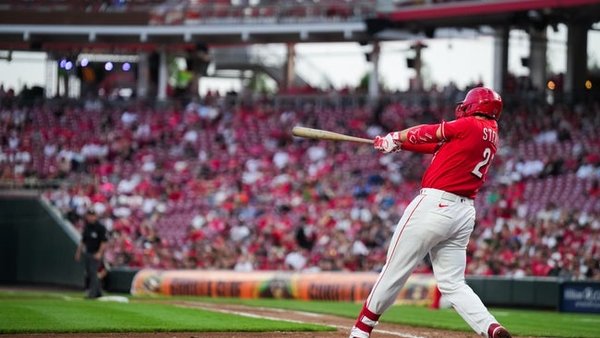
Stewart’s seven-homer explosion has Cincinnati outscoring San Francisco 10-4 through two games — the run line at +159 treats this like these teams are evenly matched.
Landen Roupp vs Chase Burns: San Francisco Giants at Cincinnati Reds Betting Preview
After watching the Reds demolish Giants pitching 8-3 on Wednesday following a tight 2-1 victory Tuesday, we’re looking at Game 3 of this series where Cincinnati has established clear dominance. Burns and Roupp present nearly identical surface numbers — 3.31 ERA versus 3.24 ERA — but the context surrounding these teams couldn’t be more different. The Giants arrive at 6-12 with a -27 run differential, having lost seven of ten, while the Reds sit 11-7 having outscored San Francisco 10-4 through the first two games of this series.
The starting pitcher matchup looks even on paper, but that surface equality masks what’s happening around these arms. Sal Stewart just torched San Francisco for six RBIs including two three-run homers, and Elly De La Cruz continues raking at .284 with five home runs. When you factor in Great American Ball Park’s 1.10 run factor and the Giants’ road struggles, this run line at +159 offers significant value on a Cincinnati team that’s been clearly superior in every phase.
Game Info & Betting Lines
- Date/Time: Thursday, April 16, 2026 | 12:40 PM ET
- Venue: Great American Ball Park (Park Factor: 1.10)
- Probable Starters: Landen Roupp (2-1, 3.24) vs Chase Burns (1-1, 3.31)
- Moneyline: San Francisco Giants +109 / Cincinnati Reds -131
- Run Line: Cincinnati Reds -1.5 (+159) / San Francisco Giants +1.5 (-194)
- Total: 8 (Over -114 / Under -105)
Why This Number Is Close
The market is balancing two starters with nearly identical ERAs and solid strikeout rates — both sit around 9.7 K/9. Roupp has been slightly more efficient with his walks (5 in 16.2 innings versus Burns’ 8 in 16.1), while Burns has surrendered three home runs to Roupp’s zero. From a pure pitching standpoint, you could argue either direction.
The legitimate case for San Francisco rests on their lineup upgrades this season. Willy Adames brings legitimate power (.869 OPS, three home runs), and Luis Arraez provides contact quality at .333. When healthy, this Giants offense has shown flashes despite the brutal record.
But the market is underweighting what we’ve seen in this series. The Reds haven’t just won — they’ve dominated, outscoring San Francisco 10-4 across the first two games of this series. Stewart’s emergence as a legitimate power threat (.310/.1.068 with five homers) gives Cincinnati a dynamic they lacked last season. The Giants’ -27 run differential tells the story of a team that’s been consistently outplayed, and nothing in Games 1 and 2 suggests that’s changing at Great American Ball Park.
What Separates the Pitching
The Statcast data reveals why this pitching matchup isn’t as even as the ERAs suggest. Burns attacks with a 98.2 mph four-seam fastball 55.7% of the time, generating a robust 53.0% whiff rate on his slider. That velocity differential — eight mph between the heater and breaking ball — creates uncomfortable timing for hitters. His 18.9% whiff rate on the fastball seems low, but the .454 xwOBA against suggests hitters are making contact without authority.
Roupp operates differently, featuring a sinker-heavy approach at 41.6% usage that generates soft contact (.349 xwOBA). His curveball serves as the putaway pitch with a 35.7% whiff rate, but the 26.8% usage means he’s not constantly attacking the zone with his best weapon. The concerning element for Roupp is facing this Reds lineup that just feasted on similar velocity from Tyler Mahle.
The head-to-head data favors Cincinnati significantly. Elly De La Cruz carries a .517 xwOBA with 10.9% barrel rate — elite contact quality that matches Burns’ fastball-slider combination perfectly. Sal Stewart shows even better numbers at .487 xwOBA, and his recent power surge suggests he’s seeing the ball exceptionally well. Meanwhile, the Giants’ best hitters have minimal exposure to Burns, with Adames sitting at just one plate appearance.
The Pushback
The genuine concern here isn’t just Burns’ control — eight walks in 16.1 innings — but the fundamental question of whether the Reds can maintain this level of offensive output. Yes, they’ve scored 10 runs in two games against Giants pitching, but regression exists. Stewart is white-hot with seven homers already, but that’s unsustainable power output that could cool off at any moment.
There’s also the uncomfortable reality that we’re laying significant juice on a run line in what could easily become a tight, low-scoring affair. Roupp has posted a 3.24 ERA for a reason — his sinker-curveball combination has been effective, and the Giants lineup, while struggling, still features legitimate threats like Arraez (.333 AVG) and Adames (.869 OPS). One swing from either hitter could turn this into a one-run game, making that run line a painful sweat.
The biggest risk is betting against variance in a short sample. We’re talking about Game 3 of a series where the better team has won convincingly, but baseball’s daily variance can make fools of even the soundest logic. If Burns walks the zone early and Roupp locates his breaking ball, this becomes exactly the type of game where the superior team wins by one run.
That said, my model projects Cincinnati winning by 1.7 runs, and the combination of superior offense, home field advantage, and established series momentum feels too strong to pass up. The Reds have been the better team in every measurable way through two games.
Run Environment & Game Shape
The total at 8 suggests the market expects moderate scoring, but Great American Ball Park’s 1.10 run factor combined with the offensive showing we’ve seen from Cincinnati points toward the over. Both lineups have shown power — the Reds with Stewart’s emergence and De La Cruz’s continued development, the Giants with Adames providing legitimate thump.
Game shape favors Cincinnati’s offensive approach. Burns’ fastball-slider combination should continue generating swings and misses, while the Reds have already proven they can time Roupp-style velocity after facing similar stuff from Tyler Mahle. The path to a Cincinnati cover involves their offense maintaining even 70% of their series output while Burns limits the Giants to 3-4 runs.
The Play
Cincinnati Reds -1.5 (+159) — 2 units
The model projects a 1.7-run Cincinnati victory, creating substantial value on this run line. While the moneyline offers no edge at -131, the combination of superior team form, home field advantage at a hitter-friendly park, and established series dominance makes the run line the clear play. The Reds have outscored San Francisco 10-4 through two games by playing better baseball in every phase — pitching, hitting, and defense.
Stewart’s power breakout gives Cincinnati a dynamic they’ve lacked, while De La Cruz continues developing into a complete offensive threat. The Giants’ -27 run differential reflects systematic issues that don’t disappear overnight, especially against a Cincinnati team that’s found its rhythm at home.
This series has established a clear hierarchy, and Game 3 represents our best chance to capitalize on that gap before the market adjusts. Take Cincinnati to complete the sweep with authority.