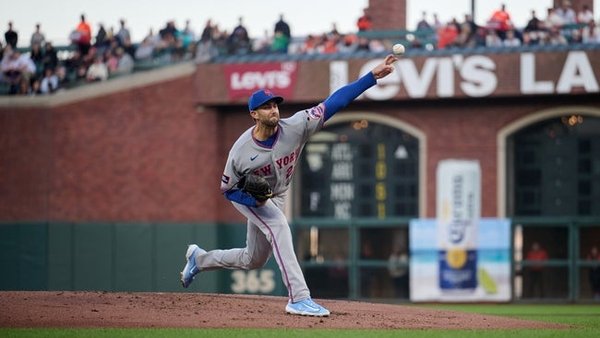
Laying -181 on a pitcher who only strikes out four batters per nine innings is a risky proposition, regardless of the logo on the jersey. After digging into the transition data for this April 13th matchup, the play here centers on whether Peterson can finally find the strike zone before Ohtani and Pages turn his 1.84 WHIP into a blowout, making this a stay-away for value hunters.
David Peterson vs Justin Wrobleski: New York Mets at Los Angeles Dodgers Betting Preview
The market has priced the Dodgers as heavy home favorites, but this line reflects more than just the stark contrast between Peterson’s 6.14 ERA and Wrobleski’s 4.00 ERA. With Juan Soto sidelined and the Mets managing just nine runs during their five-game skid, Los Angeles enters as the clear side — but at -181, we’re paying for certainty that might not exist.
Peterson’s peripherals paint a pitcher who’s been hit hard but hasn’t been burned by the long ball yet. Wrobleski, meanwhile, has allowed just four strikeouts in nine innings, suggesting he’s surviving more than dominating. The question isn’t whether the Dodgers should be favored — it’s whether this price properly reflects the gap between these two arms.
Game Info & Betting Lines
- Date/Time: Monday, April 13, 2026 | 10:10 PM ET
- Venue: Dodger Stadium (Park Factor: 0.98)
- Probable Starters: David Peterson (0-2, 6.14 ERA) vs Justin Wrobleski (1-0, 4.00 ERA)
- Moneyline: New York Mets +149 / Los Angeles Dodgers -181
- Run Line: Los Angeles Dodgers -1.5 (+109) / New York Mets +1.5 (-131)
- Total: 9 (Over -105 / Under -115)
Why This Number Is Wide
The market is balancing Peterson’s obvious struggles against a Mets offense that’s collapsed without Soto. New York has scored just nine runs in five games, posting a .236/.658 slash line that looks anemic next to the Dodgers’ .290/.864 mark. That offensive gap legitimately supports a wide line.
But here’s where I think the market has gone too far: Peterson hasn’t allowed a home run in 14.2 innings. His 6.14 ERA comes from a 1.84 WHIP — he’s been hit but not destroyed. Meanwhile, Wrobleski’s 4.0 K/9 rate suggests he’s not missing bats consistently. The concern is that Dodger Stadium’s 0.98 park factor creates enough run suppression to keep Peterson competitive, even in a rough outing.
What Separates the Pitching
Peterson’s arsenal shows a pitcher who should be getting more swings and misses than he has. His curveball generates a 46.7% whiff rate with a .069 xwOBA against, while his changeup sits at 35.7% whiffs. The problem lies in his four-seam fastball, which hitters are crushing to a .397 xwOBA — but that pitch represents just 16.6% of his arsenal.
Wrobleski counters with a split-finger that dominates his pitch mix at 28.0% usage, generating 34.7% whiffs and holding hitters to .174 xwOBA. But his four-seam fastball is getting hit even harder than Peterson’s (.464 xwOBA), and he’s leaning on it 21.9% of the time. The gap between these pitchers isn’t as wide as their ERAs suggest — it’s more about Peterson’s inability to limit baserunners than any devastating stuff advantage for Wrobleski.
The key difference is execution: Peterson’s 1.84 WHIP reflects poor command, while Wrobleski’s 1.22 WHIP suggests better location. But neither pitcher profiles as dominant enough to guarantee the type of separation this line implies.
The Pushback
I looked at the run line here, but Wrobleski’s small sample size creates real uncertainty about his ability to provide the type of innings that would support multi-run separation. His 4.0 K/9 rate is concerning for a pitcher asked to dominate, and Peterson’s home run luck feels unsustainable given his other peripherals.
The flip side of Peterson’s struggles is that he’s shown flashes of effectiveness with his secondary pitches. If he can avoid the big inning and keep balls in the yard — something he’s done successfully so far — this game could stay closer than expected. The Mets’ offensive struggles are real, but they’re also facing a Dodgers starter who hasn’t proven he can consistently put hitters away.
Run Environment & Game Shape
Dodger Stadium’s 0.98 park factor slightly suppresses scoring, which works against both the over and the idea of a blowout. The market expects around nine total runs, suggesting a game that stays in single digits where every run matters. This environment actually favors the underdog — if Peterson can limit damage early, the Mets stay live longer than their recent offensive output suggests.
The projected scoring range of 4-6 runs per side means we’re looking at a game where late-innings matter significantly. That puts pressure on both bullpens and makes the margin less predictable than the wide moneyline implies.
Joe Jensen’s Pick
JENSEN’S PICK: Dodgers Moneyline (Parlay Leg Only) — 0 Units
I like the Dodgers side here, but not at -181. Peterson’s peripherals suggest regression is coming, and Los Angeles has clear advantages in both pitching and hitting. Andy Pages (.429 BA/1.181 OPS) and Shohei Ohtani (.286 BA/.996 OPS) provide the type of offensive threats that can break games open against struggling arms.
But this price is too steep for a standalone bet. Wrobleski’s modest strikeout rate and Peterson’s ability to avoid home runs keep this in beer money territory. I’d consider this as a parlay leg where you’re getting better combined odds, but I’m not laying nearly 2-to-1 on a pitcher making his second start with a 4.0 K/9 rate. The line already accounts for most of the Dodgers’ advantages — I need better value than this.