The bullpen gap favors Milwaukee significantly, yet the moneyline has barely shifted from its opening position. This disconnect between relief depth and market pricing creates a friction point worth examining.
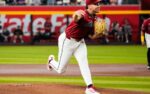
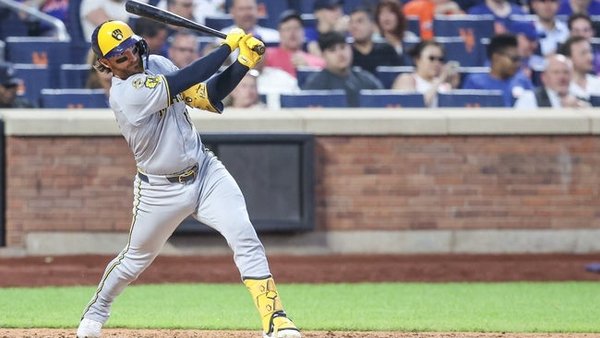
Foster Griffin vs Kyle Harrison: Washington Nationals at Milwaukee Brewers Betting Preview
After watching Washington explode for seven runs in Friday’s opener, the market has Milwaukee priced like a vulnerable home favorite at -181. The surface narrative makes sense — the Nationals just solved Brewers pitching and momentum matters in baseball. But that four-run ninth inning came entirely against Milwaukee’s depleted bullpen, not their starting rotation.
The real question isn’t whether Washington can hit — they proved that yesterday. It’s whether **Foster Griffin** can match **Kyle Harrison** in what projects as a pitcher-friendly environment. When you dig past the noise of Opening Weekend and recent results, this comes down to pitching depth and home field advantage in a tight contest.
Game Info & Betting Lines
- Date/Time: Saturday, April 11, 2026 | 7:10 PM ET
- Venue: American Family Field (Park Factor: 1.00 — neutral)
- Probable Starters: Foster Griffin (1-0, 2.70 ERA) vs Kyle Harrison (1-0, 2.61 ERA)
- Moneyline: Washington +149 / Milwaukee -181
- Run Line: Milwaukee -1.5 (+119) / Washington +1.5 (-143)
- Total: 8 (O -110 / U -110)
Why This Number Is Close But Slightly Off
The market is balancing legitimate concerns here. Washington just scored seven runs and looks like a team finding its offensive identity, while Milwaukee has lost three straight and is missing key pieces like **Jackson Chourio**. The -181 price reflects uncertainty about whether the Brewers can bounce back immediately.
But I think the market is slightly overreacting to yesterday’s result while undervaluing Milwaukee’s fundamental advantages. The Nationals’ offensive surge came against a Brewers bullpen that’s missing multiple relievers to injury. **Trevor Megill** couldn’t record an out in the ninth, allowing four runs on bunts and wild throws — that’s execution, not talent.
Where the line feels thin is in pricing Milwaukee’s pitching depth advantage. The Brewers carry a team ERA of **4.03** compared to Washington’s **5.82** — that’s not a small gap, it’s nearly two full runs per game. Combined with home field advantage, that differential should carry more weight than one bullpen meltdown.
What Separates the Pitching
On paper, these starters look remarkably similar — Griffin sits at 2.70 ERA while **Harrison** checks in at 2.61. Both have made quality starts in their season debuts. But the peripheral numbers reveal a meaningful gap in sustainability.
**Harrison** commands the strike zone with superior control metrics: **0.97 WHIP** compared to Griffin’s **1.30**. That difference translates to fewer baserunners per inning, which matters significantly in close games. Harrison also generates more strikeouts at **12.19 K/9** versus Griffin’s **9.9**, giving him an extra margin for error.
Griffin’s early success feels more precarious when you examine the underlying metrics. His **1.30 WHIP** suggests he’s been pitching around trouble, while allowing the same home run rate as Harrison (2 HRs each) despite facing fewer batters. In a tight run environment, Harrison’s ability to limit baserunners becomes the deciding factor between quality starts and early exits.
The concerning trend for Washington is that Griffin’s high WHIP paired with their team’s **5.82 ERA** creates compounding risk. If Griffin allows too much traffic early, Washington’s relief corps lacks the depth to clean up innings. Milwaukee’s bullpen, despite yesterday’s struggles, still represents a significant upgrade in late-inning leverage spots.
Alternative Angle: Run Line Value
Before committing to Milwaukee straight up, I seriously considered the run line at **Brewers -1.5 (+119)**. The logic seems sound — if Milwaukee wins behind Harrison’s superior peripherals, they should win by multiple runs given Washington’s pitching struggles.
The problem is yesterday’s game context. Washington just proved they can manufacture runs late, scoring four in the ninth through small ball and opportunistic hitting. Even if Milwaukee controls this game for eight innings, the Nationals have shown they can keep it close enough to avoid a blowout loss.
More importantly, Milwaukee’s injured lineup creates uncertainty about their scoring ceiling. Without **Jackson Chourio** and **Andrew Vaughn**, the Brewers are relying on **Eric Haase** (.229 average) and role players to drive runs. That’s not a formula for covering run lines consistently, even at home against inferior pitching. The moneyline offers better risk-adjusted value given the offensive uncertainties on both sides.
The Pushback
The obvious concern is recency bias working against this analysis. Washington didn’t just beat Milwaukee yesterday — they dominated them 7-3 after scoring late. That suggests the Nationals have figured something out about Brewers pitching that goes beyond a single bullpen meltdown.
But here’s what really makes me second-guess this bet: Milwaukee’s injury situation creates legitimate questions about their ability to score. **Jackson Chourio’s** hand injury removes their most productive hitter from 2025, while **Andrew Vaughn** remains sidelined. The Brewers are essentially operating with a skeleton crew of proven hitters, making it harder to support Harrison even if he pitches effectively.
The flip side of Milwaukee’s pitching advantage is that Washington’s offense has shown surprising life lately. **James Wood’s** .931 OPS suggests this isn’t the same struggling lineup from early projections. If the Nationals can manufacture runs early against Harrison, they’re capable of forcing him into high-stress situations where his control advantage becomes less meaningful. That’s exactly what happened to Milwaukee’s staff yesterday — once the pressure mounted, execution broke down completely.
Run Environment & Game Shape
The total sits at 8 runs, reflecting the market’s expectation of a pitcher-driven contest at neutral American Family Field. Both starters project for quality outings, setting up a game where one or two key at-bats determine the outcome.
This run environment amplifies Milwaukee’s pitching depth advantage. In low-scoring games, the team with better relief options typically prevails in late innings. Washington allowed four runs in the ninth yesterday — that’s not sustainable against quality opponents when you need to protect leads. The projected scoring range of 4-5 runs per side means every baserunner matters, favoring Harrison’s superior WHIP and strikeout rate.
For betting purposes, this game shape suggests Milwaukee’s -181 price doesn’t fully account for their late-inning advantages. While the Nationals can certainly score early, they’ll struggle to close out a tight game if they take a lead. That creates betting value on Milwaukee to win straight up, even if they don’t dominate from the first inning.
The Pick
**Milwaukee Brewers -181**
I’m laying the price with Milwaukee despite yesterday’s result. The market is overweighting one bullpen collapse while undervaluing a nearly two-run team ERA advantage. Harrison’s superior peripherals give him a better chance to work deep, protecting a depleted but still superior bullpen.
The -181 price reflects uncertainty, but the fundamentals point toward Milwaukee. In a projected low-scoring game, pitching depth matters more than recent momentum. Washington proved they can score, but they haven’t proven they can prevent runs consistently. That’s the difference in this matchup.