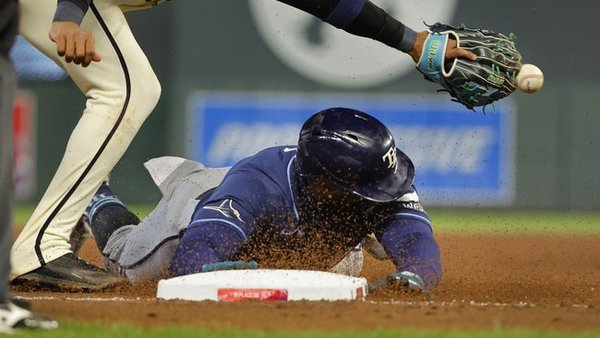
McClanahan’s 11 walks in just 13.2 innings create baserunner chaos — Keller’s steadier command should control this game. The -112 price treats this like a coin flip when the pitching profiles point to a clearer gap.
Shane McClanahan vs Mitch Keller: Tampa Bay Rays at Pittsburgh Pirates Betting Preview
The market is treating this as a near coin flip at Pittsburgh -112, but the early-season data suggests a clearer separation between these pitchers than the moneyline reflects. Mitch Keller has been the more reliable arm through three weeks, logging 22 innings compared to Shane McClanahan’s 13.2 while posting a sharper 2.86 ERA. McClanahan’s control issues — 11 walks in limited action — create the type of baserunner traffic that typically favors the home team in tight games. The question becomes whether Pittsburgh’s pitching edge is wide enough to justify the modest price.
Game Info & Betting Lines
- Date/Time: Sunday, April 19, 2026 | 1:35 PM ET
- Venue: PNC Park (Park Factor: 0.96 — pitcher-friendly)
- Probable Starters: Shane McClanahan (1-1, 3.95 ERA) vs Mitch Keller (1-1, 2.86 ERA)
- Moneyline: Tampa Bay -108 / Pittsburgh -112
- Run Line: Pittsburgh +1.5 (-178) / Tampa Bay -1.5 (+147)
- Total: 7.5 (Over -112 / Under -108)
Why This Number Is Close
The market sees legitimate reasons to keep this line tight. Tampa Bay enters with a superior recent record (7-3 in their last 10) and just demonstrated comeback ability in Saturday’s 13-inning thriller. McClanahan still carries name recognition from his 2023 Cy Young runner-up campaign, and his 8.56 K/9 suggests the strikeout ability remains intact. The Rays also boast stronger offensive depth, led by Yandy Diaz’s .365 average and 1.008 OPS.
But the market may be undervaluing Pittsburgh’s pitching stability. Keller has thrown 60% more innings than McClanahan while maintaining better command — his 9 walks in 22 innings versus McClanahan’s 11 walks in 13.2 frames tells the story. The Pirates’ team ERA advantage (3.23 vs 4.37) reflects their superior run prevention, which matters in games projected to stay under 8 runs.
What Separates the Pitching
The key differential lies in McClanahan’s early-season inconsistency versus Keller’s steady reliability. McClanahan’s arsenal still shows elite potential — his changeup generates a devastating 47.4% whiff rate with just .186 xwOBA against — but his four-seam fastball has been problematic, allowing .463 xwOBA over 41.6% usage. That’s concerning when facing a Pittsburgh lineup featuring Oneil Cruz (.545 xwOBA, 12.6% barrel rate) who can punish mistakes in the zone.
Keller offers a more balanced approach with his six-pitch mix. His sweeper (22.3% usage) holds hitters to .284 xwOBA with nearly 30% whiffs, while his four-seam fastball has been far more effective (.290 xwOBA) despite similar velocity to McClanahan. The head-to-head data supports this edge — Bryan Reynolds is just .250 against McClanahan in 8 plate appearances, while Junior Caminero has struck out once in 2 PAs against Keller.
McClanahan’s control problems create the type of baserunner traffic that benefits the home team. His 1.17 WHIP stems largely from those 11 walks, and against a Pirates lineup that draws 93 walks as a team, those free passes compound quickly. Keller’s more efficient approach (0.6 WAR vs McClanahan’s 0.08) suggests he’ll provide longer, cleaner innings.
The Pushback
The real concern here is buying into McClanahan’s early-season struggles as representative of his true talent. This is a pitcher who finished second in Cy Young voting just two seasons ago, and his current 8.56 K/9 suggests the elite strikeout ability remains intact. His changeup continues to be absolutely devastating (47.4% whiff rate), and when he locates that pitch, even powerful hitters like Cruz struggle to make meaningful contact.
There’s also the question of whether Pittsburgh can maintain their offensive momentum after Saturday’s marathon. They needed 13 innings to secure that win, burning through multiple relievers and key bench pieces. The emotional drain of rain delays and extra-inning baseball often carries negative effects into the next day’s game. Meanwhile, Tampa Bay showed tremendous resilience in that comeback, the type of mental toughness that often translates to consistent performance.
The deeper concern is that this Pittsburgh lineup, despite some strong individual performers, still strikes out 193 times as a team. When McClanahan is throwing strikes — which his .186 xwOBA on changeups suggests he can do effectively — this becomes exactly the type of matchup that favors the strikeout pitcher. The -112 price already bakes in most of Keller’s statistical advantages, leaving little margin for error if McClanahan simply pitches to his established talent level.
Run Environment & Game Shape
The 7.5 total reflects expectations of a pitcher-friendly environment at PNC Park, where the 0.96 park factor suppresses run scoring. Both starters have shown the ability to work efficiently — Keller averaging 7.3 innings per start versus McClanahan’s 4.6 — suggesting this game could be decided by which pitcher reaches the sixth inning with a lead intact. The under-8 environment amplifies the value of Keller’s superior command and deeper pitch counts. When games project to finish 5-4 or 4-3, the team with better starting pitching typically controls the outcome.
Joe Jensen’s Pick
JENSEN’S PICK: Pittsburgh Pirates Moneyline — 1 Unit
I looked at the run line here, but the projected score separation (Pirates 5, Rays 4) points to a one-run game where the -1.5 doesn’t provide sufficient value at -178. The total was tempting given both pitchers’ recent form, but Saturday’s 15-run explosion reminds us that early-season offensive variance can overwhelm pitching advantages quickly.
This comes down to trusting Keller’s superior durability and command over McClanahan’s strikeout upside with questionable control. The Pirates’ 3.23 team ERA advantage provides the edge, while the home environment should benefit the steadier arm. At -112, there’s just enough value to justify a modest position on the home side.