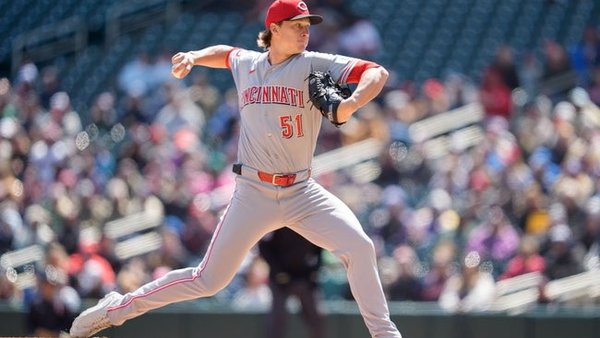
Note: We had a tech issue causing this game not to be posted.
Flaherty’s 9.26 K/9 rate contrasts sharply with Singer’s 6.08 mark and rising hard-contact rates. The even-money pricing ignores a significant strikeout differential that should favor the road team.
Jack Flaherty vs Brady Singer: Detroit Tigers at Cincinnati Reds Betting Preview
After watching both bullpens get shelled in last night’s 9-8 thriller, I’m banking on the starters to provide some stability. What bothers me about this pick’em pricing is how the market seems to be weighing Cincinnati’s hot record over the actual talent on the field. I get it — the Reds are 17-9 and riding high — but when I break down what’s actually happening between the lines, Detroit looks like the better team getting a fair price.
The more I study Jack Flaherty’s arsenal versus Brady Singer’s approach, the more convinced I become that we’re looking at a meaningful skill gap that the market hasn’t fully recognized. Add in Detroit’s superior offensive production across multiple metrics, and I’m seeing value where others see a coin flip.
Game Info & Betting Lines
- Date/Time: Saturday, April 25, 2026 | 7:15 PM ET
- Venue: Great American Ball Park (Park Factor: 1.10 — hitter-friendly)
- Probable Starters: Jack Flaherty (DET) vs Brady Singer (CIN)
- Moneyline: Detroit Tigers -110 / Cincinnati Reds -110
- Run Line: Cincinnati Reds +1.5 (-171) / Detroit Tigers -1.5 (+141)
- Total: 9.5 (Over +102 / Under -122)
Why I’m Overlooking the Hot Start
Here’s what’s nagging at me about backing the Tigers — Cincinnati’s 17-9 record isn’t some fluke built on luck. They’ve genuinely outplayed their competition, and that walk-off homer last night showed they can manufacture runs when trailing. Sal Stewart is tied for the MLB lead with 24 RBIs, and Elly De La Cruz just went yard twice against Tampa Bay. When this offense gets rolling, they can put up crooked numbers quickly.
But I keep coming back to the underlying metrics that suggest Detroit should be favored, not priced as equals. The Tigers’ .733 team OPS dwarfs Cincinnati’s .662 mark, and in a hitter-friendly park, that gap should matter more than recent wins and losses. Sometimes you have to bet against the narrative and trust the numbers — even when it feels uncomfortable.
Where Flaherty Separates Himself
This is where my confidence starts building. Flaherty’s 9.26 K/9 rate absolutely destroys Singer’s 6.08, and that’s not just a nice-to-have stat — it’s predictive of who controls the strike zone. When I look at Singer’s Statcast data, I see a pitcher living dangerously with his approach.
Singer’s 51.3% sinker usage at 91.2 mph should theoretically induce weak contact, but he’s only generating a 10.1% whiff rate and allowing a .371 xwOBA against that pitch. Hitters are making contact, and when they do, they’re hitting it hard. That’s not sustainable against Detroit’s lineup depth.
Flaherty brings variety that Singer lacks. His knuckle curve at 18.4% usage generates a devastating 40.4% whiff rate, while his four-seam fastball at 44.5% of his mix holds hitters to a .350 xwOBA — meaningfully better than Singer’s primary offering. When I see a pitcher with multiple weapons versus one relying heavily on a pitch that isn’t missing bats, I know where to lean.
The Nagging Doubts
But am I being too harsh on Singer? His season-long numbers might not reflect recent adjustments, and pitchers can find their groove quickly in April. What if he’s discovered better command of that slider since his early struggles? I’m working with incomplete information about his most recent outings, and that gap in data makes me nervous.
There’s also the simple fact that Cincinnati has been winning games. 8-2 in their last 10 isn’t a statistical accident — something is working for this team. Maybe it’s Stewart’s power surge, maybe it’s better bullpen management, or maybe they’re just getting those clutch hits that don’t show up in advanced metrics. Home teams also get the last at-bat, and after watching them walk off last night, I can’t ignore that psychological edge.
What really worries me is if I’m missing something obvious. When a line looks this clean and the edge seems this apparent, experienced bettors start questioning their own analysis. Am I overvaluing Detroit’s offensive numbers? Is Cincinnati’s pitching staff deeper than I’m giving them credit for?
Why I’m Still Pulling the Trigger
Despite those concerns, I keep coming back to Detroit’s lineup balance. Kevin McGonigle (.907 OPS), Dillon Dingler (.854), Riley Greene (.841), and Kerry Carpenter (.771) represent four legitimate threats that Singer will have to navigate multiple times. That’s not a top-heavy lineup dependent on one or two guys getting hot — it’s sustained offensive pressure throughout the order.
The Statcast matchup data reinforces this edge. McGonigle’s .435 xwOBA suggests he’s been even better than his surface numbers, while Dingler’s .507 xwOBA indicates he’s hitting the ball extremely hard. When I see multiple Detroit hitters with xwOBA marks well above .400, I trust that quality of contact will translate to runs in a park with a 1.10 run factor.
Great American Ball Park’s environment should amplify Detroit’s offensive advantage. In a moderate-scoring game around 9.5 runs, every quality at-bat matters more. Detroit’s 101 walks versus 99 strikeouts compared to Cincinnati’s 110 walks versus 244 strikeouts tells me which team takes better approaches and works deeper counts. That discipline pays dividends against a pitcher like Singer who needs to throw strikes with his sinker to be effective.
The Pick
I’m betting Detroit Tigers moneyline at -110 for 3 units. The pitching matchup favors the road team significantly, Detroit’s offensive metrics are superior across the board, and they’re getting even money when they should probably be small road favorites. Sometimes the obvious play is the right play, even when it makes you second-guess yourself.