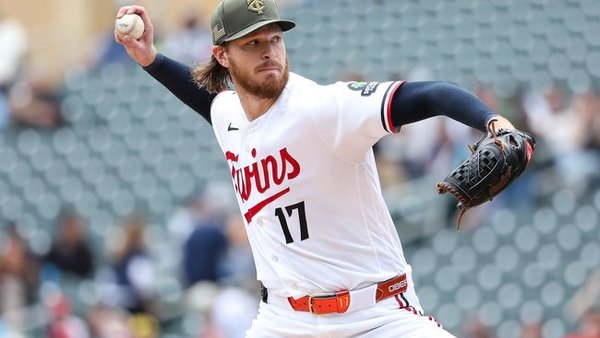
Bryan Hudson’s 3.03 ERA and 0.61 HR/9 rate sit on one side of this matchup — Bailey Ober’s 1.43 HR/9 and a sinker carrying a .581 xwOBA-against sit on the other. The posted total of 8.5 treats both arms as roughly equivalent, but the gap between them is the friction point this number hasn’t fully absorbed.
Bailey Ober vs. Bryan Hudson: Minnesota Twins at Chicago White Sox Betting Preview
After the Twins took yesterday’s game 6-4 — a 10-run combined output that went over the number — the pitching matchup today shifts dramatically. Taj Bradley was on the mound Saturday. Bryan Hudson gets the ball Sunday, and that matters more than the carryover momentum from a different arm’s performance. The series result is noise here; the starter swap is the signal.
The posted total of 8.5 is a number the market has set with reasonable balance — two middling offenses, a mild run-suppressing park, and a starting pitcher gap that isn’t universally recognized. Hudson’s season ERA of 3.03 in 59.1 innings is the kind of line that gets dismissed as a small-sample curiosity. But the peripherals say otherwise, and that’s where the lean lives.
The core thesis is simple: Hudson’s suppression profile gives this game a credible path to staying under 8.5, even if the aggregate 9.1 projected total technically clears that bar. When one starter has the tools to hold a lineup to two or three runs, the question becomes whether the other starter gives back enough to offset it — and with Bailey Ober‘s home-run-prone profile, there’s real two-directional variance in play.
Game Info & Betting Lines
- Date/Time: Sunday, September 6, 2026 | 6:20 PM ET
- Venue: Guaranteed Rate Field | Park Factor: 0.98 (run-suppressing)
- TV: NBC, Peacock
- Probable Starters: Bailey Ober (MIN, 7-4, 4.37 ERA) vs. Bryan Hudson (CWS, 4-4, 3.03 ERA)
- Moneyline: Minnesota Twins +124 / Chicago White Sox -150
- Run Line: Chicago White Sox -1.5 (+139) / Minnesota Twins +1.5 (-171)
- Total: 8.5 (Over -109 / Under -111)
Why This Number Is Close — But Slightly Off
The 8.5 total is defensible. Both team offenses are below-average to average — Minnesota posts a .728 OPS, Chicago a .723 OPS — and neither lineup scares you from top to bottom. The park carries a 0.98 factor, a structural lean toward the pitcher. On the surface, 8.5 feels like a fair equilibrium.
The legitimate case for the over is straightforward: Ober has allowed 18 home runs in 113.1 innings (1.43 HR/9), and Chicago’s lineup features three hitters with 30 or more home runs — Miguel Vargas, Munetaka Murakami, and Colson Montgomery. Murakami reached the milestone with his shot yesterday; the White Sox have the kind of power concentration that can pop a starter in one inning and flip an under into a blown number. Yesterday’s game going to 10 total runs reinforces that these offenses aren’t dead.
But here’s the problem with leaning over: yesterday’s pitching was not today’s pitching. The market is pricing today’s game through a lens that includes Ober’s HR risk and Hudson’s suppression upside. Where I think the number is slightly off is in not fully accounting for what Hudson can do over six innings against a Minnesota lineup that has been genuinely cold. The 9.1 projected total is real, but it’s only 0.6 over the line — Hudson’s ceiling alone can absorb that gap.
What Separates the Pitching
Bryan Hudson and Bailey Ober are not close to equivalent arms right now, and the pitching gap is the primary reason the under has a pulse in this game.
Hudson’s four-seam fastball sits at 92.0 mph and accounts for 66.7% of his arsenal — and it’s generating a 21.9% whiff rate with an xwOBA-against of just .267. That’s a legitimate swing-and-miss offering at above-average velocity. His sweeper at 26.5% usage adds a second weapon at .255 xwOBA-against with a 23.7% whiff rate. Combined, Hudson is generating genuine chase-and-miss results, not just soft contact. His season-long 8.34 K/9 with a 1.21 WHIP and only 4 home runs allowed in 59.1 innings (0.61 HR/9) tells you what type of innings he creates: low-damage, controllable ones that keep the big inning off the board.
Minnesota’s lineup against a left-hander is the key matchup question. Ryan Jeffers posts a .364 xwOBA vs. left-handed pitching and hit his 14th home run yesterday, making him the most dangerous bat Hudson will face. Royce Lewis carries a .407 xwOBA against lefties. But the BvP samples are too small to weight heavily, and Hudson’s whiff-generating profile limits the sustained contact sequences that produce crooked numbers.
Ober’s profile is the opposite story. His sweeper is electric — .168 xwOBA-against and a 35.8% whiff rate — and his changeup generates decent swing-and-miss at 21.8%. But his four-seam sits at just 88.1 mph, and his sinker carries an alarming .581 xwOBA-against. More critically, his 1.43 HR/9 rate exposes him to exactly the power profile Chicago deploys. Murakami’s 10.0% barrel rate and 34.8% hard-hit rate make him the most dangerous matchup in this game — a .483 xwOBA hitter who generates quality contact at elite rates against right-handed pitching (.491 xwOBA vs. RHP). Vargas at .475 xwOBA vs. lefties actually grades out strongest against Hudson, but Ober’s exposure to the middle of Chicago’s order is the real run-environment lever here.
The gap: Hudson limits big innings structurally. Ober creates them. That asymmetry is the foundation of the under thesis.
The Pushback
I want to be honest about where this bet can go wrong, because it can go wrong in a few directions.
First, the numbers do project the over. A 9.1 combined total against an 8.5 line is a moderate edge pointing the other direction, and that’s not nothing. I’m fading the aggregate projection here specifically because of Hudson’s suppression ceiling — but if Hudson runs into trouble early or exits before the fifth inning, the over case reasserts immediately. His 59.1 innings of work is a real sample-size flag. We know what his peripherals say; we don’t know how he handles adversity in a pennant-race environment late in the season.
Second, yesterday’s game. Ten combined runs, Murakami homered, Jeffers homered — these offenses showed they can get there. The under in back-to-back games in the same series isn’t impossible, but it requires today’s starting pitcher to be substantially better than yesterday’s. I believe Hudson clears that bar over Bradley based on the Statcast profile, but that belief is doing real work in this handicap.
Third, Ober could be sharper than his season ERA suggests. His sweeper at a 35.8% whiff rate and his changeup at 21.8% are legitimate weapons, and if he’s locating early and keeping the fastball out of the middle of the zone, Chicago’s power hitters can be neutralized for stretches. The under doesn’t require Ober to get lit up — it just requires Hudson to be Hudson.
I’m comfortable with the under at moderate confidence. The edge is structural, not dominant.
The Bet
The play here is the total under 8.5. Hudson’s profile — 0.61 HR/9, dual swing-and-miss weapons, 8.34 K/9 — is the anchor. Ober’s HR vulnerability creates variance but not enough to override a pitcher who keeps the ball in the park and generates whiffs at every level of the zone. The park isn’t helping hitters. Minnesota’s lineup is cold. Chicago’s power is real but concentrated in spots Hudson has the profile to navigate.
The 9.1 projected total is only 0.6 over the line. Hudson’s suppression upside swallows that margin. The under is the play.
Bet: Total Under 8.5 — 2 units — Moderate Confidence