Houston’s elite 17-4 home record meets Boston’s 16-10 road profile on Wednesday night. With the Rockets owning a significant +4.3 rebounding edge and the market hanging a 6-point spread, handicapper Bash breaks down why the venue and second-chance points dictate the best bet for this cross-conference clash.
The Setup: Celtics at Rockets
Boston travels to Toyota Center on Wednesday night as 6-point underdogs against Houston, and the market’s telling you something clear: home court matters here. The Rockets are 17-4 at home this season while the Celtics sit at 16-10 on the road—respectable, but not dominant. Houston’s laying nearly a full touchdown at home with Kevin Durant probable after missing Monday’s game with a left ankle sprain, and that injury designation is the hinge point for this entire number.
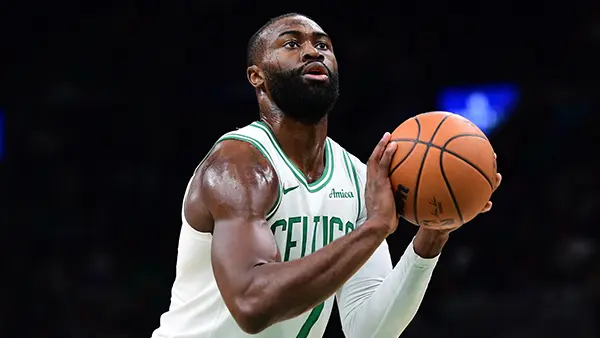
The spread reflects Houston’s territorial advantage and Boston’s depth questions. Jaylen Brown is carrying this Celtics offense at 29.5 points per game, but the supporting cast thins quickly after Derrick White and Payton Pritchard. Houston counters with a three-headed attack—Durant at 26.2 points, Alperen Sengun at 21.4, and Amen Thompson contributing 18.1—that creates more offensive variance and makes them harder to scheme against. The Rockets also own a 4.3-rebound advantage per game (49.4 to 45.1), with 16.3 offensive boards compared to Boston’s 12.6. That’s an extra four possessions per night, and those margins decide spreads.
The total sits at 216, which tracks with both teams averaging exactly 116 points per game. Identical scoring outputs, but the path to get there matters. Boston protects the ball better—12.0 turnovers per game versus Houston’s 15.3—while the Rockets generate more defensive activity with 8.7 steals and 5.8 blocks compared to Boston’s 7.7 and 5.2. The efficiency numbers are tight: Houston shoots 47.3% overall and 36.9% from three, Boston checks in at 46.9% and 36.7%. Marginal edges everywhere, which is why this game comes down to venue and personnel.
Game Info & Betting Lines
Date & Time: February 4, 2026, 8:00 ET
Location: Toyota Center
TV: Space City Home Network (Home), NBA League Pass, NBC Sports BO (Away)
Current Betting Lines (MyBookie.ag):
Spread: Celtics +6.0 (-110) | Rockets -6.0 (-110)
Moneyline: Celtics +185 | Rockets -233
Total: Over 216.0 (-110) | Under 216.0 (-110)
Why This Line Exists
Six points at home for a Rockets team that’s won 17 of 21 at Toyota Center makes sense when you consider Boston’s road profile and Houston’s offensive balance. The Celtics are 32-18 overall with a +7.1 plus/minus, better than Houston’s +6.0, but that season-long margin doesn’t account for venue. Houston’s 17-4 home record is elite, and they’ve built that by controlling the glass and generating extra possessions through offensive rebounding.
The market’s also pricing in Durant’s probable return. He missed Monday’s game against Indiana with a left ankle sprain, but the expectation is he’ll play Wednesday. Durant’s 26.2 points on 51.0% shooting and 40.5% from three changes Houston’s offensive ceiling. Without him, the Rockets still beat Indiana behind Sengun’s 39 points, but that was a grind-it-out performance that required a season-high scoring night from their center. With Durant back, Houston’s offensive distribution returns to normal, and that three-man rotation of Durant-Sengun-Thompson becomes much harder to defend.
Boston’s injury report shows Anfernee Simons as questionable, though he’s been a rotation piece averaging 14.2 points this season. The bigger issue for the Celtics is offensive creation beyond Brown. White and Pritchard combine for 34 points and 10.8 assists, but neither is a true secondary scorer who can take over stretches. Brown’s 48.6% shooting and 36.3% from three keeps Boston competitive, but he’s working without a co-star, and that shows up in road environments where the margin for error shrinks.
The total at 216 reflects both teams’ scoring consistency, but it’s slightly low given the rebounding edge Houston holds. Those extra offensive boards create second-chance points, and Houston’s 75.5% free throw shooting compared to Boston’s 79.0% means both teams convert at the line. The under might tempt you given the defensive activity—Houston’s 14.5 combined steals and blocks—but the rebounding variance pushes this toward a higher-possession game.
Celtics Breakdown: What You Need to Know
Boston’s offense runs through Brown, and there’s no pretending otherwise. He’s averaging 29.5 points, 7.0 rebounds, and 4.8 assists on efficient shooting splits, but the 3.6 turnovers per game show the burden he’s carrying. When Brown’s aggressive, the Celtics score. When he’s contained, Boston’s offense stalls because the secondary options aren’t consistent shot creators.
White and Pritchard provide perimeter shooting and playmaking—5.5 and 5.3 assists respectively—but neither can consistently attack closeouts or create their own shot against set defenses. White’s shooting 39.0% overall and 32.0% from three, which limits his gravity as a floor spacer. Pritchard’s more efficient at 46.0% and 34.9%, but he’s a catch-and-shoot player who needs Brown to collapse the defense first.
The Celtics’ advantage is ball security. 12.0 turnovers per game means they’re not giving Houston easy transition opportunities, and their 79.0% free throw shooting ensures they capitalize when they get to the line. But the rebounding deficit is real. Boston grabs 12.6 offensive boards compared to Houston’s 16.3, and on the road against a team that protects its home court, those extra possessions become backbreakers.
Defensively, Boston’s solid but not dominant. 7.7 steals and 5.2 blocks shows they’re active, but they don’t force turnovers at Houston’s rate. Against a Rockets team that commits 15.3 turnovers per game, Boston needs to capitalize on those mistakes and turn them into transition points. If this game becomes a halfcourt grind, Houston’s three-man scoring attack gives them more offensive options.
Rockets Breakdown: The Other Side
Houston’s built for home dominance. 17-4 at Toyota Center reflects their ability to control tempo and dominate the glass. Sengun’s the hub of the offense, averaging 21.4 points, 9.4 rebounds, and 6.3 assists, and his playmaking from the post creates open looks for Durant and Thompson. Sengun’s 50.1% shooting makes him efficient, though the 3.3 turnovers show he’s still learning when to pass versus when to score.
Durant’s return is the key variable. He’s shooting 51.0% overall and 40.5% from three, which spaces the floor and forces Boston to respect the perimeter. Without Durant on Monday, Houston leaned heavily on Sengun’s 39-point outburst against Indiana, but that’s not a sustainable game plan. With Durant back, the Rockets can run their normal offensive sets, and that balance makes them much harder to defend over 40 minutes.
Thompson’s emergence as a tertiary scorer—18.1 points on 50.5% shooting—gives Houston a slashing threat who attacks the rim and generates free throws. His 7.8 rebounds and 5.5 assists add versatility, and his 1.5 steals contribute to Houston’s defensive pressure. Jabari Smith Jr. provides floor spacing at 15.1 points and 35.4% from three, and his 6.9 rebounds help Houston maintain its board advantage.
The Rockets’ weakness is turnovers. 15.3 per game is high, and against a Celtics team that protects the ball, those extra possessions could swing the game. But Houston’s 8.7 steals and 5.8 blocks create enough defensive chaos to offset their own mistakes. At home, where they’re comfortable and the crowd’s behind them, those turnovers become less costly because they’re generating stops on the other end.
The Matchup: Where This Game Gets Decided
This game comes down to rebounding and offensive distribution. Houston’s 4.3-rebound advantage per game translates to roughly four extra possessions, and at home, those possessions become high-percentage looks. Boston’s 12.6 offensive boards won’t cut it against a Rockets team that crashes the glass with 16.3. Over a 95-possession game—which is where both teams typically land given their scoring outputs—that’s a 12-point swing in expected value.
Boston’s path to covering requires Brown to dominate and the Celtics to force turnovers. Houston commits 15.3 turnovers per game, and if Boston can push that number to 18 or 20, they’ll generate enough transition opportunities to stay within the number. But the Celtics’ secondary scoring is inconsistent. White and Pritchard combine for 34 points, but neither can take over a road game when Brown’s getting extra defensive attention.
Houston’s advantage is balance. Durant, Sengun, and Thompson give them three legitimate scoring threats, and all three can create their own shot. Boston has to pick its poison—double Brown and let the role players beat you, or play straight-up and trust your defense to contain him. Against a Rockets team that’s 17-4 at home, that’s a losing proposition. Houston’s offensive rebounding creates second chances, and their defensive activity—8.7 steals and 5.8 blocks—disrupts Boston’s halfcourt sets.
The total at 216 feels achievable given both teams’ scoring consistency, but Houston’s rebounding edge pushes this toward the over. Extra possessions mean more scoring opportunities, and both teams shoot well enough—47.3% and 46.9% overall—to capitalize. If Durant’s healthy and playing his normal minutes, Houston’s offensive ceiling rises, and that makes the over the sharper play.
Bash’s Best Bet & The Play
I’m laying the six with Houston. The Rockets are 17-4 at home, and Boston doesn’t have the offensive firepower to hang in a road game where the margins are tight. Brown’s excellent, but he’s working without a true co-star, and Houston’s three-man attack gives them too many scoring options. The rebounding edge—4.3 boards per game—creates extra possessions, and at home, those possessions turn into points.
Durant’s probable return solidifies this play. Without him, Houston’s offense becomes one-dimensional and reliant on Sengun. With him, they’re balanced and dangerous. Boston’s ball security keeps them competitive, but they’re not generating enough offensive rebounds to offset Houston’s advantage on the glass. The Celtics are 16-10 on the road, which is respectable, but this Rockets team is built for home dominance, and six points feels light given the matchup dynamics.
The risk is Durant’s ankle. If he’s limited or exits early, Houston’s offense loses its best floor spacer, and Boston’s defense can load up on Sengun. But the probable designation suggests he’s ready to play, and I’m trusting the Rockets’ home profile over Boston’s road grit.
BASH’S BEST BET: Rockets -6.0 for 2 units.
Houston covers at home, and the rebounding edge makes this a comfortable win. Take the Rockets and don’t overthink it.