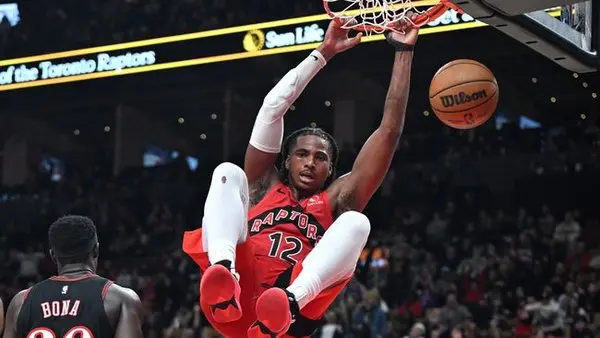
Toronto opens as a heavy 11.5-point favorite at Scotiabank Arena, but Utah’s high-volume offense—led by Lauri Markkanen and Keyonte George—might be catching too many points. Bash breaks down the efficiency gap to find a winning prediction.
The Setup: Jazz at Raptors
Toronto lays 11.5 at home against a Utah squad that’s limping through a brutal season at 15-34. The Raptors sit comfortably in the East’s fourth spot at 29-21, and this line screams mismatch on paper. But here’s the thing—Utah just lost to Brooklyn at home, and Walker Kessler’s season-ending injury gutted their interior defense weeks ago. Toronto’s been solid at Scotiabank Arena at 13-11, though they’re coming off a Friday loss in Orlando where they blew a 13-point lead. The market’s asking you to lay nearly two touchdowns with a Raptors team that hasn’t exactly dominated at home this year. The thesis here: this number reflects Utah’s catastrophic season and Toronto’s playoff positioning, but the execution gap might not be as wide as 11.5 suggests when you account for pace and possession efficiency.
Game Info & Betting Lines
Date: Sunday, February 1, 2026
Time: 6:00 ET
Location: Scotiabank Arena
TV: Sportsnet (Home), NBA League Pass, KJZZ-TV, Jazz+ (Away)
Current Betting Lines (MyBookie.ag):
- Spread: Toronto Raptors -11.5 (-110) | Utah Jazz +11.5 (-110)
- Moneyline: Toronto Raptors -631 | Utah Jazz +437
- Total: Over/Under 233.5 (-110)
Why This Line Exists
The market landed on 11.5 because Utah’s 15-34 record tells a story of systematic failure, particularly on the road where they’re 5-17. Toronto’s conference positioning at fourth in the East creates separation value—teams protecting playoff seeding typically get inflated home numbers against lottery squads. But dig into the context: Lauri Markkanen is averaging 27.4 points per game, and Keyonte George is putting up 24.2 with 6.6 assists. Those aren’t tanking numbers. The Jazz have offensive weapons that can generate efficient possessions even without Kessler anchoring the paint.
Toronto’s spread reflects their three-headed scoring attack—Brandon Ingram at 21.9, Scottie Barnes at 19.4, and RJ Barrett at 18.7—but their 13-11 home record suggests they haven’t been dominant at Scotiabank Arena. They just got torched for 130 by Orlando on Friday, and Desmond Bane dropped 32 on them in a game where their defense evaporated in the fourth quarter. The line assumes Toronto shows up focused against inferior competition, but back-to-back spots after a frustrating road loss create execution risk. The number’s built on season-long résumé, not necessarily Sunday’s specific matchup dynamics.
Jazz Breakdown: What You Need to Know
Utah’s 15-34 record masks some legitimate offensive production. Markkanen’s 27.4 points per game represents elite scoring volume, and George’s 24.2 with 6.6 assists gives them a secondary creator who can run pick-and-roll and generate open looks. The problem is Walker Kessler’s season-ending injury destroyed their rim protection and interior presence. Kessler was averaging 14.4 points and 10.8 rebounds before going down—that’s a double-double anchor you can’t replace with committee minutes.
The Jazz are 5-17 on the road, which tells you everything about their ability to execute away from Salt Lake City. They just lost at home to Brooklyn, a team that snapped a seven-game losing streak on their floor. That’s the kind of loss that signals organizational drift. Georges Niang remains out with a foot stress reaction, limiting their frontcourt depth even further. But here’s the counter: when your two best players combine for over 50 points per game, you’ve got the firepower to hang around if the pace stays reasonable and you don’t get blown out in transition.
Raptors Breakdown: The Other Side
Toronto’s 29-21 record and fourth-place conference standing reflect a team that’s exceeded expectations, but their 13-11 home mark shows they haven’t dominated at Scotiabank Arena. Ingram, Barnes, and Barrett give them balanced scoring—no one’s carrying a 30-point burden, which theoretically creates offensive versatility. The issue is consistency. They just allowed 130 points to Orlando after holding a 13-point lead, and Bane carved them up for 32 in the fourth quarter alone.
Jakob Poeltl remains out with a back injury, which removes their primary rim protector and interior rebounder. Poeltl’s absence forces Toronto to play smaller or rely on less experienced frontcourt options, which matters against a Jazz team that still has Markkanen operating in the paint. Chucky Hepburn is also out—he was averaging 12.8 points and 9.2 assists across 11 appearances, plus 2.4 steals defensively. Losing that kind of two-way production affects their ability to control pace and generate stops in transition. Toronto’s got the talent edge, but they’re dealing with rotation limitations and coming off a frustrating loss where their defense collapsed.
The Matchup: Where This Game Gets Decided
This game comes down to whether Toronto can impose their will defensively and push tempo without Poeltl protecting the rim. Utah’s 5-17 road record suggests they struggle to maintain defensive intensity away from home, but Markkanen and George can generate efficient half-court offense even against better competition. The total sits at 233.5, which implies the market expects both teams to score in the 110-120 range. That’s reasonable given Toronto’s recent defensive lapses and Utah’s offensive firepower.
The possession math matters here. If Toronto forces turnovers and runs in transition, they can build separation quickly—that’s how you cover 11.5. But if Utah controls pace and gets into their half-court sets, Markkanen becomes a matchup problem without Poeltl anchoring Toronto’s interior defense. The Jazz need to limit transition opportunities and force Toronto into contested half-court possessions. Every extra possession Utah generates by crashing the offensive glass or forcing Toronto into their half-court offense narrows the margin.
Toronto’s coming off a Friday road game in Orlando where they blew a double-digit lead and allowed 130 points. That’s not the defensive profile you want before laying 11.5 against a team with two 20-plus point per game scorers. The Raptors should win this game—they’re the better team with better depth and home court—but covering nearly 12 points requires defensive focus they didn’t show 48 hours ago. Utah’s got enough offensive talent to keep this within single digits if Toronto plays with championship hangover energy.
Bash’s Best Bet & The Play
I’m taking Utah +11.5 (-110) for 2 units. This number’s too high given Toronto’s home inconsistency and their defensive issues without Poeltl. The Raptors should win, but asking them to cover nearly 12 points after a frustrating road loss where they gave up 130 is asking too much. Markkanen and George combine for over 50 points per game—that’s legitimate scoring punch that can keep Utah competitive even on the road.
The risk is Toronto comes out angry after Friday’s collapse and buries Utah early, building a lead they can coast with. But their 13-11 home record suggests they don’t dominate inferior competition consistently enough to trust them laying double digits. Utah’s 5-17 road mark is ugly, but this isn’t a team that gets blown out every night—they’ve got offensive talent that can generate efficient possessions. Give me the points with the team that can score.
BASH’S BEST BET: Utah Jazz +11.5 for 2 units.