New York is laying a massive 10.5 points on the road in Chicago, but the market appears to be pricing in an “eight-game skid tax” on the Bulls that doesn’t align with the underlying data. Bash looks at the double-digit spread and asks if the Knicks’ 13-13 road record justifies such a heavy premium at the United Center.
The Setup: Knicks at Bulls
The Knicks are laying 10.5 points on the road in Chicago on Sunday night, and while New York’s efficiency profile justifies confidence, this number points to value on the other side. the projection has the Knicks by just 3.1 points after accounting for home court, which creates a 7.4-point cushion for Bulls backers. That’s not a small gap—that’s a canyon between perception and reality once you run the possessions math.
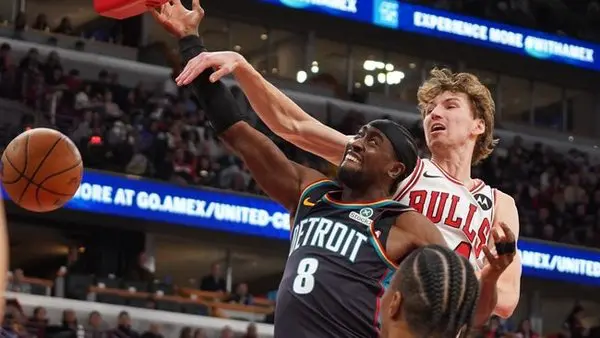
New York just pulled off an 18-point fourth-quarter comeback against Houston on Saturday, with Karl-Anthony Towns (25 points) and Jalen Brunson (20) leading the charge. Chicago, meanwhile, got steamrolled by Detroit 126-110, dropping their eighth straight loss. The market’s clearly punishing the Bulls for that ugly stretch, but the efficiency gap between these teams isn’t nearly wide enough to justify double digits on the road. The writing’s on the wall with this matchup: the Knicks are the better team, but 10.5 is too many points to give a Bulls squad that’s still capable of hanging around at home.
The pace blend projects 100.5 possessions—an up-tempo game that favors scoring variance. New York’s net rating edge of 10.1 points per 100 possessions is real, but spread that across actual game flow and you’re looking at a tighter margin than this line suggests. I’m taking the points all day long.
Game Info & Betting Lines
Game Time: February 22, 2026, 8:00 ET
Location: United Center
TV: MSG, CHSN, NBA League Pass
Current Spread: Bulls +10.5 (-110) | Knicks -10.5 (-110)
Moneyline: Bulls +357 | Knicks -500
Total: 231.5 (Over/Under -110)
Why This Line Exists
The market landed on Knicks -10.5 because Chicago’s eight-game losing streak has tanked their perceived value, while New York’s comeback win over Houston reinforced the narrative that they’re clutch closers. But let’s break down what the efficiency math actually tells us.
New York’s 118.7 offensive rating against Chicago’s 117.4 defensive rating creates a microscopic 0.1-point mismatch per 100 possessions—basically within noise. Going the other way, the Knicks’ 112.9 defensive rating versus Chicago’s 113.0 offensive rating produces a 1.3-point edge for New York’s offense. That’s a small advantage, not a dominant one. The real driver here is the net rating gap: New York sits at +5.7 for the season, Chicago at -4.4. That 10.1-point differential per 100 possessions is legitimate and forms the foundation of why the Knicks are favored.
But here’s where the possessions math changes everything in this matchup: at 100.5 expected possessions, you’re looking at roughly a 10-point swing in actual scoring based on season-long efficiency. Add in Chicago’s 2.0-point home court advantage, and the projection settles around Knicks by 3. The market’s giving you an extra 7.5 points of cushion because recency bias is screaming louder than the math.
The total of 231.5 is basically priced correctly. With a pace blend north of 100 possessions and both teams shooting above 58% true shooting, the projection of 232.3 points aligns with the market. No edge there.
Knicks Breakdown: What You Need to Know
New York’s efficiency profile is elite: 118.7 offensive rating, 112.9 defensive rating, and a 5.7 net rating that ranks among the East’s best. Jalen Brunson (27.0 PPG, 47.3% FG) remains the engine, while Karl-Anthony Towns (19.9 PPG, 11.8 RPG) provides the interior presence. OG Anunoby (16.4 PPG, 1.7 STL) and Mikal Bridges (15.7 PPG, 50.3% FG) give them versatile two-way wings who can switch and shoot.
The Knicks’ 98.6 pace ranks among the league’s slower teams, which means they control tempo and limit possessions when they want to. Their 37.6% three-point shooting and 29.2% offensive rebounding rate create multiple scoring avenues, and their 11.9% turnover rate shows disciplined ball security. In clutch situations (last five minutes, score within five), they’re 13-10 with a 47.1% field goal percentage and 41.6% from deep—they know how to close.
The concern? Miles McBride is out with a sports hernia, which removes a 42.0% three-point shooter and secondary ball-handler from the rotation. That shifts more responsibility to Tyler Kolek and Jordan Clarkson, but it’s not a crippling loss. The bigger issue is New York’s 13-13 road record—they’re not invincible away from Madison Square Garden.
Bulls Breakdown: The Other Side
Chicago’s 113.0 offensive rating and 117.4 defensive rating paint the picture of a team that can score but can’t stop anyone. Josh Giddey (18.4 PPG, 8.4 RPG, 8.5 APG) is the playmaking hub, Matas Buzelis (15.0 PPG, 1.5 BLK) provides length and athleticism, and Anfernee Simons (14.3 PPG, 38.5% 3PT) gives them perimeter shooting—though his questionable status with a left wrist injury is worth monitoring.
The Bulls’ 102.5 pace is faster than New York’s, which forces the Knicks into a slightly more up-tempo game than they prefer. Chicago’s 68.5% assist rate shows they move the ball well, but their 12.9% turnover rate and 23.0% offensive rebounding rate reveal why they struggle to sustain offense against quality defenses. That 6.2-percentage-point offensive rebounding gap compared to New York is a strong disadvantage—the Knicks will dominate second-chance points.
In clutch situations, the Bulls are 17-15 with a 46.2% field goal percentage, which shows they don’t fold late despite their overall record. At home, they’re 15-14, which means the United Center still provides some level of comfort. Jaden Ivey’s absence with a left knee injury removes a secondary scorer, but Collin Sexton (14.1 PPG) and Tre Jones (12.2 PPG, 5.9 APG) can fill minutes.
The Matchup: Where This Game Gets Decided
This game gets decided in the rebounding battle and transition opportunities. New York’s 29.2% offensive rebounding rate against Chicago’s 23.0% creates a 6.2-percentage-point gap that translates to roughly 6-7 extra possessions over the course of 100.5 possessions. That’s significant—those second-chance points will pile up for Towns and the Knicks’ frontcourt.
But here’s where Chicago can stay competitive: the pace blend of 100.5 possessions favors variance. More possessions mean more opportunities for the Bulls’ shooters to get hot, and with Giddey orchestrating the offense, they can push tempo and force New York into uncomfortable spots. The Knicks’ 1.3-point offensive advantage per 100 possessions when attacking Chicago’s defense is real but not overwhelming. If Simons plays and hits a few threes early, this game could stay within single digits deep into the fourth quarter.
New York’s disciplined 11.9% turnover rate versus Chicago’s 12.9% rate shows the Knicks will protect the ball better, but that 1.0-percentage-point edge is small. The real separator is defensive execution: Chicago’s 117.4 defensive rating means they’re going to give up points, and the Knicks’ 118.7 offensive rating means they’ll capitalize. Over 100.5 possessions, that efficiency gap projects to a Knicks advantage, but not a double-digit blowout.
Clutch performance matters here too. Both teams have shown they can execute late—New York at 47.1% shooting in clutch time, Chicago at 46.2%. If this game comes down to the final five minutes, the Knicks have the edge, but it’s not a lock. The possessions math tells a different story than the spread suggests: this is a 3-5 point game, not a 10-point runaway.
Bash’s Best Bet & The Play
I’m backing the Bulls +10.5 here, and I’m doing it with confidence. The projection shows a 3.1-point Knicks win, which gives Chicago a 7.4-point cushion against the spread. That’s too much value to pass up, especially with the pace blend creating scoring variance and Chicago playing at home where they’re 15-14 this season.
New York’s the better team—no question. But 10.5 points on the road against a Bulls squad that’s shown clutch competitiveness and can push pace? This line doesn’t add up once you run the efficiency math. The Knicks will likely win this game, but they’ll have to earn every possession against a Chicago team that’s desperate to snap an eight-game skid in front of their home crowd.
The risk is simple: if New York’s defense clamps down and the rebounding gap turns into a 15-possession advantage, the Bulls won’t have enough firepower to keep it close. But over 100.5 possessions with Chicago’s ability to score and push tempo, I’m betting on variance to keep this within the number.
BASH’S BEST BET: Bulls +10.5 for 2 units.
The market’s disrespecting Chicago here, and I’ve seen this movie before—good teams laying double digits on the road in up-tempo spots rarely cover when the efficiency gap is this narrow. Give me the points and let’s cash.