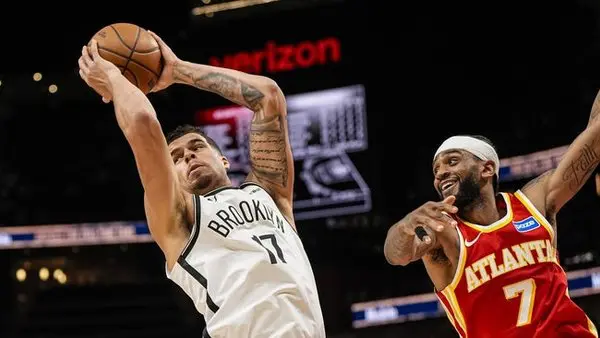
Betting on two teams with losing records requires a deep dive into the underlying numbers rather than just the standings. While the Nets are home underdogs, their bottom-tier defensive rating creates a scoring cushion that defines our prediction for Tuesday’s matchup.
The Setup: Mavericks at Nets
The Mavericks are laying 1.5 points on the road at Barclays Center on Tuesday night, and this line doesn’t add up once you run the efficiency math. Dallas just snapped a 10-game losing streak with a road win in Indianapolis, getting 25 from Khris Middleton and 23 from P.J. Washington in a game where six Mavs scored in double figures. Brooklyn, meanwhile, is spiraling—four straight losses including Sunday’s collapse in Atlanta where they blew an 11-point fourth-quarter lead and missed 11 of their final 12 shots. The projection has Dallas by 0.2 points in a game expected to hit 225 possessions, and with the Nets getting +1.5, there’s a small edge toward Brooklyn catching the points at home. But the possessions math tells a different story when you dig into how these teams actually play.
Cooper Flagg remains out for Dallas with a left foot sprain—his fourth straight absence—but the Mavs showed in Indy they can win without their rookie All-Star. Brooklyn just got Nic Claxton back from a three-game absence, but he couldn’t stop the bleeding against Atlanta. The market’s treating this like a coin flip, and I’ve seen this movie before with two struggling teams in a pace mismatch. this number points to situational advantage once you factor in how Dallas controls tempo.
Game Info & Betting Lines
When: February 24, 2026, 7:30 ET
Where: Barclays Center
Watch: YES (home), KFAA-TV, Mavs.com, NBA League Pass (away)
Records: Dallas Mavericks 20-36 (6-19 road) | Brooklyn Nets 15-41 (8-19 home)
Current Betting Lines (MyBookie.ag):
- Spread: Brooklyn Nets +1.5 (-110) | Dallas Mavericks -1.5 (-110)
- Total: Over 224.5 (-110) | Under 224.5 (-110)
- Moneyline: Brooklyn Nets +100 | Dallas Mavericks -122
Why This Line Exists
The market landed on Dallas -1.5 because the season-long efficiency numbers show a 4.5-point gap per 100 possessions favoring the Mavericks. Dallas sits at -3.3 net rating while Brooklyn checks in at -7.8, and that medium-sized differential is the foundation here. But here’s where it gets interesting: the projected margin is only 0.2 points in Dallas’s favor after factoring in a modest home-court bump for Brooklyn. That’s essentially a pick’em projection against a 1.5-point spread.
The pace blend is the key variable the market’s pricing. These teams play at drastically different speeds—Dallas runs at 102.6 possessions per game while Brooklyn crawls at 97.0. The expected pace blend settles around 99.8 possessions, which is a deliberate, half-court game that favors Dallas’s ability to control tempo. When you’re projecting a total around 225 points over fewer possessions, every efficiency edge matters more. Dallas posts a 110.3 offensive rating against Brooklyn’s 117.4 defensive rating, creating a 7.1-point mismatch when the Mavs have the ball. Meanwhile, Brooklyn’s 109.6 offensive rating against Dallas’s 113.6 defensive rating produces a 4.0-point disadvantage for the Nets.
The writing’s on the wall with this matchup: Dallas controls the pace, limits Brooklyn’s possessions, and exploits a defensive rating gap that’s too wide to ignore. The Nets are 8-19 at home for a reason—they can’t defend consistently, and against a Mavs team that just found some offensive rhythm in Indianapolis, that’s a problem. The market’s essentially saying these teams are even, but the efficiency gap suggests otherwise once you account for pace control.
Mavericks Breakdown: What You Need to Know
Dallas averages 114.3 points per game on 47.1% shooting with a true shooting percentage of 56.6%. They’re not an elite offensive team, but they’re efficient enough to exploit bad defenses, and Brooklyn’s 117.4 defensive rating qualifies. The Mavs move the ball well with an assist rate of 59.4%, and they protect possessions better than Brooklyn with a 12.6% turnover rate. Without Flagg, they’re leaning on committee scoring—Naji Marshall (15.1 PPG on 52.9% shooting), P.J. Washington (14.3 PPG, 7.1 RPG), and Max Christie (13.3 PPG on 42.7% from three) all stepped up in the win over Indiana.
The clutch numbers favor Dallas significantly. The Mavs are 14-22 in clutch situations (38.9% win rate) compared to Brooklyn’s brutal 5-19 mark (20.8%). That’s an 18.1% gap in close-game execution, and while this might not come down to the final possession, it speaks to Dallas’s ability to execute when the game tightens. They shoot 40.6% in clutch moments compared to Brooklyn’s 34.1%, and that discipline matters in a low-possession environment.
The injury situation is manageable. Dereck Lively II and Kyrie Irving are done for the season, but Dallas has adjusted. Daniel Gafford is questionable with an ankle issue but has played through it for 11 straight games. Caleb Martin is probable after missing time before the All-Star break. The Mavs proved in Indianapolis they can win on the road without their best player when the matchup favors their style.
Nets Breakdown: The Other Side
Brooklyn scores 106.8 points per game on 44.3% shooting with a 56.0% true shooting percentage. Michael Porter Jr. leads the way at 24.5 PPG on 47.0% shooting and 37.0% from three, but he doesn’t have enough help. Nic Claxton returned Sunday with 15 points and eight rebounds, but he couldn’t prevent the fourth-quarter collapse. Noah Clowney (12.8 PPG) and Egor Demin (10.7 PPG) provide secondary scoring, but this offense stalls against competent defenses.
The defensive rating of 117.4 is bottom-tier, and it’s been exposed repeatedly down the stretch. Brooklyn allowed Atlanta to close on a 24-2 run Sunday, going 0-for-10 from three in crunch time. That’s not an anomaly—it’s a pattern. The Nets rank 14th in the East for a reason, and their home court provides zero advantage at 8-19. They rebound well on the offensive glass with a 24.8% offensive rebounding rate, but that 2.2-percentage-point edge over Dallas doesn’t compensate for the efficiency gaps everywhere else.
The clutch numbers are catastrophic. Brooklyn’s 5-19 clutch record and 34.1% clutch field goal percentage reflect a team that can’t execute late. They turn the ball over at a 14.1% rate overall, nearly two percentage points worse than Dallas, and those extra possessions matter in a pace-controlled game. The Nets have no injury concerns, but health doesn’t solve execution problems or defensive breakdowns.
The Matchup: Where This Game Gets Decided
This game gets decided in the pace battle, and Dallas holds all the leverage. The expected 99.8 possessions favors the Mavericks’ half-court execution and limits Brooklyn’s ability to generate easy transition buckets. When Dallas controls tempo, they force Brooklyn into contested half-court possessions where the Nets’ 109.6 offensive rating gets exposed against even a mediocre Dallas defense.
The offensive-defensive mismatch heavily favors Dallas. When the Mavs have the ball, they’re operating at 110.3 offensive rating against Brooklyn’s 117.4 defensive rating—a 7.1-point advantage per 100 possessions. Over 99.8 possessions, that projects to roughly seven extra points of scoring efficiency for Dallas. When Brooklyn has the ball, their 109.6 offensive rating against Dallas’s 113.6 defensive rating creates a 4.0-point disadvantage. The net effect is an 11-point swing in efficiency that the pace suppresses but doesn’t eliminate.
The effective field goal percentage gap is small at 1.0 percentage point favoring Dallas, but it compounds over possessions. Brooklyn’s 2.2-percentage-point edge in offensive rebounding provides some second-chance equity, but it’s not enough to overcome the efficiency gap. The Mavs’ 1.4-percentage-point advantage in turnover rate means they’re protecting possessions better, and in a game with fewer than 100 possessions, every extra opportunity matters.
This is exactly the spot where Brooklyn burns you. They’re at home, getting points, coming off four straight losses, and the market’s treating them like a live dog. But they can’t defend, they can’t close games, and they’re facing a Dallas team that just rediscovered its offensive identity on the road. The efficiency gap is too wide to ignore here, even with the pace suppression working in Brooklyn’s favor.
Bash’s Best Bet & The Play
I’m laying the 1.5 points with Dallas. The projection shows a 0.2-point Dallas edge, which creates a small 1.2-point lean toward Brooklyn covering, but that noise-level margin ignores the stylistic mismatch. Dallas controls pace, exploits a seven-point offensive efficiency advantage, and executes in clutch situations at an 18% higher rate than Brooklyn. The Nets are 8-19 at home and just collapsed down the stretch for the fourth straight game. This line’s begging you to take the home dog, but the possessions math and efficiency gaps point to Dallas grinding out a road cover.
The risk is Dallas’s road struggles at 6-19, but they just won in Indianapolis without Flagg, and this Brooklyn defense is significantly worse than Indiana’s. If Gafford sits, there’s some interior concern, but Marvin Bagley showed he can contribute (12 points, 11 rebounds Sunday). The total projection sits at 225, basically in line with the 224.5 market number, so there’s no edge there. I’m taking the points all day long with the Mavericks in a pace-controlled game where efficiency decides the outcome.
BASH’S BEST BET: Dallas Mavericks -1.5 (-110) for 2 units.