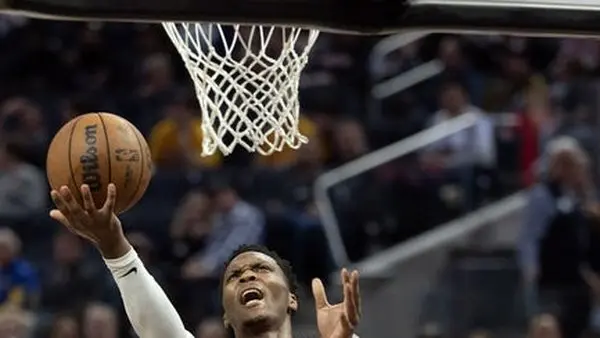
After digging into the efficiency gaps, Bash identifies a staggering 6.5-point cushion that defines his best bet for tonight’s game at Intuit Dome.
The Setup: Indiana Pacers at Los Angeles Clippers
The Clippers are laying 12.5 points at home against a Pacers squad that’s been one of the league’s most disappointing teams this season. At first glance, that number looks justified—Indiana is 15-46 overall and a brutal 5-24 on the road, while LA sits at 29-31 and 15-13 at Intuit Dome. But here’s where it gets interesting: the numbers project this closer to a 6-point margin once you account for the pace blend and efficiency gaps. That’s a 6.5-point cushion built into this spread, and the market’s disrespecting how deliberate this game will play. Indiana runs at 101.9 possessions per game, the Clippers at 96.8, and the expected pace blend of 99.3 possessions changes everything about how this margin develops. The efficiency gap is real—LA holds an 8.0-point net rating advantage per 100 possessions—but translating that into a blowout cover requires more possessions than this matchup will deliver. I’m taking the points all day long.
Game Info & Betting Lines
Game Time: March 4, 2026, 10:30 ET
Venue: Intuit Dome
TV Network: Check local listings
Current Betting Lines (MyBookie.ag):
- Spread: Indiana Pacers +12.5 (-110) | LA Clippers -12.5 (-110)
- Moneyline: Pacers +456 | Clippers -667
- Total: Over/Under 225.5 (-110)
Why This Line Exists
The market built this 12.5-point spread around two narratives: Indiana’s abysmal road record and LA’s overall efficiency advantage. The Clippers post a 115.3 offensive rating and 115.3 defensive rating for a net-zero season profile, while the Pacers sit at 108.7 offensive and 116.7 defensive for a net rating of -8.0. That 8.0-point gap is the foundation here, and it’s legitimate—LA is the better team by every efficiency measure. But the possessions math tells a different story about how that gap translates into actual margin.
At the expected pace of 99.3 possessions, this game plays significantly slower than Indiana’s season average. The Pacers want to push tempo at 101.9, but the Clippers grind at 96.8, and LA controls the pace at home. That deliberate tempo limits the number of scoring opportunities for both sides, which naturally compresses margins. The projection lands at a 6-point Clippers win, roughly half of what the spread suggests. The market’s assuming LA can extend their efficiency advantage into a comfortable double-digit win, but I’ve seen this movie before—slower games keep underdogs within striking distance, even when they’re clearly overmatched.
The Clippers also face rotation questions with John Collins out due to a neck injury, which removes a key frontcourt contributor who’s been efficient all season at 56.0% from the field. Meanwhile, Indiana’s injury report is murky—Pascal Siakam, Andrew Nembhard, and Aaron Nesmith are all questionable, which creates uncertainty about their offensive firepower. If those guys sit, the spread makes more sense. But if even two of them play, Indiana has enough scoring to stay within the number.
Indiana Pacers Breakdown: What You Need to Know
The Pacers are a mess this season, no sugarcoating it. At 15-46, they’ve been eliminated from playoff contention for months, and the absence of Tyrese Haliburton—out for the season recovering from Achilles surgery—has gutted their offensive identity. Without their primary playmaker, Indiana’s offensive rating has cratered to 108.7, one of the worst marks in the league. They shoot 45.1% from the field and 34.9% from three, and their true shooting percentage of 56.0% ranks near the bottom of the NBA.
But here’s what keeps them in games: Pascal Siakam is still a legitimate bucket-getter when healthy, averaging 23.9 points on 48.3% shooting and 37.3% from deep. Andrew Nembhard has stepped into a larger role as the primary ball-handler, posting 17.4 points and 7.4 assists per game. If both are available Wednesday, Indiana has enough offensive firepower to crack 110 points against a Clippers defense that’s been league-average all season at 115.3 defensive rating. The Pacers also rebound decently for a bad team, grabbing 10.3 offensive boards per game, which creates second-chance opportunities that can extend possessions and keep them within striking distance.
The problem is defense. Indiana allows 116.7 points per 100 possessions, and they don’t have the personnel to slow down Kawhi Leonard or Darius Garland. They’re 10-19 in clutch situations this season with a -1.6 plus-minus, which tells you they fold late in close games. This isn’t a team built to steal wins—they’re built to lose close and get blown out on bad nights.
Los Angeles Clippers Breakdown: The Other Side
The Clippers are a .500 team treading water in the Western Conference play-in race. At 29-31, they’re the 9-seed, and their net-zero rating (115.3 offensive, 115.3 defensive) reflects a team that’s perfectly mediocre. But they’ve got Kawhi Leonard playing at an elite level, averaging 27.8 points on 49.6% shooting and 37.8% from three with 2.0 steals per game. When Kawhi’s engaged, LA has enough offensive firepower to beat bad teams comfortably.
The addition of Darius Garland at the trade deadline gives them a secondary playmaker who just made his debut Monday night, scoring 12 points in 23 minutes. Garland’s still shaking off a toe injury, but his presence shifts the offensive dynamic—LA now has two guys who can create shots in the halfcourt, which matters in slower-paced games like this one. Bennedict Mathurin adds 18.0 points per game, and the Clippers shoot 47.9% from the field and 36.1% from three with a 60.0% true shooting percentage, a massive 3.9-point edge over Indiana in efficiency.
Defensively, LA is exactly average. They don’t force turnovers at an elite rate, and they’re not dominant on the glass. But against a Pacers offense that ranks near the bottom of the league, they don’t need to be elite—they just need to be solid. The Clippers are 10-13 in clutch games this season with a -0.1 plus-minus, so they’re not exactly closers either. This is a team that wins games they’re supposed to win, but they don’t blow the doors off overmatched opponents.
The Matchup: Where This Game Gets Decided
This line doesn’t add up once you run the efficiency math against the pace blend. The Clippers hold an 8.0-point net rating advantage, which is the widest gap you’ll see in this matchup. But over 99.3 possessions, that efficiency edge translates to roughly 8 points of expected margin before accounting for home-court advantage. Add in the standard 2-point home bump, and you’re looking at a projected margin around 6 points—exactly where the numbers land.
The offensive/defensive mismatch breakdown tells the rest of the story. When the Clippers offense (115.3 rating) faces the Pacers defense (116.7 rating), you get a -1.4-point mismatch—basically neutral. LA should score efficiently, but they’re not going to torch Indiana. On the flip side, when the Pacers offense (108.7 rating) faces the Clippers defense (115.3 rating), you get a -6.6-point mismatch in favor of LA. That’s where the Clippers build their advantage—by limiting Indiana’s scoring opportunities and forcing them into tough shots.
But here’s the key: the true shooting gap of 3.9 percentage points and the effective field goal gap of 3.0 points are real, but they’re not blowout-level advantages. The Clippers will score more efficiently, but over 99 possessions, that’s worth maybe 4-5 points of margin. The writing’s on the wall with this matchup—LA wins, but they don’t cover 12.5 unless Indiana completely falls apart or key rotation players sit.
The total projection of 226.5 points sits just above the market number of 225.5, giving a slight edge to the over. But with both teams playing deliberate halfcourt offense and the pace blend sitting below 100 possessions, this number points to grind-it-out. I’d lean under in a vacuum, but the projection says there’s a small edge to the over if both teams hit their efficiency marks.
Bash’s Best Bet & The Play
I’m backing Indiana +12.5 with confidence. The projection puts this game at a 6-point margin, which gives us a 6.5-point cushion against the spread. The Clippers are the better team, no question, but they’re not built to blow out opponents in slow-paced games. The pace blend of 99.3 possessions limits scoring opportunities for both sides, and Indiana has enough offensive talent—assuming Siakam and Nembhard play—to stay within striking distance for three quarters.
The efficiency gap is too wide to ignore here in terms of who wins the game, but it’s not wide enough to justify a double-digit spread in a deliberate matchup. LA’s 115.3 offensive rating against Indiana’s 116.7 defensive rating creates a near-neutral mismatch, which means the Clippers won’t score at will. And even though Indiana’s offense struggles, they’ve got enough shot-creators to crack 110 points against an average Clippers defense.
The risk is obvious: if Siakam, Nembhard, and Nesmith all sit, this spread makes perfect sense. Indiana’s bench is thin, and without their top three scorers, they’ll struggle to reach 100 points. But assuming we get at least two of those guys, the possessions math keeps this game within the number. The Clippers win outright, but they win by 8-10, not 13-plus.
BASH’S BEST BET: Indiana Pacers +12.5 for 2 units.