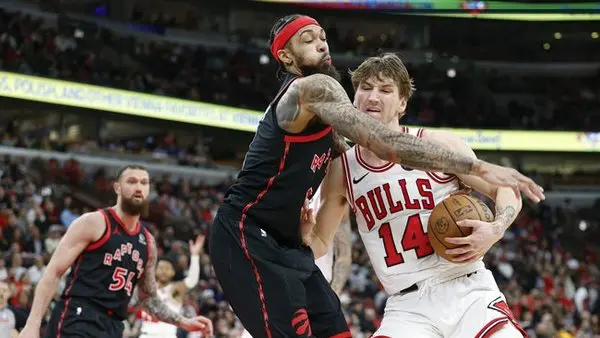
Looking at the efficiency math, it’s clear why the bookmakers have pushed this line toward double digits. We explore how Jalen Duren’s return to the Pistons’ frontcourt impacts the rebounding battle against a desperate Bulls squad.
The Setup: Detroit Pistons at Chicago Bulls
The Pistons roll into the United Center on Saturday night as massive 11-point favorites against a Bulls team that’s lost seven straight. Detroit sits at 41-13, tops in the Eastern Conference, while Chicago limps along at 24-32. On the surface, this looks like a mismatch. And to be clear, it is—the Pistons are the better team by a wide margin. But this line doesn’t add up once you run the efficiency math. The projection puts Detroit winning by 4.3 points, giving us a 6.7-point edge against the spread in favor of Chicago. That’s not noise. That’s a meaningful gap between what the market’s asking and what the possessions math suggests. Cade Cunningham just dropped 42 and 13 assists on the Knicks Thursday night, and Detroit’s 19-7 road record speaks to their ability to win anywhere. But laying 11 in a spot where the efficiency gap projects closer to four? I’m taking the points all day long.
Game Info & Betting Lines
Game Time: February 21, 2026, 8:00 ET
Location: United Center
TV: Home: CHSN | Away: FanDuel SN DET, NBA League Pass
Current Betting Lines (Bovada):
- Spread: Chicago Bulls +11.0 (-110) | Detroit Pistons -11.0 (-110)
- Total: 234.0 (Over/Under -110)
- Moneyline: Bulls +390 | Pistons -550
Why This Line Exists
The market sees a 12.6-point net rating gap between these teams and sets the spread accordingly. Detroit’s +8.4 net rating against Chicago’s -4.2 creates a foundation that justifies Detroit as a sizable favorite. The Pistons operate at 116.7 offensive rating and 108.4 defensive rating—elite on both ends. Chicago counters with 113.2 offensive rating and 117.4 defensive rating, which means they’re getting outscored by 4.2 points per 100 possessions over the full season. That’s the story the Bulls’ seven-game losing streak tells you in real time.
But here’s where the possessions math tells a different story. The pace blend sits at 101.4 possessions, which means this game plays slightly slower than both teams’ season averages. Detroit prefers 100.3, Chicago runs at 102.4, so we’re looking at a controlled tempo that limits total scoring opportunities. When you project that pace over the efficiency differentials and factor in a standard 2.0-point home court advantage, the model projects Detroit by 4.3 points. The market’s asking you to lay 11. That’s a 6.7-point cushion for Chicago to work with, and against a team that’s shown they can score—116.5 points per game on 58.4% true shooting—that cushion matters.
The total sits at 234.0, and the projection comes in at 231.0. That’s a 3.0-point edge toward the under, driven by the pace blend and defensive matchup dynamics. this number points to under when you account for Detroit’s 108.4 defensive rating limiting possessions and Chicago’s inability to consistently generate high-quality looks against elite defenses.
Detroit Pistons Breakdown: What You Need to Know
Cade Cunningham is operating at an All-NBA level right now—25.7 points and 9.7 assists per game with a 46.3% field goal percentage. His 42-point, 13-assist performance against the Knicks on Thursday showcased exactly why Detroit’s offense hums at 116.7 efficiency. Jalen Duren anchors the interior with 17.7 points and 10.4 rebounds while shooting 63.1% from the field, and the Pistons’ 30.6% offensive rebounding rate creates second-chance opportunities that Chicago can’t match.
The shooting depth is real. Duncan Robinson hits 40.2% from three, Tobias Harris provides 13.4 points and veteran stability, and the Pistons’ 54.2% effective field goal percentage reflects quality shot selection. Detroit’s 62.0% assist rate shows ball movement that generates open looks, and their 13.1% turnover rate keeps possessions clean. Isaiah Stewart remains out serving his suspension, and Tolu Smith is questionable, but Jalen Duren’s return from his two-game suspension stabilizes the frontcourt rotation.
In clutch situations—last five minutes, score within five—Detroit’s 71.9% win rate (23-9 record) demonstrates they know how to close games. That’s an 18.8% better clutch win rate than Chicago, which matters if this game stays competitive late.
Chicago Bulls Breakdown: The Other Side
The Bulls are hemorrhaging games right now, but the underlying offensive metrics aren’t terrible. They score 116.5 points per game on 58.4% true shooting—actually slightly better than Detroit’s 57.9%. Josh Giddey orchestrates the offense with 18.2 points and 8.7 assists, Matas Buzelis provides 15.0 points with emerging two-way impact, and the backcourt trio of Anfernee Simons, Collin Sexton, and Tre Jones gives Chicago multiple ball-handlers who can create.
The problem is defense. Chicago’s 117.4 defensive rating ranks among the league’s worst, and they allow opponents to operate efficiently. The Bulls’ 23.2% offensive rebounding rate creates a 7.4-percentage-point gap against Detroit’s 30.6%, which means second-chance points will tilt heavily toward the Pistons. Chicago’s 12.8% turnover rate is solid, but they can’t generate enough stops to compensate for their defensive leakage.
At home, Chicago’s 15-13 record shows they compete better at the United Center than on the road. Their 53.1% clutch win rate (17-15 record) isn’t elite, but it’s respectable enough to suggest they don’t fold in close games. Zach Collins remains out, and Jaden Ivey is questionable with left knee pain after sitting out Thursday’s loss to Toronto.
The Matchup: Where This Game Gets Decided
The efficiency gap is too wide to ignore here—Detroit’s 12.6-point net rating advantage drives the baseline expectation. But when you break down the directional matchups, the picture gets more nuanced. Chicago’s offense against Detroit’s defense produces a +4.8 mismatch advantage for the Bulls. That means Chicago’s 113.2 offensive rating actually matches up reasonably well against Detroit’s 108.4 defensive rating. The Bulls can score when they execute.
Going the other way, Detroit’s offense against Chicago’s defense sits within noise—essentially a wash at -0.7 per 100 possessions. The Pistons will score, but Chicago’s defensive struggles don’t create the kind of blowout environment the 11-point spread implies. Over 101.4 possessions, that +4.8 mismatch advantage for Chicago translates to roughly 4-5 additional points of expected output relative to the season-long averages. That’s not enough to win the game outright, but it’s enough to keep the margin manageable.
The rebounding battle tilts heavily toward Detroit. That 7.4-percentage-point offensive rebounding gap means the Pistons will generate extra possessions through second chances, and Jalen Duren’s presence amplifies that advantage. But Chicago’s ball movement—68.4% assist rate compared to Detroit’s 62.0%—shows they can create quality looks when they share the ball. The pace blend at 101.4 possessions limits total variance, which means fewer possessions for Detroit to pull away and fewer opportunities for Chicago to make a run.
The writing’s on the wall with this matchup: Detroit wins, but the margin stays single digits unless Chicago completely collapses.
Bash’s Best Bet & The Play
I’ve seen this movie before—elite road team, big spread, struggling home team that can still score. The market’s disrespecting Chicago here. The projection shows a 4.3-point Detroit win, and the market’s asking us to lay 11. That 6.7-point edge against the spread is too significant to ignore. Chicago’s offense matches up reasonably well against Detroit’s defense, the pace keeps possessions limited, and the Bulls have shown at home they can compete even during losing streaks.
The risk is simple: Detroit’s talent gap is real, and if Cunningham gets rolling early, this could get ugly. The Pistons’ offensive rebounding advantage creates extra possessions that could compound over 48 minutes. But at 11 points, we’re getting a cushion that accounts for Detroit’s superiority while acknowledging that Chicago’s offensive efficiency keeps them within striking distance.
The total projects at 231.0 against a market number of 234.0, giving us a 3.0-point edge toward the under. The pace blend and defensive matchup dynamics support that lean, but the spread offers the clearer value.
BASH’S BEST BET: Chicago Bulls +11.0 for 2 units.
Detroit wins this game, but they don’t cover. Take the points and let the possessions math work in your favor.