The Orlando Magic are sitting as 1.5-point home favorites against the Toronto Raptors on Friday night at Kia Center, and the market’s telling you something specific here. While Orlando is missing Franz Wagner, they just proved their depth is real by hanging 133 on Miami.
The Magic are sitting as 1.5-point home favorites against the Raptors on Friday night at Kia Center, and the market’s telling you something specific here. Orlando just snapped a four-game skid with a convincing road win in Miami, while Toronto got boat-raced by the Knicks at home. But this line isn’t about recent results—it’s about roster construction and how these teams generate offense when key pieces are missing.
Toronto comes in at 29-20, fourth in the East, with a better road record (16-9) than home mark. Orlando sits 24-22, eighth in the conference, but they’re 13-8 at home and just proved they can score without Franz Wagner. The spread reflects Orlando’s home-court edge and depth advantage, but 1.5 points suggests the market respects Toronto’s road performance and offensive balance. This number makes you work for both sides, which is exactly where sharp lines live.
Game Info & Betting Lines
Game Time: January 30, 2026, 7:30 ET
Venue: Kia Center
TV Network: ESPN
Current Spread: Orlando Magic -1.5 (-110) | Toronto Raptors +1.5 (-110)
Moneyline: Magic -123 | Raptors +101
Total: 220.5 (Over/Under -110)
Why This Line Exists
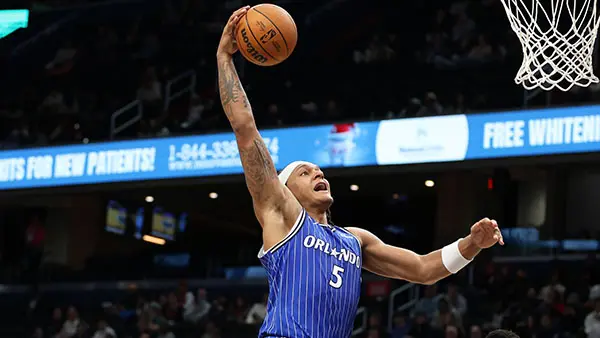
Orlando’s laying the short number because they just hung 133 on Miami without their leading scorer. Paolo Banchero dropped 31 and 12, Anthony Black added 26, and Desmond Bane went 10-of-16 for 23 points. That’s three guys in efficient scoring rhythm, and it happened on the road against a Heat team that plays with pace. The Magic proved their offense doesn’t collapse without Wagner—it redistributes, and when Banchero and Bane are both cooking, they’ve got enough firepower to stay competitive.
Toronto’s getting respect at +1.5 because their road split is legitimate. At 16-9 away from home, they’re actually better on the road than at Scotiabank Arena, which tells you something about their focus and execution in hostile environments. Brandon Ingram’s averaging 21.7 points, Scottie Barnes is putting up 19.4 with 8.3 boards and 5.6 assists, and RJ Barrett adds another 18.8. That’s three scorers in the high teens to low twenties, which creates offensive balance even without Poeltl anchoring the paint.
The total at 220.5 reflects both teams’ ability to score in transition and Orlando’s recent offensive explosion. But Toronto’s missing their starting center, which impacts defensive rebounding and rim protection. The market’s pricing in possessions and efficiency, not just raw scoring talent.
Toronto Raptors Breakdown: What You Need to Know
The Raptors are dealing with two significant absences. Jakob Poeltl remains out after aggravating a back injury in late December, and Chucky Hepburn is sidelined despite averaging 12.8 points and 9.2 assists across 11 appearances. Losing Hepburn’s playmaking—nearly a double-double with 2.4 steals per game—puts more pressure on Barnes to facilitate and Ingram to create off the dribble.
Without Poeltl, Toronto’s interior defense loses its anchor. Rookie Collin Murray-Boyles and Sandro Mamukelashvili are operating in expanded roles, but neither provides the rim protection or defensive rebounding Poeltl delivers. Against a Magic team that just attacked the paint effectively in Miami, that’s a problem. Banchero and Bane both thrive on drives and mid-range creation, and Toronto’s makeshift frontcourt doesn’t have the size or experience to consistently wall off the paint.
Offensively, the Raptors have enough creation with Ingram, Barnes, and Barrett. All three can handle, pass, and score in multiple ways. But the Knicks just exposed Toronto’s defensive fragility—119-92 isn’t a competitive loss, it’s a structural breakdown. When the offense stalls and the defense can’t get stops, this team spirals quickly.
Orlando Magic Breakdown: The Other Side
Franz Wagner’s been out for five straight games with an injury that’s keeping him from contact in practice, but Orlando’s 3-0 against Miami this season and just put up 133 without him. That tells you the offensive system doesn’t rely on one creator. Banchero’s averaging 21.9 points with 8.8 boards and 4.9 assists, making him a legitimate primary option. Desmond Bane’s at 19.0 points with 4.4 assists, and his shooting efficiency (10-of-16 against Miami) keeps defenses honest.
Anthony Black’s emergence is the key here. He’s thriving in the starting lineup, and his 26-point performance in Miami shows he can carry scoring load when needed. Jalen Suggs added 16 in that game, giving Orlando four guys in double figures. That’s depth Toronto can’t match right now, especially with Hepburn out.
At 13-8 at home, Orlando’s comfortable at Kia Center. They control pace, defend the three-point line, and generate efficient looks in the halfcourt. Colin Castleton’s absence doesn’t impact the rotation—he’s emergency depth on a two-way deal. This team’s healthy where it matters, and they’re playing with confidence after snapping that four-game slide in emphatic fashion.
The Matchup: Where This Game Gets Decided
This game comes down to interior defense and offensive redistribution. Toronto’s missing their starting center and primary rim protector, while Orlando just proved they can score without Wagner by spreading the offensive load across Banchero, Bane, Black, and Suggs. The Raptors have three capable scorers, but when defenses load up on Ingram and Barnes, Barrett’s the third option—and he’s not efficient enough to punish aggressive schemes consistently.
Orlando’s depth advantage matters over 48 minutes and roughly 95-98 possessions. The Magic can rotate fresh bodies, keep defensive intensity high, and maintain offensive rhythm without leaning too heavily on any single player. Toronto’s rotation is thinner without Poeltl and Hepburn, which means Barnes and Ingram are carrying heavier creation responsibilities on both ends.
The pace will favor Orlando. They just played up-tempo in Miami and thrived, while Toronto’s coming off a blowout loss where their defensive structure collapsed. When the Raptors can’t get stops, they struggle to control tempo, and that plays directly into Orlando’s hands. Banchero and Bane both excel in transition and early offense, and Toronto’s makeshift frontcourt doesn’t have the foot speed to consistently get back and protect the rim.
Bash’s Best Bet & The Play
I’m laying the short number with Orlando at home. The Magic just proved their offense doesn’t crater without Wagner, and they’re facing a Raptors team missing both their starting center and a key playmaker. Toronto’s 16-9 road record is real, but this isn’t about general road performance—it’s about specific matchup problems. The Raptors can’t protect the rim without Poeltl, and Orlando’s got four guys who can attack the paint and create efficient looks.
The depth advantage matters here. Orlando can rotate Banchero, Bane, Black, and Suggs without losing offensive efficiency, while Toronto’s leaning heavily on Ingram and Barnes to create everything. That’s not sustainable over 95-plus possessions, especially when the defense is already compromised. The main risk is Toronto’s three-headed scoring attack catching fire simultaneously, but even then, I trust Orlando’s home-court execution and defensive versatility to hold serve.
BASH’S BEST BET: Magic -1.5 for 2 units. Orlando’s got the depth, the home-court edge, and the matchup advantages where this game gets decided. Toronto’s missing too many pieces to consistently defend the paint and control tempo. Take the short number and trust the Magic’s structure.