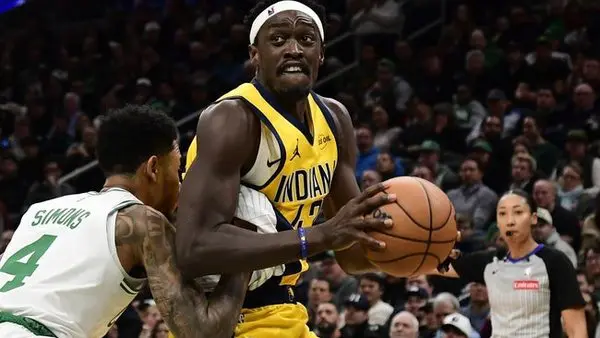
Houston is fighting for West positioning, but they’re walking into a track meet without their best closer. Can Pascal Siakam and Andrew Nembhard pull off the upset, or is Houston’s depth the best bet? Bash delivers the bold truth.
The Rockets are laying 5.5 at Gainbridge Fieldhouse against a Pacers squad that’s limped to 13-36, and the market expects Houston to handle business without Kevin Durant. But this number asks you to trust a road favorite missing its best player against a team that just put up 129 points at home. The pace environment and Indiana’s offensive efficiency at home make this spread wider than the actual talent gap suggests.
Houston sits 30-17 overall but splits hard by location—17-4 at home, 13-13 on the road. That’s not a team built to dominate inferior opponents away from Toyota Center. Indiana is 13-36 for a reason, but 10-16 at home tells you they’re not getting steamrolled in their own building. The Pacers just beat Atlanta 129-124 on Saturday behind 26 from Andrew Nembhard and 25 from Pascal Siakam. That’s the same offensive firepower that makes this total sit at 219, and it’s the same firepower that keeps Indiana competitive in a pace-up environment even when the wins don’t follow.
Game Info & Betting Lines
Houston Rockets (30-17) at Indiana Pacers (13-36)
Date: Monday, February 2, 2026
Time: 7:00 PM ET
Location: Gainbridge Fieldhouse
TV: Space City Home Network, FanDuel SN IN | NBA League Pass
Spread: Rockets -5.5 (-110) | Pacers +5.5 (-110)
Moneyline: Rockets -225 | Pacers +185
Total: Over/Under 219.0 (-110)
Why This Line Exists
The market built this spread around Houston’s superior record and conference standing—fourth in the West versus fifteenth in the East—but it didn’t fully account for Durant’s absence or the road/home context. Durant averages 26.2 points per game and provides the primary offensive creation Houston needs when Alperen Sengun gets trapped or double-teamed. Without him, the Rockets lean harder on Amen Thompson (18.2 PPG, 7.7 RPG, 5.5 APG) and Sengun (21.0 PPG, 9.2 RPG, 6.4 APG), which creates more predictable offensive actions and fewer bailout options in half-court sets.
Indiana’s 13-36 record screams blowout, but the Pacers score enough to stay within range when the game turns into a track meet. They just dropped 129 on Atlanta at home, and that offensive output isn’t an outlier—it’s how this team survives without Tyrese Haliburton. Pascal Siakam (23.8 PPG) and Nembhard (17.6 PPG, 7.5 APG) handle creation duties, while Bennedict Mathurin (17.5 PPG) provides secondary scoring. The total at 219 reflects both teams’ ability to push pace, but the spread at 5.5 assumes Houston controls possessions and executes in the half-court without its best player. That’s a bigger ask than the number suggests.
Rockets Breakdown: What You Need to Know
Houston’s 13-13 road record exposes the team’s limitations away from home, and losing Durant for this spot magnifies every weakness. The Rockets just beat Dallas 111-107 on Saturday behind 21 points, nine assists, and eight rebounds from Amen Thompson, but that game went down to the wire at home against a Mavericks team playing without Luka Doncic. Thompson’s playmaking keeps Houston functional, but he’s not a high-volume scorer who can replace Durant’s shot creation.
Sengun remains the offensive hub, averaging 21.0 points and 6.4 assists, but he struggles when defenses load up on him without a secondary perimeter threat. Durant’s absence means more attention on Sengun in the post and fewer open looks for role players. Steven Adams is out for the season, which shifts backup center duties to Clint Capela and Dorian Finney-Smith, but that rotation doesn’t change the fundamental issue—Houston lacks the offensive firepower to blow out a competent home team without its leading scorer.
The Rockets defend well enough to stay competitive, but they don’t force turnovers at an elite rate or control the glass against bigger frontcourts. Indiana will push pace and attack in transition, which limits Houston’s ability to set its half-court defense and grind possessions. This isn’t a spot where the Rockets can lean on defensive dominance to cover a road spread.
Pacers Breakdown: The Other Side
Indiana’s 13-36 record hides how functional this offense remains even without Haliburton. Siakam just dropped 25 against Atlanta and continues to carry the scoring load at 23.8 per game. Nembhard’s 26-point performance on Saturday shows he can step up as a primary option, and his 7.5 assists per game keep the offense moving. Mathurin adds 17.5 points and provides enough shooting to space the floor for Siakam’s drives.
The Pacers can’t defend consistently, which explains the 13-36 record, but they score enough at home to stay within striking distance. The 10-16 home mark isn’t impressive, but it’s significantly better than their 3-20 road split. Indiana gets comfortable offensive possessions at Gainbridge Fieldhouse and doesn’t fold when opponents make runs. They just hung 129 on Atlanta and stayed competitive throughout the fourth quarter despite leading by only three entering the final frame.
Obi Toppin remains out, which limits Indiana’s frontcourt depth, but the Pacers don’t rely on traditional size to generate offense. They spread the floor, attack in transition, and hunt mismatches in pick-and-roll. That style plays directly into Houston’s defensive vulnerabilities, especially with the Rockets missing Durant’s length and versatility on the perimeter.
The Matchup: Where This Game Gets Decided
This game hinges on pace and half-court execution. The total at 219 suggests both teams will push tempo, which favors Indiana’s offensive style and limits Houston’s ability to control possessions through Sengun. The Pacers thrive in transition and generate quality looks before defenses get set. The Rockets prefer to slow the game down and execute in the half-court, but they can’t dictate pace on the road against a team that just scored 129 at home.
Houston’s road splits tell the story—13-13 away from home means this team doesn’t dominate inferior opponents in hostile environments. Add Durant’s absence, and the Rockets lose their most reliable closer and the player who bails them out when the offense stalls. Thompson and Sengun are talented, but they’re not a duo that blows teams off the floor without additional perimeter creation.
Indiana’s offensive efficiency at home keeps them competitive even when the defense leaks points. Siakam, Nembhard, and Mathurin combine for nearly 60 points per game, and that scoring punch doesn’t disappear just because Houston shows up. The Pacers will give up their share of buckets, but they’ll score enough to stay within a possession or two throughout the fourth quarter. Over a 90-possession game, the difference between these teams without Durant is closer to three or four points than six.
Bash’s Best Bet & The Play
The market overvalued Houston’s record and undervalued Durant’s absence in a pace-up road environment. The Rockets are 13-13 away from home, and that mediocrity doesn’t support laying nearly a touchdown against a team that just scored 129 in this building. Indiana’s offensive firepower keeps them within range, and Houston lacks the perimeter creation to pull away late without its best player.
The risk is Indiana’s defense, which remains porous enough for Houston to build a double-digit lead if Sengun dominates inside. But the Pacers have shown they can score their way back into games at home, and the pace environment favors their transition attack over Houston’s half-court grind. This number needs to be closer to three or four to accurately reflect the talent gap without Durant.
BASH’S BEST BET: Pacers +5.5 for 2 units.
Houston wins this game more often than not, but Indiana stays close enough to cover. The Rockets don’t have the offensive firepower to blow out a competent home team without Durant, and the Pacers score too efficiently at Gainbridge Fieldhouse to fold late. Take the points and trust the pace environment to keep this competitive into the fourth quarter.