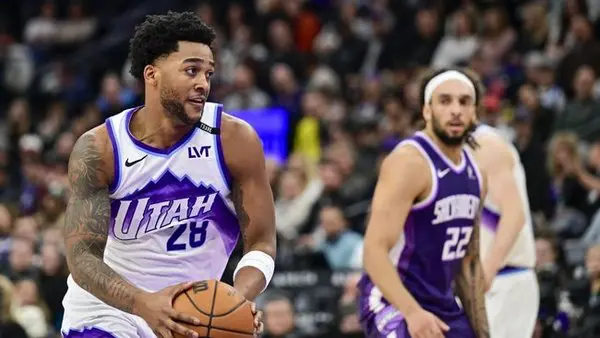
The efficiency math heavily favors Portland in this spot, especially with the Jazz surrendering a league-worst 125.8 points per game. Given Utah’s depth crisis, identifying the Blazers as the top ATS pick hinges on their ability to minimize the 17.3 turnovers that have plagued their road trips.
The Setup: Trail Blazers at Jazz
Portland lays 7.5 points on the road in Salt Lake City Thursday night, and that’s a number that demands context. The Blazers are 26-29 overall but just 10-16 away from home, while Utah sits at 18-37 with an 11-17 home mark. On paper, this looks like a straightforward fade of a struggling road team getting inflated by a three-game win streak that ended Wednesday in Minneapolis. But the matchup math tells a different story once you account for Utah’s depleted rotation and Portland’s offensive balance. The Jazz are missing Keyonte George to an ankle sprain and Walker Kessler for the season, which guts both their backcourt creation and interior presence. Portland counters with Deni Avdija averaging 25.2 points and 6.6 assists alongside Shaedon Sharpe’s 21.4 per game. The total sits at 238, which feels light given both teams’ scoring averages, but the pace and efficiency differentials narrow that window considerably. This line exists because Portland’s road identity doesn’t match their talent level, and Utah’s home court has been anything but a fortress this season.
Game Info & Betting Lines
Game: Portland Trail Blazers at Utah Jazz
Date: Thursday, February 12, 2026
Time: 9:00 PM ET
Venue: Delta Center
TV: Home: KJZZ-TV, Jazz+ | Away: KUNP 16, BlazerVision, NBA League Pass
Current Betting Lines (MyBookie.ag):
- Spread: Portland Trail Blazers -7.5 (-110) | Utah Jazz +7.5 (-110)
- Moneyline: Portland -286 | Utah +224
- Total: 238.0 (Over -110 | Under -110)
Why This Line Exists
The market landed on Portland minus-7.5 because the Blazers own a plus-minus of -2.3 compared to Utah’s -7.5, which represents a five-point margin in season-long efficiency. Add in home court advantage worth roughly three points, and you’re at an eight-point spread before adjustments. But Portland’s road splits complicate that logic. They’re 10-16 away from home, which suggests a team that doesn’t travel well despite having quality pieces. Utah counters that narrative by being equally mediocre at home, posting an 11-17 record at the Delta Center. The Jazz score 2.3 more points per game than Portland (118.3 vs 116.0) and assist on 5.4 more possessions (30.1 vs 24.7), which indicates better ball movement when healthy. The problem is they’re not healthy. George’s absence removes their second-leading scorer at 23.8 points per game, and Kessler’s season-ending injury eliminated their rim protection and a player averaging 14.4 points on 70.3% shooting. Portland’s injury situation is less impactful—Damian Lillard is out for the season but wasn’t part of this roster’s identity, and Matisse Thybulle hasn’t played since October. The line reflects Portland’s talent edge but discounts their road execution, creating a middle ground that neither fully trusts nor fades the Blazers.
Trail Blazers Breakdown: What You Need to Know
Portland’s offense runs through Avdija’s playmaking and Sharpe’s scoring, and that two-headed approach gives them multiple entry points against Utah’s depleted perimeter defense. Avdija posts 25.2 points with 6.6 assists while shooting 46.3% from the field, which means he’s both efficient and high-usage. Sharpe adds 21.4 points on 45.6% shooting, giving Portland two legitimate scorers who can attack closeouts. Jerami Grant chips in 18.8 points at 37.8% from three, which spaces the floor and prevents Utah from collapsing on drives. The Blazers also have Jrue Holiday running point at 15.1 points and 6.5 assists, which stabilizes their halfcourt execution. Portland’s rebounding edge is real—they average 45.9 boards per game compared to Utah’s 44.4, with a significant advantage on the offensive glass at 14.2 offensive rebounds versus 11.8. That’s an extra 2.4 possessions per game, which matters in a close spread. The concern is their turnover rate. Portland coughs it up 17.3 times per game compared to Utah’s 15.8, which negates some of that rebounding advantage. Their road struggles are real, but the matchup dynamics favor their strengths if they can limit self-inflicted errors.
Jazz Breakdown: The Other Side
Utah’s offense still has firepower with Lauri Markkanen leading at 26.7 points on 47.8% shooting and 36.3% from three. He’s a matchup problem for Portland’s frontcourt because he can stretch the floor and attack mismatches inside. Jaren Jackson Jr. adds 19.4 points with 1.4 blocks, giving Utah a secondary scorer who can protect the rim in Kessler’s absence. The issue is depth. With George out, Isaiah Collier steps into the starting lineup, and while he posted 12 points and 14 assists in Wednesday’s blowout win over Sacramento, that performance came against a Kings team that’s been inconsistent defensively. Collier doesn’t have George’s scoring punch, and that shifts more creation responsibility to Markkanen and Jackson. Brice Sensabaugh averages 12.3 points off the bench, but he’s not a high-volume threat. Utah’s shooting percentages are solid—46.9% from the field and 35.0% from three—but their assist rate of 30.1 per game suggests they rely heavily on ball movement to generate quality looks. That’s harder to sustain when your primary ball-handler is sidelined. The Jazz commit fewer turnovers than Portland at 15.8 per game, which keeps possessions alive, but their defensive activity drops off without Kessler’s rim presence. They average 8.0 steals and 3.5 blocks compared to Portland’s 8.0 steals and 4.9 blocks, which means the Blazers have more disruptive length.
The Matchup: Where This Game Gets Decided
This game hinges on Portland’s ability to control the glass and limit second-chance points for Utah. The Blazers’ 14.2 offensive rebounds per game give them a tangible edge in possession creation, and against a Jazz team missing Kessler’s interior presence, that advantage expands. Portland’s defensive activity—4.9 blocks per game—should disrupt Utah’s rim attempts and force them into contested jumpers. Utah counters by moving the ball better, averaging 5.4 more assists per game, which means they’ll hunt open threes and exploit Portland’s closeout discipline. The problem is they’re doing that without George, who was their second-leading scorer and a key initiator. Collier’s playmaking is solid, but he doesn’t have the same scoring gravity, which allows Portland to load up on Markkanen and Jackson. The total at 238 assumes both teams push pace and convert efficiently, but Portland’s turnover issues and Utah’s rotation depth concerns suggest a grindier game. Portland scores 116 per game and Utah scores 118.3, which projects to around 234 combined points before adjustments. The under has value if Portland’s road execution tightens and they limit Utah’s transition opportunities. But if Portland’s rebounding edge translates to extra possessions and they convert at their season average, the over is live. The spread decision comes down to whether you trust Portland’s talent edge to overcome their road splits. Utah’s home court hasn’t been a factor this season at 11-17, and their depth crisis makes it harder to sustain runs against a Blazers team that can score in multiple ways.
Bash’s Best Bet & The Play
Portland’s road struggles are documented, but this matchup tilts in their favor when you account for Utah’s missing pieces. George’s absence removes 23.8 points and 6.5 assists from Utah’s rotation, and Kessler’s season-ending injury eliminates their most efficient interior scorer and rim protector. Portland counters with a deeper rotation and a rebounding edge that should generate extra possessions. The Blazers’ plus-minus of -2.3 compared to Utah’s -7.5 represents a five-point efficiency gap, and even accounting for home court, Portland should cover 7.5 if they execute. The risk is their turnover rate—17.3 per game leaves margin for error—and if Utah’s ball movement creates open looks for Markkanen and Jackson, this stays tight. But Portland’s talent edge and Utah’s depth crisis make the Blazers the side. Lay the points and expect Portland to control the glass and dictate pace.
BASH’S BEST BET: Portland Trail Blazers -7.5 for 2 units.