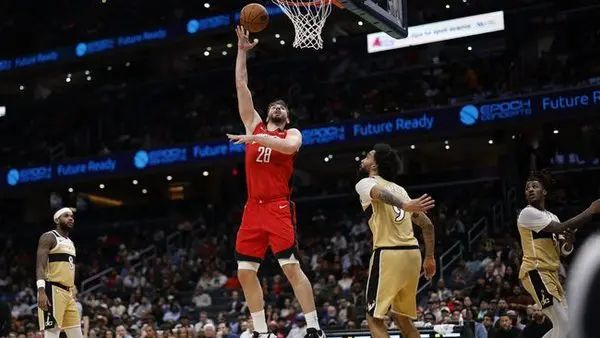
Houston’s top-five rebounding rate meets a Golden State squad struggling for size, yet the 9.5-point spread feels like an overcorrection for the Warriors’ missing stars.
The Houston Rockets are laying 9.5 at home against a Golden State Warriors squad that’s been gutted by injuries, and on the surface, this looks like a mismatch. But the projection tells a different story—a 4-point margin once you account for pace and efficiency. That’s a 5.5-point gap between where the market landed and where the math says this game should close. The Warriors are 12-17 on the road and missing Stephen Curry, Jimmy Butler, and Kristaps Porzingis. Houston’s 20-7 at home with Kevin Durant and Alperen Sengun leading a top-three Western Conference squad. Yet the efficiency gap is narrower than this spread suggests, and the pace blend changes everything in this matchup.
Golden State’s offensive rating sits at 114.2 against Houston’s 111.7 defensive rating—that’s a 2.5-point mismatch in the Warriors’ favor when they have the ball. Meanwhile, Houston’s 117.0 offensive rating against Golden State’s 112.9 defense creates a 4.1-point edge for the Rockets. The net rating differential is 4.0 per 100 possessions, which translates to a projected 4-point margin in a game expected to run at 98.7 possessions. That’s a deliberate, grinding pace—well below Golden State’s season average of 100.7 and Houston’s 96.8. When you run the possessions math at that tempo, you’re looking at fewer opportunities for either team to pull away. I’m taking the points all day long.
Game Info & Betting Lines
Golden State Warriors at Houston Rockets
Date: Thursday, March 5, 2026
Time: 7:30 ET
Venue: Toyota Center
TV: Prime Video
Current Betting Lines (MyBookie.ag):
Spread: Houston Rockets -9.5 (-110) | Golden State Warriors +9.5 (-110)
Total: 216.0 (Over -110 | Under -110)
Moneyline: Houston Rockets -385 | Golden State Warriors +295
Why This Line Exists
The market’s disrespecting Golden State here, and it’s easy to see why. The Warriors are down three of their top five scorers—Curry’s been out since January 30 with a right knee injury, Butler’s done for the season after tearing his ACL, and Porzingis is traveling with the team but sitting Thursday. Moses Moody picked up a wrist sprain Monday against the Clippers and joins the casualty list. That’s a lot of firepower missing, and Houston’s riding momentum after Sengun dropped 32 and 13 in Monday’s win over Washington while Durant added 30.
But here’s what the market’s missing: Golden State’s offensive efficiency hasn’t cratered despite the injuries. They’re still posting a 114.2 offensive rating with 58.6% true shooting—both metrics that hold up against Houston’s defense. The Warriors are generating quality looks through ball movement (71.0% assist rate) and shooting 46.1% from the field. The problem isn’t their offense—it’s that they’re running fewer possessions than usual. At 100.7 pace, they’re one of the faster teams in the league, but Houston’s going to drag this game into the mud at 96.8 possessions per 48 minutes.
The pace blend settles at 98.7 possessions, which means fewer total scoring opportunities and a tighter margin for error. In a game with 98.7 possessions, a 4.0 net rating gap projects to roughly 4 points of separation. That’s the foundation of why this line doesn’t add up once you run the efficiency math. Houston’s the better team at home, no question—they’re 20-7 at Toyota Center with a +5.3 net rating overall. But 9.5 points is asking them to win by more than double what the season-long efficiency numbers support.
Golden State Warriors Breakdown: What You Need to Know
The Warriors are down to De’Anthony Melton, Brandin Podziemski, and Pat Spencer handling the bulk of the backcourt minutes with Curry sidelined. Melton’s averaging 12.4 points but shooting just 29.0% from three, which is a problem when you’re trying to space the floor without your primary creator. Gary Payton II is questionable with an undisclosed issue, and if he can’t go, Golden State’s going to be extremely thin in the rotation.
The saving grace is that the Warriors are still generating 29.2 assists per game and turning the ball over just 15.6 times—basically in line with the market when you compare their 13.7% turnover rate to Houston’s 13.5%. They’re not giving away possessions, which matters in a slow-paced game where every trip counts. Golden State’s clutch record is 11-14 with a -0.5 plus-minus in close games, so they’re not collapsing late—they’re just losing tight ones.
The real concern is on the glass. Golden State’s pulling down 11.1 offensive rebounds per game (25.1% offensive rebound rate), which is going to be a problem against Houston’s 35.4% offensive rebounding rate. That’s a 10.3-percentage-point gap, and in a game with 98.7 possessions, that translates to multiple extra chances for the Rockets. Second-chance points could be the difference in a game projected to land around 225 total points.
Houston Rockets Breakdown: The Other Side
Houston’s rolling with Durant, Sengun, and Amen Thompson as their core three, and all three are dealing with questionable tags heading into Thursday. Sengun’s not feeling 100% but is expected to play after dropping 32 and 13 on Monday. Thompson sprained his right ankle in that same game, though coach Ime Udoka indicated he’d be good to go. Jabari Smith Jr. is also questionable but likely to suit up after a two-game absence.
Assuming they’re all available, Houston’s offense is humming at 117.0 points per 100 possessions with 57.2% true shooting. Durant’s averaging 26.3 points on 51.0% shooting and 40.1% from three, and he’s the kind of versatile scorer who can exploit Golden State’s depleted wing defense. Sengun’s playmaking out of the post (6.3 assists per game) creates advantages when defenses collapse, and Thompson’s athleticism (17.4 points, 7.7 rebounds, 5.2 assists) gives them a secondary ball-handler who can push pace in transition.
The Rockets are 16-17 in clutch situations with a -0.1 plus-minus, so they’re not exactly dominant in tight games either. That’s relevant because if this game stays within single digits late, Houston’s track record suggests they’re not automatic. They shoot just 30.7% from three in clutch time, which is a red flag when you need a bucket to extend a lead.
The Matchup: Where This Game Gets Decided
This game gets decided on the glass and in the halfcourt. Houston’s 10.3-percentage-point edge in offensive rebounding is the clearest advantage they have, and over 98.7 possessions, that’s roughly 10 extra chances to score. If the Rockets convert even half of those second-chance opportunities, that’s 8-10 points right there. Golden State’s going to need to box out with discipline, which is tough when you’re undersized and missing rotation bodies.
The pace blend at 98.7 possessions favors Houston’s style—they want to control tempo, pound the ball inside to Sengun, and let Durant operate in isolation. Golden State would prefer to push the pace and create transition opportunities, but without Curry to orchestrate the break, they’re going to struggle to speed this up. The writing’s on the wall with this matchup: Houston’s going to dictate terms, and the Warriors are going to have to execute in the halfcourt to stay within striking distance.
Here’s the thing, though—Golden State’s 2.5-point offensive advantage when they have the ball (114.2 offensive rating vs. 111.7 defensive rating) means they can score even in a slow game. They’re shooting 55.2% effective field goal percentage, which is slightly better than Houston’s 53.8%. The shooting quality gap is small—just 1.4 percentage points—but it’s there, and it keeps the Warriors competitive. This is exactly the spot where Houston burns you if you’re expecting a blowout. The Rockets are the better team, but they’re not 9.5 points better in a game with this pace and this efficiency profile.
Bash’s Best Bet & The Play
BASH’S BEST BET: Golden State Warriors +9.5 for 2 units.
The market’s asking Houston to win by double digits in a game projected to finish with a 4-point margin. That’s a 5.5-point edge in favor of the Warriors covering, and I’ve seen this movie before—road dogs with competent offensive systems hanging around in slow-paced games where the favorite can’t pull away. Golden State’s not going to win this game outright, but they don’t need to. They just need to stay within two possessions, and the efficiency math says they can do exactly that.
The risk is obvious: if Houston’s questionable players all suit up and the Rockets dominate the offensive glass the way their season numbers suggest, those second-chance points could stretch the margin late. But even in that scenario, Golden State’s shooting quality and ball security keep them within range. this number points to overreaction to the injury report, and I’m happy to take the points with a Warriors team that’s still posting a 114.2 offensive rating despite missing half their rotation. Give me Golden State +9.5, and let’s watch them grind this one out in the halfcourt.