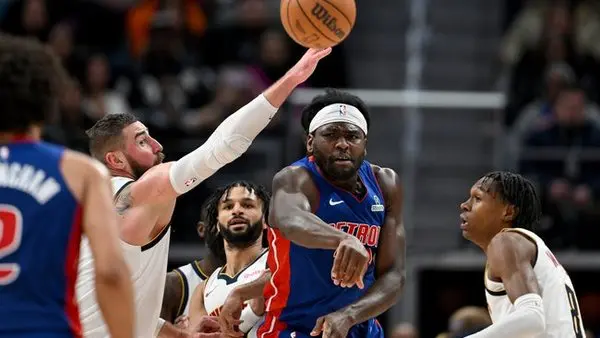
The conference-leading Pistons are heavy 14.5-point favorites against a Wizards squad that just landed Anthony Davis and D’Angelo Russell. Handicapper Bash breaks down why Detroit’s defensive activity is the primary prediction for tonight’s matchup.
The Setup: Wizards at Pistons
The Pistons are laying 14.5 points at home against a Wizards squad that’s been gutted by injuries and sitting at 13-36 on the season. Detroit’s 37-12 record and conference-leading status makes this look like a mismatch on paper, but double-digit spreads always demand scrutiny. The Pistons average 117.5 points per game compared to Washington’s 112.1, and they’re doing it more efficiently across the board—48.0% from the field versus 45.7% for the Wizards. Detroit’s +7.5 plus/minus against Washington’s -10.6 tells you everything about season-long execution. The Wizards are 4-19 on the road, and they’re walking into Little Caesars Arena without Trae Young, without Tre Johnson, and without much hope of keeping pace with Cade Cunningham’s offensive machine. This line exists because the talent gap is real, but the margin matters when you’re asking a team to win by 15.
Game Info & Betting Lines
Date: Thursday, February 5, 2026
Time: 7:00 ET
Location: Little Caesars Arena
TV: Home: FanDuel SN DET | Away: NBA League Pass, MNMT, MNMT2
Current Betting Lines (MyBookie.ag):
- Spread: Detroit Pistons -14.5 (-110) | Washington Wizards +14.5 (-110)
- Moneyline: Detroit Pistons -909 | Washington Wizards +559
- Total: Over 227.0 (-110) | Under 227.0 (-110)
Why This Line Exists
The market set this number at 14.5 because Detroit holds advantages in every meaningful category. The Pistons average 5.4 more points per game, they grab 1.8 more rebounds, and they distribute 1.5 more assists. They’re also committing 0.2 fewer turnovers per contest, which matters when you’re trying to create separation against an overmatched opponent. Washington’s shooting from three-point range is marginally better at 35.4% compared to Detroit’s 35.0%, but that narrow edge gets swallowed by the Pistons’ overall field goal efficiency and their ability to generate high-percentage looks inside.
The Wizards are missing Trae Young, who hasn’t made his team debut yet while dealing with MCL and quadriceps injuries in his right knee. They’re also without Tre Johnson, who’s been out for four consecutive games. That’s two of their primary ball-handlers and shot creators sitting on the sideline. Alexandre Sarr is averaging 17.4 points and 7.7 rebounds, and KyShawn George is contributing 15.3 points with 5.0 assists, but neither player has the usage or efficiency to carry an offense against a top-tier defense. Detroit’s defensive activity—10.6 steals and 6.3 blocks per game compared to Washington’s 7.7 steals and 6.0 blocks—creates extra possessions and transition opportunities that amplify scoring margins.
The Pistons are 20-5 at home, and they just beat Denver 124-121 with Cade Cunningham dropping 29 points and 10 assists. That’s the kind of performance that keeps teams honest, and Washington doesn’t have the personnel to slow him down right now.
Wizards Breakdown: What You Need to Know
Washington’s offense runs through a patchwork rotation without its intended floor general. Alexandre Sarr is shooting 49.6% from the field, which is solid for a young big, and he’s adding 2.1 blocks per game on the defensive end. KyShawn George is handling playmaking duties with 5.0 assists per contest, but he’s also turning it over 2.9 times per game—a turnover rate that gets exploited by a defense as active as Detroit’s. Tre Johnson was averaging 12.9 points before going down, and his absence removes another scoring option who was shooting 39.3% from three.
The Wizards are averaging 112.1 points per game on 45.7% shooting, but those numbers get tested when you’re facing a team that forces 15.4 turnovers per game and converts those mistakes into easy buckets. Washington’s -10.6 plus/minus reflects their inability to sustain competitive stretches, especially on the road where they’re 4-19. Khris Middleton is averaging 10.3 points, but at this stage of his career, he’s not the guy who’s going to take over a game against a conference leader.
The Wizards grabbed 11.8 offensive rebounds per game, which is one area where they can create second-chance opportunities, but Detroit’s 13.1 offensive boards per game shows they’re even better at crashing the glass. Washington’s three-point shooting at 35.4% is respectable, but volume and execution matter more than percentage when you’re trying to keep pace with a team that scores 117.5 per night.
Pistons Breakdown: The Other Side
Cade Cunningham is the engine here, averaging 25.3 points and 9.8 assists per game while shooting 46.0% from the field. His ability to control tempo and create for others makes Detroit’s offense hum, and Jalen Duren’s 18.0 points and 10.7 rebounds give them an interior presence that Washington can’t match. Duren is shooting 63.4% from the field, which means he’s converting at the rim at an elite rate. Duncan Robinson just scored 20 points in the win over Denver, and his 40.1% three-point shooting stretches defenses and opens driving lanes for Cunningham.
Detroit’s 26.8 assists per game reflects their ball movement and offensive connectivity. Tobias Harris is adding 13.5 points with efficient shooting splits, and Kevin Huerter—who’s questionable for this game—has been contributing 10.9 points with 2.6 assists. Even if Huerter sits, the Pistons have enough depth to maintain offensive flow. They’re averaging 117.5 points per game on 48.0% shooting, and they’re doing it with multiple players capable of stepping up on any given night.
Defensively, Detroit’s activity numbers stand out. They’re forcing 10.6 steals per game, which leads to transition opportunities where they can exploit Washington’s lack of backcourt speed. The Pistons are 37-12 overall and 20-5 at home because they execute on both ends and don’t beat themselves with turnovers—they’re committing just 15.4 per game compared to Washington’s 15.6.
The Matchup: Where This Game Gets Decided
This game gets decided in transition and on the glass. Detroit’s 10.6 steals per game creates extra possessions that turn into easy buckets before Washington can set their defense. The Pistons are grabbing 13.1 offensive rebounds per game, which means they’re getting second and third chances to extend possessions and build leads. Washington’s road struggles—4-19 away from home—show they can’t sustain defensive intensity for 48 minutes, and that’s a problem when you’re facing a team that averages 26.8 assists and moves the ball as well as Detroit does.
The scoring differential of 5.4 points per game in Detroit’s favor is significant, but it’s the efficiency gap that makes this spread dangerous. The Pistons are shooting 48.0% from the field and converting at the rim with Duren’s 63.4% efficiency. Washington’s 45.7% shooting and lack of interior presence means they’re settling for contested jumpers and hoping their 35.4% three-point shooting can keep them within striking distance. That’s not a sustainable strategy against a team that’s 20-5 at home.
Cade Cunningham’s 9.8 assists per game means he’s creating high-quality looks for teammates, and Washington doesn’t have the personnel to slow him down without Trae Young and Tre Johnson. Alexandre Sarr can protect the rim with 2.1 blocks per game, but he can’t guard the perimeter and the paint simultaneously. Detroit’s ability to generate 1.8 more rebounds per game means they’re controlling possessions and limiting Washington’s opportunities to stay close.
The total sits at 227.0, which projects to a 120-107 type of game if you split it evenly by the spread. Detroit’s averaging 117.5 per game, and Washington’s putting up 112.1, so the math supports a game in the 230s if both teams execute. But Washington’s road struggles and injury situation make it hard to trust them to hit their season average against a defense that’s forcing turnovers and converting them into transition points.
Bash’s Best Bet & The Play
I’m laying the points with Detroit. The Pistons are 20-5 at home, they’re healthier, and they have the depth to pull away in the second half when Washington’s rotation gets thin. Cade Cunningham and Jalen Duren are both playing at an All-Star level, and the Wizards don’t have the firepower to match them possession for possession. Washington’s 4-19 road record and their injuries to Trae Young and Tre Johnson remove any hope of a competitive fourth quarter.
The risk here is that 14.5 points requires Detroit to stay aggressive for 48 minutes, and conference leaders sometimes coast when they build double-digit leads. But the Pistons have been covering at home, and Washington’s defensive activity numbers—7.7 steals and 6.0 blocks per game—show they’re not creating the kind of disruption that keeps games close. Detroit’s +7.5 plus/minus against Washington’s -10.6 tells you this is a talent gap that shows up every night, not just on paper.
BASH’S BEST BET: Pistons -14.5 for 2 units. Detroit’s depth, home-court execution, and Washington’s injuries make this the right side. The Wizards don’t have the horses to keep this within two possessions, and the Pistons have enough offensive firepower to pull away late.