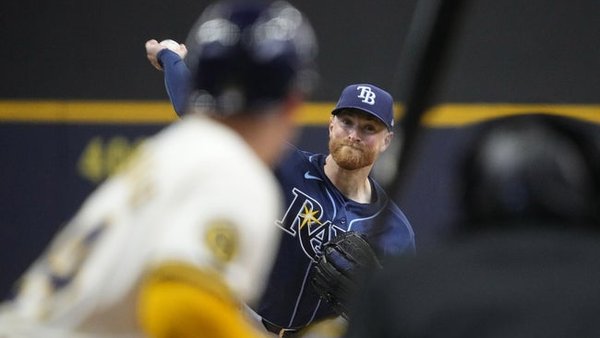
Cole’s track record against Tampa Bay screams one direction — but the moneyline is still treating Bello like he belongs in the same conversation.
Cam Schlittler vs Drew Rasmussen: New York Yankees at Tampa Bay Rays Betting Preview
The market is pricing this as a straightforward pitching edge — Schlittler’s dominant 1.62 ERA and 0.48 WHIP against a Rays rotation held together by duct tape and prayer. After back-to-back losses where the Yankees managed just four runs combined, the books still see enough separation in the starting pitching to make New York a substantial favorite.
The noise around this number is obvious: Opening Day recency bias, the Yankees’ offensive struggles, and Tampa Bay’s recent momentum after taking the first two games of this series. But strip away the small-sample theater, and you’re left with a clear disparity between two starting rotations heading in opposite directions.
The question isn’t whether Schlittler has the edge — it’s whether that edge is worth -156, especially when the Yankees have been swinging pool noodles for the better part of a week.
Game Info & Betting Lines
- Date/Time: Sunday, April 12, 2026, 1:40 PM ET
- Venue: Tropicana Field (Park Factor: 0.95 – pitcher friendly dome)
- Probable Starters: Cam Schlittler (NYY, 2-0, 1.62 ERA) vs Drew Rasmussen (TB, 0-0, 1.80 ERA)
- Moneyline: Yankees -156 / Rays +129
- Run Line: Rays +1.5 (-136) / Yankees -1.5 (+113)
- Total: 7.5 (Over -112 / Under -108)
Why This Number Is Close
The market is balancing Schlittler’s elite early returns against the Yankees’ recent offensive implosion and Tampa Bay’s proven ability to manufacture runs at home. At -156, the books are essentially saying the pitching gap is significant enough to overcome New York’s .202 team batting average and recent struggles.
The legitimate case for Tampa Bay centers on momentum and lineup execution. The Rays have scored five runs in both games against Yankees pitching this series, showing they can solve even quality arms. Yandy Diaz is hitting .373 with a 1.065 OPS, and the lineup has been opportunistic in clutch spots.
But the market might be undervaluing just how catastrophic Tampa Bay’s rotation situation has become. With Pepiot and Boyle on the IL, plus Rasmussen dealing with paternity leave and potential rust, this isn’t just about individual matchups — it’s about a bullpen that’s been taxed covering for a decimated starting staff. The Yankees may not be hitting, but they’re getting a premium arm at a reasonable price against organizational chaos.
What Separates the Pitching
This matchup represents two pitchers moving in completely different directions. Schlittler has been untouchable through 16.2 innings — that 1.62 ERA backed by a microscopic 0.48 WHIP and zero walks allowed. More importantly, his 11.88 K/9 suggests the dominance isn’t just good fortune. He’s been attacking the zone with precision while missing bats at an elite rate.
Rasmussen’s 1.80 ERA looks competitive on paper, but the underlying metrics tell a different story. He’s already allowed two home runs in just 10 innings, and that comes after an extended absence for paternity leave. The rust factor is real, especially against a Yankees lineup that, despite recent struggles, still features legitimate power threats like Jasson Dominguez (.719 OPS, 10 HRs in 381 ABs).
The broader context makes this disparity even starker. The Yankees enter with a 2.60 team ERA compared to Tampa Bay’s 4.63 ERA — a gap that reflects organizational depth. While Schlittler has been the poster child for New York’s early-season pitching dominance, the Rays are cobbling together innings with a makeshift rotation that’s forced their bullpen into unfavorable usage patterns.
In a dome environment that typically suppresses offensive output, Schlittler’s perfect command should translate into efficient innings and a longer leash. Rasmussen, meanwhile, is working back from an absence into a situation where Tampa Bay can’t afford another short outing from their starter.
The Pushback
The concern here is obvious and glaring: the Yankees offense has been historically bad. We’re talking about a team .202 average and offensive struggles that have persisted through multiple games. Elite pitching doesn’t matter if you can’t score, and Tampa Bay has shown they can manufacture runs against quality arms — they’ve put up five runs in both recent games against Yankees pitching.
There’s also the small-sample trap with Schlittler. Sixteen innings is nothing, and even elite stuff can get exposed quickly once hitters see him a second or third time. Rasmussen, despite the layoff, has shown flashes with 10 strikeouts in 10 innings, and returning from paternity leave isn’t the same as coming back from injury.
The biggest red flag might be the line movement and market behavior. If this pitching edge was as obvious as it appears, sharps would have already driven this number higher. The fact that it’s held steady around -156 suggests the market sees something that balances the rotation disparity — likely the Yankees’ offensive struggles and Tampa Bay’s recent success against them.
That said, pitching typically stabilizes before hitting in early-season environments. The Yankees may be struggling at the plate, but they’re getting a legitimate ace-level performance from their starter against a team using organizational filler. Sometimes the market gets the general direction right even when the specific price feels a touch high. The edge here is real — it’s just a question of whether we’re getting paid enough for it.
The Play
I’m taking the Yankees moneyline at -156. The pitching disparity is too significant to ignore, especially with Tampa Bay’s rotation in complete disarray and Rasmussen working through potential rust. While the offensive concerns are legitimate, Schlittler’s dominance in a pitcher-friendly environment should be enough to carry this number. Sometimes you have to trust the starting pitcher edge in spots like this, even when the lineup struggles are obvious.