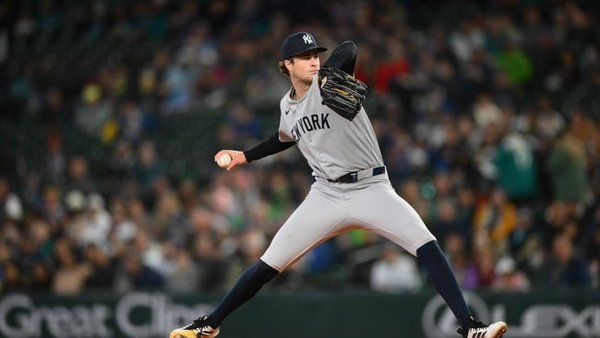
Wacha’s 0.43 ERA screams dominance — but his contact-dependent approach faces a Yankees offense that’s pounded 20 home runs. The -193 price looks steep until you factor in Schlittler’s strikeout dominance against Kansas City’s .214 team average.
Michael Wacha vs Cam Schlittler: Kansas City Royals at New York Yankees Betting Preview
The market sees a pitching duel between two starters with elite early-season numbers, but the underlying metrics tell a different story. Cam Schlittler’s dominant 12.46 K/9 rate against a Royals offense that’s managed just 56 runs in 18 games creates a clear path for the Yankees to control this game. Kansas City enters having lost four straight by one run, showing they can hang around but consistently fall short in crucial moments.
While Michael Wacha’s 0.43 ERA jumps off the page, his modest 7.29 K/9 rate and reliance on soft contact suggests regression is coming. The Yankees’ superior offensive depth, led by Ben Rice’s 1.166 OPS and Aaron Judge’s power threat, should eventually break through against Wacha’s contact-dependent approach. This sets up as backing the better team with better weapons, even if the price feels uncomfortable.
Game Info & Betting Lines
- Date/Time: Friday, April 17, 2026 | 7:05 PM ET
- Venue: Yankee Stadium (Park Factor: 1.05)
- Probable Starters: Michael Wacha (2-0, 0.43 ERA) vs Cam Schlittler (2-1, 2.49 ERA)
- Moneyline: Kansas City +159 / New York Yankees -193
- Run Line: Yankees -1.5 (+113) / Royals +1.5 (-136)
- Total: 8.5 (Over -105 / Under -115)
Why This Number Is Too Steep
The -193 moneyline reflects the market’s respect for New York’s home field advantage and superior roster construction, but it’s also inflated by recency bias around Wacha’s unsustainable early-season dominance. The Yankees are 10-9 with a +10 run differential, while Kansas City sits 7-12 with a -14 mark, suggesting the talent gap is real and measurable.
The legitimate case for Kansas City centers on Wacha’s 0.714 WHIP and the Yankees’ own recent struggles, having lost three of four to the Angels while managing just four runs in yesterday’s defeat. Both teams are 3-7 in their last 10 games, creating the appearance of a coin-flip matchup between similarly struggling clubs.
But here’s the problem with that surface reading: the Yankees’ offensive struggles are more about timing than talent. They’re averaging 4.56 runs per game compared to Kansas City’s 3.11, with 20 home runs to the Royals’ 13. The price feels heavy, but it’s pricing in genuine advantages that should matter over nine innings. The Yankees simply have better hitters in better spots.
What Separates the Pitching
Schlittler’s 97.6 mph four-seam fastball sits 37% of his repertoire and generates a dominant 36.8% whiff rate with 0.189 xwOBA against. His ability to blow strikes past hitters at the top of the zone creates a massive mismatch against a Royals offense that’s struck out 149 times while managing just 56 runs. The strikeout differential tells the story—Schlittler’s 30 strikeouts in 21.2 innings with only one walk shows elite command that Kansas City’s patient approach can’t exploit.
Wacha operates from the opposite end of the spectrum, generating outs through his 22.1% changeup usage at 80.1 mph and relying on weak contact rather than swing-and-miss. His 0.327 xwOBA against his four-seamer reveals vulnerability against power hitters like Judge (0.586 xwOBA this season) and Giancarlo Stanton (14.9% barrel rate). The Statcast data shows Judge owns a devastating .702 xwOBA against left-handed pitching, but even his .535 mark against righties like Wacha creates significant leverage.
The critical gap lies in margin for error. Schlittler’s elite strikeout rate creates clean innings and reduces the impact of defensive mistakes or borderline calls. Wacha’s contact-dependent approach means every at-bat becomes a dice roll—and against Yankees hitters who’ve shown 20 home runs in 19 games, those dice rolls favor the home team. Ben Rice’s .627 xwOBA against right-handed pitching particularly stands out as a potential breaking point in this matchup.
The Pushback
The case against laying this price starts with Wacha’s ridiculous 0.43 ERA and 0.714 WHIP through three starts. Even accounting for small-sample noise, those numbers represent legitimate execution against major league hitters. His changeup has held opponents to 0.235 xwOBA, suggesting he’s not just getting lucky on soft contact—he’s commanding a plus secondary pitch that keeps hitters off balance.
The Yankees’ recent offensive struggles compound the concern. They’ve scored just 11 runs in their last four games, including yesterday’s four-run output that came largely through solo home runs rather than sustained rallies. That pattern suggests they might struggle to string together quality at-bats against a crafty veteran like Wacha who changes eye levels and keeps hitters guessing.
The flip side is Kansas City’s resilience in close games, even during this losing streak. Four straight one-run losses indicate they’re competitive despite inferior talent, and their bullpen ERA of 3.73 isn’t dramatically worse than New York’s 3.27. If Wacha can navigate five or six quality innings, the Royals have shown they can steal games in the late innings through opportunistic offense and solid relief work.
The Run Line Dilemma
That said, what keeps pulling me back to the Yankees is the fundamental talent gap. Kansas City’s .214 team batting average and .632 OPS simply don’t match up well against Schlittler’s strikeout dominance. The model projects New York covering by 2.0 runs, creating a compelling case for the run line at +113.
But here’s where the analysis gets tricky: while the Yankees should win this game based on talent and matchup advantages, converting that edge into a two-run victory requires everything to break right. Wacha’s early-season success, though potentially unsustainable, has been legitimate. His 0.235 xwOBA on the changeup and 0.057 mark on his slider show he’s commanding multiple weapons effectively.
The run line rejection ultimately comes down to variance. Even with Schlittler’s superior arsenal and Kansas City’s offensive struggles, Wacha has the craft to keep this game close through five or six innings. The Royals have shown they can compete in tight games, and their recent one-run losses suggest they’re better than their record indicates.
The smarter play is taking the moneyline despite the steep price. The talent gap is real, the matchup favors New York, and Schlittler’s strikeout dominance provides a clear path to victory. Sometimes the obvious play is obvious for good reason, even when the price makes you wince. The Yankees should win this game—they just don’t need to blow out a scrappy Royals team to make that investment worthwhile.
The Play: New York Yankees -193 (1 unit). The price hurts, but the model’s 4.7% edge on the moneyline reflects genuine advantages that should hold up over nine innings.