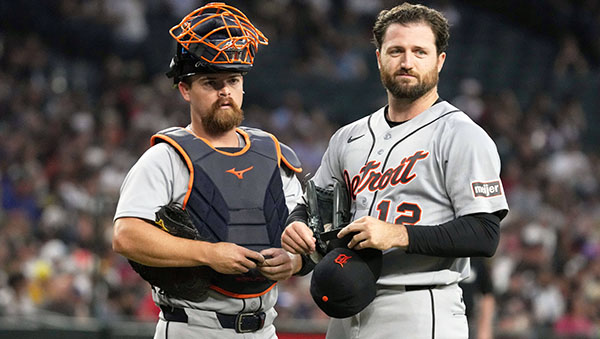
Detroit brings superior pitching and a six-game winning streak into Fenway — the market is still giving them plus money. Casey Mize’s arsenal advantage over Ranger Suarez creates a gap the +104 line hasn’t fully absorbed.
Casey Mize vs Ranger Suarez: Detroit Tigers at Boston Red Sox Betting Preview
The market is pricing this matchup based on venue reputation and seasonal expectations, but the current form tells a different story. Detroit arrives at Fenway Park riding their longest winning streak of the season, including back-to-back walk-off victories that showcase a resilient offensive unit. Meanwhile, Boston’s recent struggles — getting shut out by Minnesota and allowing 13 runs in their previous series opener — suggest the home field advantage might not be as pronounced as the pricing implies.
The pitching matchup reveals the clearest path to value. Casey Mize brings superior strikeout numbers and comparable control metrics, while Ranger Suarez enters with a negative WAR and elevated ERA that signals genuine vulnerability. Getting plus money on the road team with the better pitcher and hotter offense creates the type of market inefficiency that sharp handicappers target.
Game Info & Betting Lines
- Date/Time: Friday, April 17, 2026 | 7:15 PM ET
- Venue: Fenway Park (Park Factor: 1.08)
- Probable Starters: Casey Mize vs Ranger Suarez
- Moneyline: Detroit Tigers +104 / Boston Red Sox -126
- Run Line: Boston Red Sox -1.5 (+159) / Detroit Tigers +1.5 (-194)
- Total: 7.5 (Over -118 / Under -102)
Why This Number Is Close
The market is balancing Detroit’s recent surge against Boston’s perceived home field advantage and pitching depth concerns. Fenway’s 1.08 park factor provides legitimate run inflation, and the Red Sox do possess more offensive upside when healthy — Willson Contreras and Trevor Story represent legitimate power threats that can change game dynamics quickly.
But here’s where the doubt creeps in: Detroit is 10-9 overall but their road performance away from Comerica Park remains largely untested during this hot streak. Four of their six straight wins came at home, and we’ve seen plenty of teams struggle to maintain offensive rhythm in different venues. Boston may be 7-11, but they’re getting a wounded Detroit team that could easily revert to their season-long offensive averages of .237 batting average and .688 OPS against decent pitching.
The line also reflects legitimate questions about whether Detroit’s recent comeback wins represent sustainable offensive improvement or simply hot streaks against inferior pitching. Boston’s bullpen, despite recent struggles, still projects as more reliable than Detroit’s relief corps over a full season, and Fenway’s unique dimensions could neutralize whatever road adjustments Detroit has made.
What Separates the Pitching
Casey Mize enters with a significant arsenal advantage that the current pricing doesn’t fully capture. His split-finger pitch generates a devastating 36.7% whiff rate with just 0.147 xwOBA against, providing a legitimate swing-and-miss weapon that Suarez simply lacks. Mize’s 10.1 K/9 rate towers over Suarez’s pedestrian 6.9 K/9, creating more margin for error when runners reach base.
The control metrics tell an interesting story — both pitchers sit with similar WHIP numbers (Mize 1.44, Suarez 1.47), but Mize’s four-seam fastball at 93.3 mph creates different challenges than Suarez’s sinker-heavy approach. Suarez leans heavily on his 90.2 mph sinker (28.5% usage) that generates just a 10.0% whiff rate and allows 0.381 xwOBA against, making him vulnerable to sustained rallies.
The concerning element for Boston is Suarez’s negative WAR (-0.06), indicating he’s been actively detrimental to his team’s chances. When combined with his 5.02 ERA and the fact that his best secondary pitch — a curveball with 43.8% whiff rate — gets used only 10.5% of the time, it suggests a pitcher operating without a clear identity or reliable game plan.
The Pushback
The primary concern here involves Detroit’s road credentials and whether their recent offensive surge translates away from Comerica Park. The Tigers’ season-long offensive numbers remain troubling — their .237 team batting average and .688 OPS don’t inspire confidence against quality pitching, even when that pitching is struggling. Six straight wins can mask underlying offensive limitations, especially when four of those victories came in the comfort of their home ballpark.
There’s also the sustainability question around this Detroit hot streak. Teams that rely on late-game heroics often find those moments harder to manufacture on the road, where crowd energy and familiar surroundings disappear. Boston’s lineup, despite early struggles, still features proven major league hitters like Wilyer Abreu (.941 OPS) and the potential for Story to break out of his early-season funk.
Contreras’ day-to-day status with back tightness adds another variable. If he’s available and locks down the catching spot, his .936 OPS provides exactly the type of middle-order production that can exploit Mize’s occasional lapses. The Red Sox also possess more proven offensive depth that could capitalize if Detroit’s pitching advantage doesn’t translate to actual run prevention.
But the fundamental pitching gap remains too wide to ignore. Even accounting for potential Detroit road struggles and Boston’s offensive ceiling, Suarez’s negative WAR and inability to consistently command his arsenal creates too many opportunities for a Tigers lineup that’s shown recent life.
Run Environment & Game Shape
The total sits at 7.5 in a park that slightly favors offense, suggesting the market expects a moderate-scoring affair where starting pitching quality determines outcomes. This environment actually amplifies Mize’s advantage — in tighter games, his superior strikeout ability and split-finger weapon become more valuable, while Suarez’s tendency to allow hard contact creates more volatility.
Fenway’s 1.08 park factor means both teams should generate slightly more offense than neutral venues, but the gap between these starters suggests Detroit captures more of that upside. The projected scoring range of 8-10 total runs creates enough margin for the Tigers to win outright while staying under inflated totals.
Joe Jensen’s Pick
JENSEN’S PICK: Detroit Tigers ML (+104) — 2 units
This line offers too much value on a Tigers team bringing superior pitching and recent offensive momentum against a Red Sox club that’s shown real vulnerability. Mize’s arsenal advantage, particularly that 36.7% whiff rate split-finger, gives Detroit the type of starting pitching edge that translates directly to moneyline value. While Detroit’s road credentials remain questionable and their offensive numbers don’t inspire long-term confidence, the immediate pitching gap is too wide to pass up at plus money.
The concern about sustainability is legitimate — six-game winning streaks don’t guarantee continued success, especially on the road. But when you can back the better starter, the hotter team, and get plus money doing it, the math works in your favor. Suarez’s negative WAR and inability to consistently miss bats creates too many scoring opportunities for a Tigers lineup that’s found life at the right time.