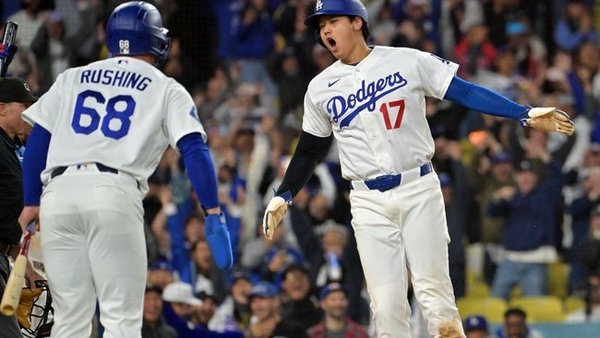
Ohtani’s knuckle curve generates a 51.9% whiff rate while Junk’s fastball command issues create hittable counts — but the -314 price treats this talent gap like a sure thing when yesterday’s close game suggests otherwise.
Shohei Ohtani vs Janson Junk: Miami Marlins at Los Angeles Dodgers Betting Preview
The Dodgers are massive -314 moneyline favorites tonight, and on the surface, it’s easy to see why. Shohei Ohtani brings a microscopic 0.38 ERA to the mound against Janson Junk, who’s posted a pedestrian 3.67 ERA through his first month. But beneath these headline numbers lies a more complex story — one where Ohtani’s arsenal creates specific mismatches that Junk’s repertoire simply cannot answer.
Yesterday’s 5-4 walk-off thriller showed these Marlins can hang around, even against superior talent. But that was against Yamamoto’s splitter-heavy approach. Tonight presents an entirely different challenge, one where the strikeout differential and run prevention gap justify this steep price despite the juice.
Game Info & Betting Lines
- Date/Time: Tuesday, April 28, 10:10 PM ET
- Venue: Dodger Stadium (Park Factor: 0.98)
- Probable Starters: Janson Junk vs Shohei Ohtani
- Moneyline: Miami Marlins +248 / Los Angeles Dodgers -314
- Run Line: Los Angeles Dodgers -1.5 (+113) / Miami Marlins +1.5 (-136)
- Total: 8 (Over -110 / Under -110)
Why This Number Is Steep But Defensible
A -314 moneyline translates to roughly 76% implied probability, which feels aggressive until you examine what drives this spread. The market is pricing in Ohtani’s dominance (0.38 ERA, 9.38 K/9) against a Marlins offense that ranks near the bottom in most meaningful categories. Los Angeles carries a +68 run differential compared to Miami’s -1, suggesting this talent gap extends beyond one starting pitcher.
But here’s what gives me pause: Miami just pushed the Dodgers to the final out yesterday, scoring four runs against what should have been superior pitching. Liam Hicks took Yamamoto deep for three runs in the fifth, showing this lineup has pop when it connects. The Marlins aren’t rolling over, even on the road against playoff-caliber teams.
The question becomes whether this price reflects genuine superiority or market overreaction to Ohtani’s early-season brilliance. I lean toward the former, but that -314 number demands near-certainty that’s tough to embrace in baseball.
What Separates the Pitching
The arsenal gap tells the real story here. Ohtani’s knuckle curve at 80.5 mph generates a devastating 51.9% whiff rate and holds hitters to just .173 xwOBA — a pitch that becomes unhittable when he locates it properly. His four-seam fastball sits 95.4 mph with enough ride to set up that breaking ball, creating a two-pitch combination that explains his 25 strikeouts in 24 innings.
Junk’s approach relies heavily on sinkers (23.4%) and four-seamers (23.0%) that both sit around 97 mph but lack the deception Ohtani brings. His changeup shows promise with a 37.3% whiff rate, but the fastball command issues (evidenced by his 7 walks in 27 innings) create too many hittable counts. When Junk falls behind, he’s forced to challenge hitters with average stuff.
The strikeout differential matters enormously in this environment. Ohtani’s 9.38 K/9 against Junk’s 5.67 K/9 suggests fewer baserunners and shorter innings for the Dodgers’ star. Meanwhile, Junk’s tendency to work deep counts plays directly into the hands of a patient Dodgers lineup that ranks fourth in team OPS.
The Pushback
Yesterday’s game provides the strongest argument against laying this steep price. Miami scratched and clawed to a 4-2 lead against Yamamoto, showing they can solve elite pitching when they get their timing right. Xavier Edwards is hitting .343 with surprising pop, while Otto Lopez (.314 average) gives them legitimate threats at the top of the order.
But here’s the concern that almost derailed this pick entirely: Ohtani’s early-season workload. He’s thrown 24 innings across four starts, and manager Dave Roberts has shown he’ll pull his ace before trouble develops. If Ohtani exits after five innings with a modest lead, this bet hinges on a Dodgers bullpen that’s shown cracks recently.
That said, the talent gap remains too significant to ignore. Even if Ohtani works shorter innings, Junk still has to navigate a .820 OPS lineup that’s scored 164 runs in 29 games. The Marlins’ .716 OPS suggests they’ll struggle to match that production, even in a favorable run environment.
Run Environment & Game Shape
Dodger Stadium’s 0.98 park factor creates a slightly pitcher-friendly environment that should amplify Ohtani’s dominance while exposing Junk’s command issues. The total sits at 8 runs, suggesting oddsmakers expect a moderate-scoring affair where quality pitching drives the outcome.
This environment favors the superior starter, and with Ohtani’s arsenal creating more whiffs and weaker contact, the game shape should tilt toward Los Angeles controlling the tempo. Junk’s higher walk rate (2.3 per nine innings) becomes more problematic in a tight, low-scoring game where every baserunner matters.
The projected scoring range of 4-6 total runs means the Dodgers don’t need explosive offense — just consistent pressure that turns Junk’s marginal stuff into hittable mistakes.
Joe Jensen’s Pick
JENSEN’S PICK: Los Angeles Dodgers Moneyline — 0 Units
I like this side but not at this price. The pitching gap is real, and Ohtani’s arsenal creates matchup nightmares that Junk simply cannot replicate. But -314 demands too much certainty in a sport where yesterday’s close game proves Miami won’t fold quietly.
I looked at laying the 1.5 runs at +113, but that requires a multi-run margin in what projects as a tighter game than the blowouts Ohtani typically creates. This is better suited as a parlay leg or beer money territory — the kind of play where you’re happy to be right but won’t stress the outcome.
The talent differential supports the Dodgers, but this price removes most of the value from what should be a straightforward handicap.