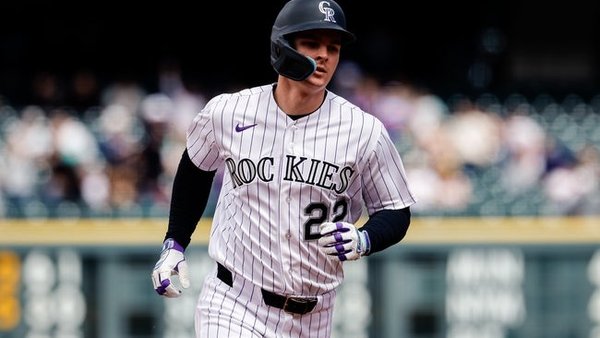
Chase Burns’ devastating slider creates a clear mismatch against Colorado’s contact-heavy offense, but Cincinnati’s -207 price demands near-perfect execution. The talent differential supports the home team — the juice may not.
Kyle Freeland vs Chase Burns: Colorado Rockies at Cincinnati Reds Betting Preview
The market has priced Cincinnati as a heavy home favorite based on legitimate factors: superior team record, home field advantage, and a meaningful pitching talent gap. Chase Burns (2.57 ERA, 9.64 K/9) brings strikeout upside that Kyle Freeland (2.30 ERA, 7.47 K/9) simply can’t match in this ballpark environment.
The Reds’ 18-10 record versus Colorado’s 13-16 mark reflects genuine team quality separation, not just early-season variance. Burns’ Statcast profile — particularly that devastating slider generating 48.3% whiffs — creates a significant mismatch against Colorado’s contact-heavy offense.
Great American Ball Park’s 1.10 park factor tilts toward offense, but both starters have posted sub-3.00 ERAs this season, suggesting the total at 9 already accounts for the run environment. The question becomes whether Cincinnati’s edge justifies laying this much chalk.
Game Info & Betting Lines
- Date/Time: Tuesday, April 28, 6:40 PM ET
- Venue: Great American Ball Park (Park Factor: 1.10)
- Probable Starters: Kyle Freeland (2.30 ERA) vs Chase Burns (2.57 ERA)
- Moneyline: Colorado Rockies +169 / Cincinnati Reds -207
- Run Line: Cincinnati Reds -1.5 (+102) / Colorado Rockies +1.5 (-122)
- Total: 9 (Over +100 / Under -120)
Why This Number Is Steep But Fair
The -207 price reflects legitimate factors: Cincinnati’s superior record, home field advantage, and Burns’ strikeout upside over Freeland’s contact-heavy approach. The Reds have won seven of their last 10 while showing offensive life with Sal Stewart (9 homers) and Elly De La Cruz leading a balanced attack.
Colorado just swept the Mets to gain momentum, but that series came against struggling New York pitching. The Rockies’ .247 team average masks some real offensive threats — Mickey Moniak (.316 average, 1.036 OPS) and Hunter Goodman (7 homers) provide legitimate run production capability.
The concern is paying this much juice for what should be a competitive game. Colorado’s offense has shown it can score against quality arms, and road underdogs in this range often provide value. But the pitching differential tilts heavily toward the home team.
What Separates the Pitching
Burns operates with a devastating slider that generates 48.3% whiffs and holds hitters to .172 xwOBA — a legitimate swing-and-miss weapon that creates clean innings. His 98.0 mph four-seam sits 56.4% of his arsenal, setting up that slider perfectly. The strikeout rate (9.64 K/9) indicates he can work through Colorado’s lineup without relying on defense.
Freeland profiles as a contact-oriented lefty who lives in the zone and trusts his defense. His 2.30 ERA suggests effectiveness, but the peripheral gap is significant — 7.47 K/9 compared to Burns’ strikeout dominance. Freeland’s approach works at Coors Field where he can suppress home runs, but Great American Ball Park’s 1.10 park factor removes that environmental advantage.
The Statcast matchups favor Cincinnati’s hitters as well. Elly De La Cruz (.520 xwOBA) and Sal Stewart (.483 xwOBA) profile as serious threats against Freeland’s contact-oriented style, while Colorado’s top-of-order struggles against Burns’ slider arsenal. Hunter Goodman’s .491 xwOBA provides Colorado’s best chance, but his 32.8% whiff rate plays into Burns’ strikeout approach.
Burns has the clear edge in stuff, matchup dynamics, and park environment, making this more about execution than talent differential.
The Pushback
Here’s the problem: this price offers minimal value even if everything breaks right. At -207, Cincinnati must win roughly 67% of the time to show profit, and that’s aggressive pricing for a regular season game between competitive teams.
Colorado’s recent sweep of the Mets demonstrates their ability to win as underdogs. Moniak’s .385 xwOBA and 25.6% whiff rate suggests he can handle Burns’ slider, while Goodman’s .491 xwOBA indicates genuine power threat capability. The Rockies have scored 4.07 runs per game this season — not an offense to completely dismiss.
My model shows a 3.9% implied probability edge toward Colorado, suggesting the market has overcorrected on Cincinnati’s home dominance. The run line at +102 offers better value for the Reds’ backers, but even that feels like paying retail price for a moderate edge.
The talent gap between Burns and Freeland remains real, and Cincinnati’s home record should carry weight. But at these prices, we’re laying significant juice for what projects as a competitive game.
Run Environment & Game Shape
Great American Ball Park’s 1.10 park factor suggests a moderate offensive environment, but both pitchers have shown run prevention ability this season. The total at 9 feels appropriately calibrated for this venue and matchup.
Burns’ strikeout rate projects for efficient innings, while Freeland typically works quickly through lineups. This sets up as a 4-3 or 5-4 type game where early leads matter significantly. The park factor doesn’t dramatically favor either offensive approach — both teams can score but neither projects for explosive output.
Cincinnati’s .213 team average masks their power (37 homers), while Colorado’s .247 mark reflects more consistent contact. Burns’ ability to generate swings-and-misses should neutralize Colorado’s contact advantage, but baseball rarely follows the script perfectly.
The Pick
I lean Cincinnati based on the pitching matchup and home field advantage, but this price is too steep for a confident play. The talent differential supports the Reds, Burns’ slider creates genuine problems for Colorado’s contact-oriented offense, and the home team gets the better park environment.
But at -207, we’re paying premium pricing for what should be readily apparent advantages. The model suggests a small edge toward Colorado at these odds, though I disagree with backing the road underdog against Burns’ strikeout arsenal.
My preference would be the run line at +102, where Cincinnati’s talent edge can manifest as a comfortable victory rather than requiring a specific result. The model strongly recommends that approach with a 3-unit play, and the logic makes sense — Burns should dominate enough to create separation.
However, I’m passing on the moneyline entirely. When the price doesn’t match the actual game dynamics, discipline matters more than forcing action.
Pick: Pass (No Play) — 0 units
The talent favors Cincinnati, but the price offers no value for moneyline backers. Consider the run line if you want Reds exposure, but this moneyline requires too much juice for a competitive regular season game.