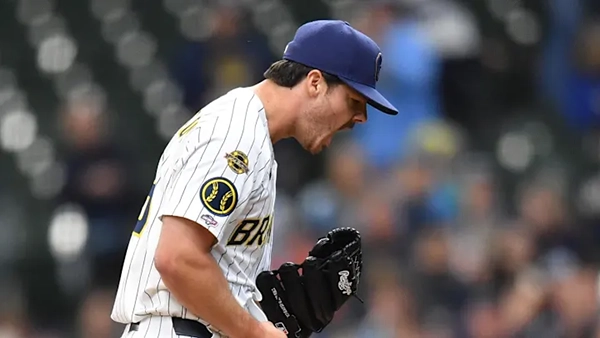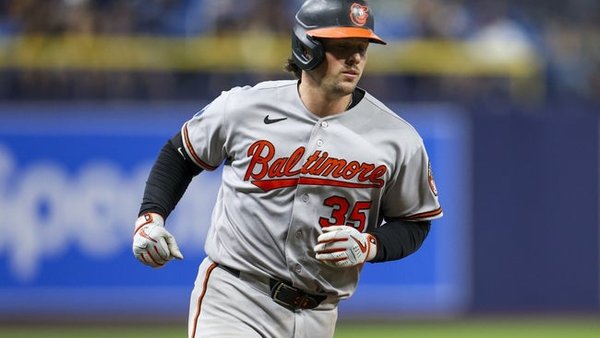
Two pitchers with ugly ERAs still generate whiffs at elite rates — Detroit’s one run in three games suggests the total is pricing in offense that isn’t coming.
Jack Flaherty vs Chris Bassitt: Detroit Tigers at Baltimore Orioles Betting Preview
Two of baseball’s worst offensive teams meet Friday night at Camden Yards in what should be a pitcher-friendly environment despite surface numbers suggesting otherwise. Jack Flaherty (0-5, 5.77 ERA) takes the mound for Detroit against Chris Bassitt (3-3, 5.44 ERA) for Baltimore in a matchup where both starters carry inflated ERAs but possess the arsenal to limit run production.
The market has set this total at 8.5, seemingly accounting for the poor pitching statistics while undervaluing just how anemic these lineups have become. Detroit enters this series having scored just one run in their last three games while riding a 1-9 record over their last 10. Baltimore isn’t much better offensively, ranking among the bottom third in OPS at .700 with a strikeout-heavy approach that plays into both starters’ strengths.
The real story here isn’t the pitchers’ ERAs — it’s the complete offensive collapse both teams are experiencing at exactly the wrong time for over bettors.
Game Info & Betting Lines
- Date/Time: Friday, May 22, 2026 | 7:15 PM ET
- Venue: Oriole Park at Camden Yards (Park Factor: 1.01)
- Probable Starters: Jack Flaherty vs Chris Bassitt
- Moneyline: Detroit Tigers +112 / Baltimore Orioles -132
- Run Line: Baltimore Orioles -1.5 (+164) / Detroit Tigers +1.5 (-200)
- Total: 8.5 (O -114 / U -106)
Why This Number Is Close But Catchable
The market sees two pitchers with ERAs north of 5.40 and sets a reasonable total expecting offensive production. That’s logical on paper — Flaherty’s 5.77 ERA and Bassitt’s 5.44 ERA suggest runs should come easily. The line makers are balancing these poor pitching numbers against two below-average offenses, landing on 8.5 as the compromise.
But the market is missing the severity of the current offensive context. Detroit’s recent form tells a more compelling story than season-long averages: they’ve managed just one run across their last three games and have lost six straight. This isn’t a team that’s been unlucky — they’re genuinely struggling to generate any offense. Baltimore has been marginally better but still ranks 24th in team OPS at .700, and their recent series sweep at Tampa Bay exposed significant holes in their lineup depth.
The key insight is that both pitchers, despite their inflated ERAs, maintain strong strikeout rates that should translate well against these specific lineups. Sometimes bad ERA pitchers are still effective run preventers in the right matchup.
What Separates the Pitching
Here’s where the Statcast data reveals the real story behind those ugly ERAs. Flaherty’s 92.5 mph four-seam fastball sits 48.6% of his arsenal and generates a solid 12.2% whiff rate, while his slider at 84.6 mph produces an impressive 28.9% whiff rate with a .357 xwOBA against. His knuckle curve rounds out the arsenal at 78.0 mph with a devastating 37.3% whiff rate. The stuff is clearly there — Flaherty’s 9.89 K/9 rate confirms he can miss bats when he commands the zone.
Bassitt’s approach differs but offers similar strikeout upside. His sinker-heavy attack (37.8% usage at 91.6 mph) pairs with a 70.9 mph curveball that generates 28.9% whiffs and holds hitters to just .309 xwOBA. The cutter at 89.3 mph adds another dimension with 21.2% whiffs. While his 6.28 K/9 trails Flaherty’s, Bassitt’s ground ball approach should play well against Detroit’s power-dependent lineup.
The critical gap here isn’t talent — it’s command consistency. Both pitchers have shown the ability to dominate when their location is sharp, but both have also been prone to big innings when they miss spots. Against these struggling lineups, the margin for error increases significantly. Detroit’s .236 team average and 428 strikeouts suggest they’ll chase, while Baltimore’s 464 strikeouts indicate similar vulnerability to quality stuff.
The Pushback
The obvious concern is those ERA numbers don’t lie — both pitchers have been genuinely poor this season. Flaherty’s 1.603 WHIP and Bassitt’s 1.698 WHIP indicate they’re putting runners on base at alarming rates. When I see those walk rates and those ERAs, I genuinely worry about betting against runs. These aren’t pitchers who’ve been unlucky — they’ve been consistently leaky, and that creates real concern about the under.
The variance factor is equally troubling. Early-season numbers can deceive, but these ERAs represent genuine struggles with command and execution. Both pitchers could easily revert to the exact form that created those bloated numbers, delivering exactly the kind of performances that make over bettors cash tickets. Detroit, despite their recent struggles, still has talent in Riley Greene (.326 average) and Kevin McGonigle (.286 average), while Baltimore counters with Samuel Basallo (.277 average) and Adley Rutschman (.266 average).
Most concerning is the statistical reality that both pitchers have been putting multiple runners on base per inning. Even these struggling offenses eventually capitalize when pitchers consistently challenge the strike zone with runners in scoring position. The weather and Camden Yards’ dimensions could also play a factor — any wind blowing out could turn routine fly balls into runs, exactly what struggling pitchers can’t afford.
The Case for Under 8.5
Despite those legitimate concerns about the pitchers’ ERAs and control issues, the current offensive context is simply too compelling to ignore. Detroit has managed one run in three games — that’s not bad luck or small sample variance, that’s a lineup completely out of rhythm facing quality stuff.
The Statcast matchup data supports the under thesis when you dig deeper. Detroit’s projected lineup shows concerning contact quality against right-handed breaking balls, with Matt Vierling posting just a .315 xwOBA versus righties and Dillon Dingler carrying an 18.3% strikeout rate despite his power numbers. Baltimore’s lineup is similarly vulnerable to Flaherty’s slider-curve combination, with multiple hitters showing whiff rates above 20% against similar arsenals.
The key insight is that both pitchers, despite their command issues, still miss bats at above-average rates. Flaherty’s 9.89 K/9 and Bassitt’s ability to generate weak contact through his sinker-curve combo create realistic paths to keeping these struggling lineups off the scoreboard. When offenses are this cold, pitchers don’t need to be perfect — they just need to avoid the big inning.
While the offensive context is compelling, those ERA concerns are legitimate and create enough doubt to limit my exposure. The under represents solid value at -106, but this isn’t a spot to get aggressive given the legitimate variance concerns with both starters’ recent form.
Bet: Under 8.5 (-106) — 2 units