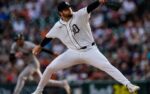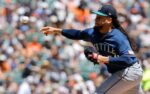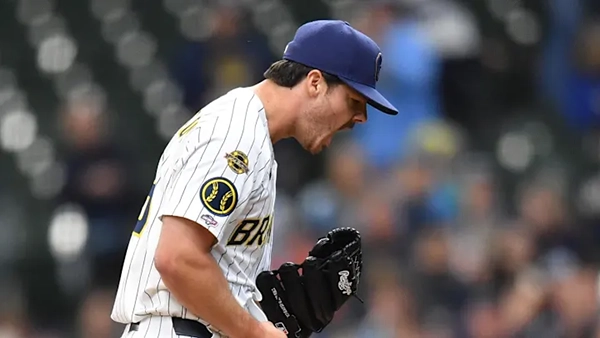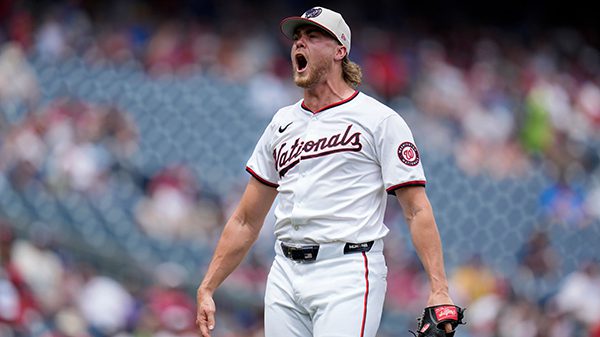
Atlanta is missing Baldwin, Murphy, and Farmer — three legitimate run-producers stripped from a lineup the total of 9 appears to price at full strength. Holmes’ 46.6% slider whiff rate and Iglesias’ scoreless 15.2-inning stretch give the Braves a back-end structure that caps scoring on both sides — a ceiling the posted number has not caught up with.
Jake Irvin vs Grant Holmes: Washington Nationals at Atlanta Braves Betting Preview
The total of 9 on this game is doing a lot of work. It’s pricing in a full-strength Atlanta lineup against a below-average Nationals rotation, but the reality on the ground looks different. Drake Baldwin (.931 OPS, 13 HR) and Sean Murphy are both on the 10-Day IL — oblique and finger, respectively — removing the two primary catchers from a Braves lineup that already ranked more on pitching than run-scoring in their best stretches. Kyle Farmer is also out. That’s three bats gone, and the lineup that takes the field today is meaningfully lighter than the one the market is implicitly pricing.
On the pitching side, Grant Holmes (3.80 ERA, 3-1) enters with a real quality edge over Jake Irvin (5.79 ERA, 1-4), and Atlanta’s bullpen — anchored by Raisel Iglesias, who has not allowed a run in 15.2 innings this season — provides the kind of back-end insurance that naturally suppresses the second half of any game. The thesis isn’t that this becomes a shutout. It’s that the combination of a depleted Braves offense, Holmes holding his ground for five-plus innings, and Iglesias slamming the door late pushes the final number to 9 or under.
The under at -115 reflects a market that leans the same direction. That price is acceptable for a 2-unit play with a clear structural foundation.
Game Info & Betting Lines
- Date/Time: Saturday, May 23, 2026 | 4:10 PM ET
- Venue: Truist Park (Park Factor: 1.01 — neutral)
- TV: MLB.TV, BravesVision, Nationals.TV
- Probable Starters: Jake Irvin (WSH, 1-4, 5.79 ERA) vs Grant Holmes (ATL, 3-1, 3.80 ERA)
- Moneyline: Washington Nationals +158 / Atlanta Braves -188
- Run Line: Atlanta Braves -1.5 (+102) / Washington Nationals +1.5 (-122)
- Total: 9 (Over -105 / Under -115)
Why This Number Is Close
The market set this total at 9 for defensible reasons. Irvin’s 5.79 ERA screams vulnerability — if Atlanta’s lineup, even shorthanded, gets into him early, runs pile up fast. The Nationals’ own pitching staff carries a 4.96 ERA, meaning Atlanta could reasonably be expected to produce four or five runs on their own. Add those projections together and you’re already at the number before any bullpen erosion.
But here’s the problem: the book is partially right for the wrong reasons. Irvin is genuinely bad, but Washington’s offense (.738 OPS as a team) is not the kind of lineup that torches a competent Atlanta pitching staff into blowout territory. The Nationals have scored zero runs across their last three games by the season baseline — a cold stretch that doesn’t need to persist to matter. The concern is that the total of 9 is priced as though both offenses are operating at peak capacity, which the injury report and recent form both push back against.
Where I think the market is slightly wrong: it’s underweighting the back half of this game. Once Holmes exits — probably after five innings given his elevated walk rate — Iglesias and Atlanta’s staff shut the door. The Braves’ depleted lineup creates a ceiling on their own run production. The numbers project a combined 9.5, and I’m comfortable taking the half-run under at -115.
What Separates the Pitching
The gap between these two starters is real but nuanced. Holmes leans heavily on a slider — 37.2% usage at 85.2 mph — that generates an extraordinary 46.6% whiff rate and holds hitters to a .308 xwOBA. That’s a legitimate put-away pitch, one that explains how he’s managed a 3.80 ERA despite 22 walks in 47.1 innings. His four-seamer sits at 94.4 mph with only a 10.8% whiff rate — hitters make contact on the fastball — which means his success depends on the slider doing damage, and against a Washington lineup that isn’t particularly disciplined, it can. His curveball (9.5% usage, .216 xwOBA) adds a third shape that freezes batters. Holmes creates weak-contact innings when the slider is working, and that’s the version that keeps scores in the 2-3 run range.
Irvin is a different story. His four-seamer sits at 92.6 mph with a passable 23.2% whiff rate, but his sinker — thrown 24.7% of the time — generates a damaging .493 xwOBA against and only a 5.9% whiff rate. That sinker is getting hammered. His best weapon is a curveball at 77.1 mph that produces a 43.4% whiff rate and .267 xwOBA, but against Atlanta’s top-of-order, he’ll need it to work early and often. Matt Olson carries a .472 xwOBA and has gone deep twice in 19 career plate appearances against Irvin. Michael Harris II carries a .514 xwOBA against right-handed pitching and a .470 xwOBA overall with an 8.8% barrel rate. These are dangerous contacts waiting to happen — the question is whether the Braves’ depleted lineup around them can capitalize.
The pitching edge belongs to Holmes, but the more important structural point is the ceiling on both offenses. Holmes’s slider ceiling caps Washington’s scoring potential. Irvin’s sinker vulnerability is real, but the Baldwin/Murphy/Farmer absences strip the Braves of three legitimate run-producers. The math still points under.
The Pushback
The honest concern is Irvin’s volatility. A pitcher posting a 5.79 ERA with a sinker generating a .493 xwOBA doesn’t offer a clean floor — he can implode in the third inning and blow this total open before Holmes throws his 60th pitch. That’s a real risk, not a hypothetical one.
There’s also a BvP flag worth acknowledging. Ronald Acuña Jr. is hitting .500 (4-for-8) in 8 career plate appearances against Irvin. That’s a thin sample, but it’s in the same direction as everything else suggesting Irvin struggles to retire this lineup’s top end. Acuña’s .433 xwOBA against right-handed pitching generally already pointed that way.
What I’d say to the pushback: the edge here is half a run at a -115 price. That’s not a fat number. This isn’t a confident hammer — it’s a moderate-conviction play built on structural factors that the market has partially but not fully priced. The injury-depleted Braves offense provides the real buffer, not Irvin pitching over his head. If the Braves’ shortened lineup produces two or three runs and Holmes does his job for five innings, we cash without Irvin needing to be good. That’s the path.
Angles I’m Not Taking
The Atlanta moneyline at -188 is a reasonable favorite price given the talent gap, but I’m not paying juice on a game where Irvin can get shelled and the Nationals can still cover via a crooked inning or two. The moneyline requires Irvin to not completely fall apart, which is too much to ask at that price.
The over at -105 is the more interesting wrong-side argument. You’re getting the Braves’ dangerous middle order — Olson (.472 xwOBA), Harris (.470 xwOBA overall, .514 vs. RHP) — against a starter who’s been hit hard all season, at near-even money. I get the appeal. But Baldwin and Murphy being out matters more than the book seems to be acknowledging, and Iglesias’s 15.2 scoreless innings aren’t going away. The over requires Irvin to allow a lot of early damage and then the back half to also fall apart — that’s two things going wrong instead of one.
Run Environment & Game Shape
Truist Park carries a 1.01 park factor — essentially neutral, neither suppressing nor amplifying run totals meaningfully. That means no park-driven thumb on the scale in either direction; whatever runs cross the plate will be earned through pitching and lineup execution, not inflated by a bandbox environment.
The game shape I expect: Holmes works five innings, gives up two or three runs, and hands a close game to a bullpen anchored by Iglesias. Irvin navigates early trouble, possibly surrendering a couple of runs to Atlanta’s top-of-order, but the depleted middle-and-bottom of that lineup — with Baldwin, Murphy, and Farmer all absent — doesn’t have the depth to extend a crooked inning. Both teams end up in the 2-4 run range individually, and the final lands at or under 9. The -115 juice on the under confirms that the market leans this direction too; we’re not fighting the book, just agreeing with it at a price that represents acceptable value given the structural ceiling arguments outlined above.
The Holmes slider ceiling, the Iglesias lock-down late, and a shorthanded Atlanta lineup that can threaten but not pile on — that’s the framework. It’s a moderate-conviction play, and the half-run edge at -115 is worth 2 units.
Bet: Under 9 (-115) — 2 Units