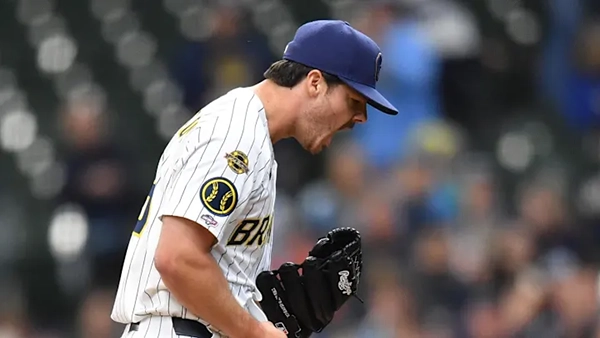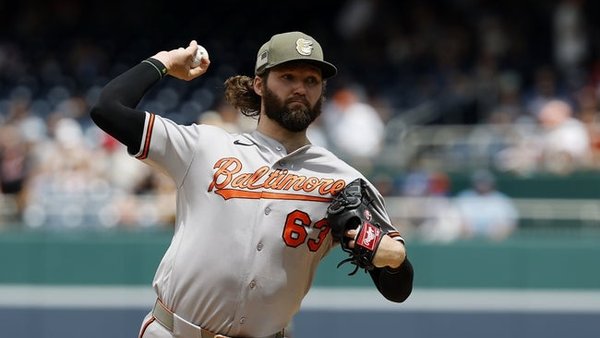
Baltimore’s -124 moneyline prices this as a clear home favorite, but the Orioles own a -56 run differential — worse than Detroit’s -26 — and are outperforming their underlying production. Young’s 1.48 WHIP and a split-finger sitting at .445 xwOBA against create real exposure against a Tigers lineup the market is heavily discounting.
Framber Valdez vs. Brandon Young: Detroit Tigers at Baltimore Orioles Betting Preview
The market has Baltimore installed as a -124 favorite at home in what projects as a coin-flip game. That gap — between the pricing and the expected outcome — is where the value lives on the Detroit Tigers moneyline at +106. This isn’t a strong play on Detroit’s ability to win; it’s a value play on the market overweighting home-field advantage and a 3-1 record from a starting pitcher whose underlying numbers are quietly alarming.
The Tigers arrive having lost seven straight, and Baltimore snapped its own three-game skid with a 7-4 win on Friday. Neither team is playing inspiring baseball. But context matters here: when the numbers call a game even and plus money is sitting on one side, you take the number.
Detroit’s team ERA of 3.97 against Baltimore’s 4.95 represents a meaningful staff-wide gap that becomes amplified if starters don’t go deep — and with the pitch count exposure both of these arms carry, the bullpens are going to matter. The Tigers’ run prevention advantage points directly toward the plus-money side of this board.
Game Info & Betting Lines
- Date/Time: Sunday, May 24, 2026 — 12:35 PM ET
- Venue: Oriole Park at Camden Yards | Park Factor: 1.01 (neutral)
- Probable Starters: Framber Valdez (DET) vs. Brandon Young (BAL)
- Moneyline: Detroit Tigers +106 / Baltimore Orioles -124
- Run Line: Detroit Tigers +1.5 (-188) / Baltimore Orioles -1.5 (+155)
- Total: 8.5 (Over +100 / Under -122)
Why This Number Is Off
Camden Yards carries a park factor of 1.01 — effectively neutral. There is no meaningful environmental edge for Baltimore. The home-field premium in baseball runs approximately 0.3 runs, which a -124 price does not come close to justifying when the numbers have this game tied at 4.7. The implied probability on Baltimore’s moneyline is roughly 55.4%; their projected win probability sits at 52.2%. That’s a 3.2-point gap in implied probability that represents real money over time.
The legitimate case for Baltimore: they’re at home, their offense is slightly better (.708 OPS vs. Detroit’s .688), and Young has a 3-1 record with a surface-level 4.25 ERA. Pete Alonso has been crushing the ball — 10 home runs, .433 xwOBA — and the Orioles lineup from top to bottom carries more pop than Detroit’s battered roster. The market is pricing in a home team with a winning record against a squad that has dropped seven straight. That logic isn’t wrong.
But here’s the problem: Baltimore’s run differential sits at -56, worse than Detroit’s -26 despite the better record. The Orioles are outperforming their underlying production, and the market hasn’t fully discounted that regression risk. At +106, Detroit doesn’t need to be the better team — just closer than -124 suggests.
What Separates the Pitching
The headliner here is the gap between what these starters actually produce versus what their surface stats imply. Framber Valdez is a familiar arm — 2-3, 4.58 ERA, 1.40 WHIP across 55 innings. That’s not inspiring. But his arsenal tells a more nuanced story: his curveball generates a 32.7% whiff rate and holds hitters to a .292 xwOBA, and his changeup sits at .287 xwOBA with a 21.8% whiff. The sinker (46.4% usage, 93.9 mph) draws only a 9.4% whiff, which is the legitimate concern — it bleeds contact. But his secondaries give him paths to navigate through a Baltimore lineup that, outside of Alonso and Rutschman, can be exploited with quality offspeed.
Adley Rutschman presents the clearest threat — .392 xwOBA, .375 batting average in 17 career PA against Valdez with a homer in that sample. Rutschman makes contact, works counts, and has tracked Valdez well historically. Taylor Ward is the other concern: 26 career PA against Valdez at a .478 clip. These are directional signals worth noting, though 26 PA remains a limited BvP sample — weight it lightly alongside the broader arsenal matchup, where Valdez’s curveball and changeup create genuine problems for right-handed contact hitters.
Brandon Young is where the edge crystallizes. His 3-1 record and 4.25 ERA look functional, but the peripherals underneath are red flags: a 1.48 WHIP in just 29.2 innings, 14 walks, and a negative -0.21 WAR. His four-seam fastball (42.9% usage, 94.2 mph) generates a 21.3% whiff — decent — but his split-finger, used nearly 20% of the time, carries an alarming .445 xwOBA against. That’s a pitch getting punished. Riley Greene, batting fourth for Detroit, sits at a .487 xwOBA overall with a .494 mark against right-handed pitching — he’s the Tigers’ biggest mismatch against Young’s fastball-heavy approach. Dillon Dingler’s .464 xwOBA and .504 xwOBA vs. right-handers adds another threat in the middle of the order. Young’s ERA is almost certainly due for regression given his WHIP and walk rate.
The Pushback
Detroit has lost seven straight games and 14 of their last 16. That’s not a slump — that’s a team in genuine freefall, and fading a team in that kind of spiral requires discipline. The concern is that losing streaks have momentum, and a road game on a Sunday afternoon is not an ideal spot for a team this compromised.
The injury picture makes it worse. Kerry Carpenter (shoulder) and Gleyber Torres (oblique) are both on the IL, stripping two of Detroit’s more reliable bats from a lineup that was already thin. The Tigers are running out McGonigle, Dingler, and Greene as their primary threats — workable, but not the roster you’d draw up for a road series finale.
On the Baltimore side, the offense has been inconsistent. The Orioles were swept in Tampa going into the weekend, then bounced back with a 7-run output Friday. That Friday performance partially reflects a Tigers staff getting hit while short-handed, and the day-to-day variance from this Baltimore lineup — despite the pop in their top half — makes them difficult to fully trust at a -124 price.
The run line at Baltimore -1.5 (+155) got a look here and was declined. The numbers project this game essentially tied, which makes laying a run-and-a-half a bad fit regardless of the plus price. The over at 8.5 (+100) was also considered given the projected 9.4 total, but with two starters who can keep the ball in the yard when their secondary stuff is working, the juice-free over didn’t clear the bar as a standalone play. This comes back to the moneyline.
Run Environment & Game Shape
The projected 9.4 total against a market line of 8.5 is a significant gap — the numbers see more scoring than the total implies. Camden Yards at 1.01 is a wash. Both starters carry elevated WHIPs and neither is likely to pitch deep into this game, which sets up heavy bullpen usage by the fifth or sixth inning.
Detroit’s staff ERA of 3.97 versus Baltimore’s 4.95 becomes most relevant here: in a tight, bullpen-dependent game, that nearly full run of separation in team ERA is a structural edge that doesn’t disappear when the lineup cards flip. Baltimore’s bullpen carries the heavier load in a close game with the worse underlying staff, and that tilts the late-inning leverage toward Detroit even when the starting matchup looks closer to even. With the game projected as a coin flip and the market pricing Baltimore like a clear favorite, Detroit Tigers moneyline at +106 is the play — 1 unit, lean. The core thesis is simple: the numbers say pick a side, the market has priced the wrong one, and Valdez’s secondary arsenal gives Detroit the better chance to keep this close enough for the bullpen edge to matter.
Bet: Detroit Tigers Moneyline +106 — 1 unit (lean)