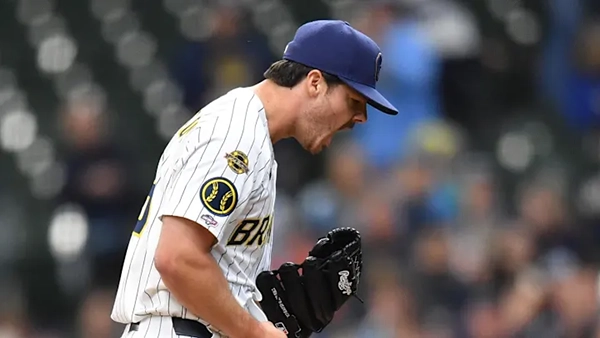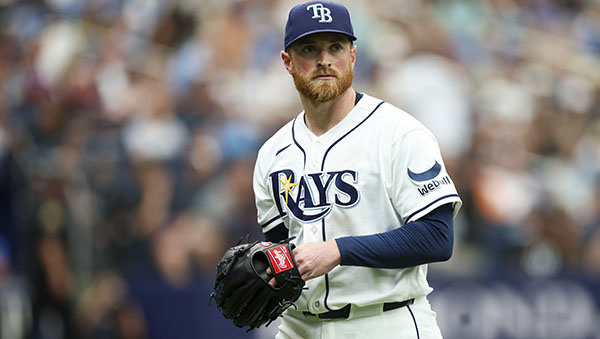
Drew Rasmussen walks into Yankee Stadium with a 1.00 WHIP and a career stranglehold on New York’s top two run producers — Judge is 1-for-15 against him, Rice is 0-for-8 — while the Yankees have dropped 10 of their last 14. The market is pricing this like home field offsets all of it, and that gap between what the matchup says and what -136 implies is where the tension lives.
Drew Rasmussen vs. Ryan Weathers: Tampa Bay Rays at New York Yankees Betting Preview
Friday’s 4-2 Tampa Bay win at Yankee Stadium set the table cleanly: the Rays rallied through a José Caballero error in the eighth, handed New York its third straight loss, and extended a series sweep streak that now reads 4-0 in 2026. Now the Yankees turn to Ryan Weathers in a Sunday afternoon finale, and the market has installed them at -136 — a number that treats home-field advantage as if it offsets every other factor on the board.
It doesn’t. The Rays counter with Drew Rasmussen, a pitcher operating at an entirely different command level than his opponent. At +116, Tampa Bay clears the juice ceiling I set for plus-money value (-130 or better) with room to spare. You’re getting a premium team at a discount price because the market is anchoring on “home field” and ignoring the broader picture.
The core thesis is simple: the superior team — better record, better recent form, better starter today, and a dominant head-to-head edge — is available at a plus number. That doesn’t happen often, and when it does, you take it.
Game Info & Betting Lines
- Date/Time: Sunday, May 24, 2026 — 1:35 PM ET
- Venue: Yankee Stadium (Park Factor: 1.05 — slight hitter lean)
- Probable Starters: Drew Rasmussen (TBR) vs. Ryan Weathers (NYY)
- Moneyline: Tampa Bay Rays +116 / New York Yankees -136
- Run Line: New York Yankees -1.5 (+158) / Tampa Bay Rays +1.5 (-192)
- Total: 7.5 (Over +102 / Under -124)
Why This Number Is Off
The market’s logic isn’t indefensible. Yankee Stadium carries a modest 1.05 park factor — a slight lean toward offense that benefits the home side. The Yankees own a 3.30 team ERA and a 1.175 WHIP on the pitching staff, marginally tighter than Tampa Bay’s 3.54 ERA and 1.193 WHIP. And there’s a general home-field anchoring effect at a venue with crowd noise and familiarity built in. I understand why oddsmakers landed at -136.
But here’s where the market drifts: it’s pricing home field as the dominant variable while largely ignoring the momentum gap, the head-to-head edge, the starter disparity, and the lineup context. The numbers put this as a 4.7-4.4 New York lean — a 0.3-run margin that does not justify -136 juice. When the projected margin is that thin and the moneyline favorite is priced at -136, that’s a gap between market expectation and output that has value on the other side.
The Yankees are 4-6 in their last 10, have lost 10 of 14 entering today, and are fielding a lineup missing Giancarlo Stanton (DH, IL) and Jasson Dominguez (LF, IL). You’re paying -136 for a team in a genuine cold stretch against a club that has beaten them four consecutive times this season. The price is wrong.
What Separates the Pitching
The gap between these two starters is real and measurable. Drew Rasmussen enters at 4-1, 3.19 ERA, 1.00 WHIP with only 9 walks in 48 innings — a command profile that is genuinely elite. His arsenal is built around a cutter at 34.3% usage (90.2 mph, 21.4% whiff, .293 xwOBA) mixed with a 95.7 mph four-seamer and a sinker sitting 95.2 mph that generates weak contact (.223 xwOBA). The weapon that matters most against this lineup is his changeup: 45.7% whiff rate, .222 xwOBA, used as a true put-away pitch. The curveball, though a small-sample 3.9% usage, has generated a .000 xwOBA this season. Rasmussen doesn’t walk hitters — and against a Yankees lineup that has gone ice cold, suppressed rally potential is the most valuable thing a pitcher can deliver.
The BvP data adds a signal worth flagging: Aaron Judge is 1-for-15 career against Rasmussen over 15 plate appearances, with 8 strikeouts and zero home runs. That’s a meaningful sample, and it aligns with Judge’s current 1-for-24 slide and a career-high 11 games without an RBI. The Yankees’ best bat is historically bad against this specific pitcher and is in the worst stretch of his 2026 season.
And it doesn’t stop with Judge. Ben Rice — batting .287 with a 1.017 OPS and 16 home runs, New York’s second-best hitter by production — is 0-for-8 with 4 strikeouts in 8 career plate appearances against Rasmussen. Zero hits. Zero home runs. The Yankees’ top two run producers are a combined 1-for-23 with 12 strikeouts against this exact starter. That’s not noise. That’s a structural edge at the top of the lineup that reinforces the Rasmussen case in a meaningful way.
Ryan Weathers is not a soft arm — his 10.9 K/9 and 2-2 record with a 3.58 ERA represent genuine competence. His sweeper at 22.7% usage is a legitimate weapon: 48.2% whiff rate, .187 xwOBA, 36.4% put-away rate. The changeup (.249 xwOBA, 31.2% whiff) grades well too. But the red flag is unmistakable: 8 home runs allowed in 50.1 innings. His four-seamer (29.2% usage, 96.4 mph) carries a .436 xwOBA — that’s a number hitters are doing real damage against. Junior Caminero (.413 xwOBA overall, 8.2% barrel, 33.6% hard-hit) and Jonathan Aranda (.421 xwOBA, .443 vs. RHP) are precisely the type of hitters who make Weathers pay for mistakes over the plate. The Rays have 41 home runs as a team and a .724 OPS — not a lineup you want to challenge with a pitch mix that surrenders this much hard contact.
The Pushback
The concern starts with the run environment. Yankee Stadium’s 1.05 park factor nudges offense upward, and both starters — despite their surface ERAs — have given up a combined 15 home runs in roughly 98 innings this season. Weathers’ four-seam vulnerability is real, but Rasmussen’s 4-seamer carries a .377 xwOBA of its own, and the Yankees lineup still has Rice, Judge, Bellinger, and Goldschmidt capable of damage on any given at-bat.
There’s also the honest acknowledgment that the underlying numbers lean New York. The 4.7-4.4 projected score, the Yankees’ +65 run differential on the season, and a home-team win probability north of 63% are all pointing in the same direction. I’m recommending a team that the numbers have as the underdog in expected runs. That tension is real, and I’m not dismissing it.
But the moneyline case doesn’t require Tampa Bay to be the better team on paper — it requires the price to be wrong. At +116, you need the Rays to win roughly 46% of games like this to break even. Given the starter edge, the head-to-head dominance, the Judge and Rice BvP futility against Rasmussen, and New York’s 4-6 recent form, that break-even threshold is beatable. The market is anchoring on home field and ignoring the momentum gap. That’s where the value lives.
Run Environment & Game Shape
With a 7.5 total and a 1.05 park factor, the market is already baking in a moderate run environment. The over is priced at +102 — essentially a pick — which tells you the book isn’t strongly committed to the under either. The shape of this game likely hinges on the middle innings: if Rasmussen gets through five or six with the lead, Tampa Bay’s bullpen (3.54 team ERA) has the depth to protect it. Conversely, if Weathers’ four-seamer gets punished early, New York’s path back runs through a lineup missing two of its most dangerous bats.
The total projecting north of 9 runs in the raw numbers versus a 7.5 posted line is worth noting — the market has already partially accounted for the offensive environment at Yankee Stadium, but the Rays’ ability to generate runs against a leaky four-seamer keeps upside on the Tampa Bay side of the ledger. Rasmussen’s sinker (.223 xwOBA) and changeup (.222 xwOBA) are built to suppress the contact-heavy Yankees lineup that remains, and with Stanton and Dominguez out, the middle of New York’s order carries less thunder than the name recognition suggests.
The game shape favors a close, low-to-mid scoring contest where Rasmussen’s command edge is the deciding factor. That’s a game where the better starter on the better team at a plus price is exactly where you want to be.
The Pick
Everything in this handicap points the same direction: the superior team, the better starter, four consecutive head-to-head wins, and a market price that hasn’t adequately adjusted for any of it. You’re getting Tampa Bay at a number that implies less than a 46.4% win probability. Given Rasmussen’s command, the Judge and Rice BvP shutdowns against him, New York’s 4-6 skid, and Weathers’ four-seam vulnerability against Caminero and Aranda, that implied probability is too low.
Bet: Tampa Bay Rays Moneyline +116 — 2 Units — Moderate Confidence
The best team in baseball is available at a plus number. Take it.