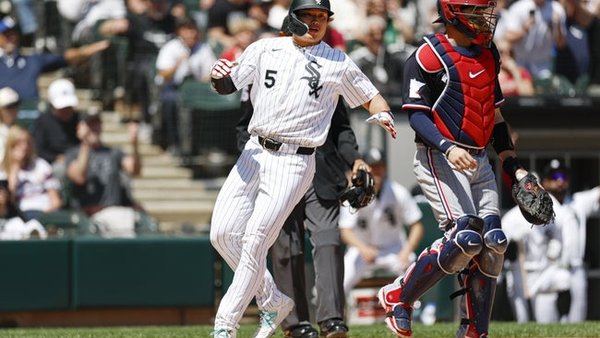
Taj Bradley’s cutter-splitter-curve combination posts whiff rates above 36% across his secondary arsenal — and he’s drawing a White Sox lineup stripped of its two best power bats, a unit that already ranks among the AL’s most strikeout-prone offenses. The total is parked at 8.5, but today’s pitching profile is a sharp departure from the arms that let both offenses run in Games 1 and 2.
Erick Fedde vs. Taj Bradley: Chicago White Sox at Minnesota Twins Betting Preview
After Tuesday’s 6-4 Twins win completed back-to-back high-scoring games in this series, the market has set the total at 8.5 — a number that looks reasonable on paper until you factor in who’s pitching today versus who was pitching the last two nights. The pitching matchup in Game 3 is qualitatively different, and that difference is the entire argument for the Under.
Taj Bradley is one of the better arms in the American League right now. Erick Fedde is 0-5 with a 5.40 ERA and has surrendered 13 home runs in 53.1 innings. The gap between these two starters is significant — and it lands squarely on the CWS half of the run ledger, where the White Sox are also missing their two most dangerous offensive weapons.
Pitching edges don’t always survive late-inning volatility — but today’s setup is cleaner, anchored by an elite strikeout profile against a lineup that’s already been gutted by the IL. The Under at -105 is where the value lives.
Game Info & Betting Lines
- Date/Time: Wednesday, June 3, 2026 | 1:40 PM ET
- Venue: Target Field (Park Factor: 1.00 — neutral, no run inflation)
- TV: ESPN Unlmtd, MLB.TV, Twins.TV, CHSN
- Probable Starters: Erick Fedde (CWS, 0-5, 5.40 ERA) vs. Taj Bradley (MIN, 5-1, 3.21 ERA)
- Moneyline: Chicago White Sox +130 / Minnesota Twins -154
- Run Line: Minnesota Twins -1.5 (+134) / Chicago White Sox +1.5 (-162)
- Total: 8.5 (Over -115 / Under -105)
Why This Number Is Close — But Tilting Under
The market’s logic for 8.5 is sound at the surface level. Both offenses score around 4.7 runs per game on the season, the park factor is dead neutral at 1.00, and this series has featured 9 and 10 combined runs in the first two games. Books are anchoring off recent totals, and that makes sense — recency is real information.
But the legitimate case for the Over relies on projection continuity that today’s pitching matchup doesn’t support. The previous two games featured Connor Prielipp and Joe Ryan — serviceable but not dominant arms. Bradley is a different animal, and the CWS lineup coming in today is thinner than the one that put up runs in Games 1 and 2.
Where the market looks slightly off: it’s underweighting the Bradley strikeout profile specifically against a White Sox offense that ranks among the AL’s highest strikeout teams (547 SO on the season). The numbers project 9.2 combined runs, which technically shades Over — but that figure accounts for an average Bradley performance. When his arsenal is working against a high-swing, low-contact lineup missing its best bat, there’s a structural argument that the CWS run contribution lands at the lower end of any range. The narrow gap between the projected total (9.2) and the posted line (8.5) means Bradley doesn’t need to be historic — he just needs to be himself.
What Separates the Pitching
The gap between these two starters is stark, and it matters because both teams’ offenses are average enough that pitching drives the outcome here.
Bradley’s suppression case rests on his secondary arsenal, not his four-seamer. He throws the four-seam fastball 47% of the time at 96.7 mph, but that pitch carries a .383 xwOBA — it’s hittable, and hitters know it’s coming. The real weapons are his cutter (21.7% usage, 37.4% whiff rate, .257 xwOBA), his splitter (19.9% usage, 36.5% whiff rate, .239 xwOBA), and his curveball — the genuine finisher at a 43.9% whiff rate and .215 xwOBA, one of the more dominant put-away offerings you’ll see from a mid-rotation arm. The fastball sets up those secondaries, but it’s the off-speed arsenal that actually suppresses damage. When you combine a 10.4 K/9 with only 6 home runs allowed in 56 innings, you get a pitcher whose cutter-splitter-curve combination keeps contact quality down even when the heater gets squared up.
Against the White Sox lineup, that whiff-heavy secondary arsenal runs into a team that strikes out 547 times on the season. Colson Montgomery — Chicago’s cleanup hitter today — carries a 30.4% strikeout rate and 32.2% whiff rate, making him a prime target for Bradley’s cutter-splitter combination. Montgomery does have two home runs in seven lifetime plate appearances against Bradley, which is the one flicker of concern in that matchup — and given his whiff rate, it’s likely those came off fastballs he sat on and punished.
Fedde leans heavily on a sweeper (37.7% usage, .272 xwOBA) and a changeup (12.5%, .236 xwOBA, 26.2% whiff) — those are his two legitimate weapons. The problem is the sinker (27.3% usage) and cutter (21.1% usage) both produce xwOBA marks above .390, meaning a large chunk of his pitch mix is genuinely hittable. His 5.40 ERA and 13 home runs in 53.1 innings reflect real vulnerability, not bad luck. Byron Buxton (.419 xwOBA, 10.2% barrel rate) is the Minnesota bat most capable of doing damage against Fedde’s elevated pitch mix — and Fedde’s sinker-heavy approach to right-handed hitters creates real exposure.
The pitching gap is roughly two runs of projected differential on its own, concentrated on the CWS side of the ledger.
The Pushback
I need to be honest about what works against this play, because there’s more friction here than a clean Under article usually carries.
The most uncomfortable piece of data is the projected total itself: 9.2 combined runs. That number technically favors the Over, which means betting the Under here requires believing Bradley outperforms his average projection — or that Fedde’s crooked-number risk materializes on the Twins side in a way that paradoxically keeps the White Sox from a big inning. Neither is guaranteed.
Fedde’s volatility cuts both ways. Yes, he’s surrendered 13 home runs in 53.1 innings — but a blowup inning from Fedde doesn’t automatically sink the Under. If Minnesota hangs a five-spot in the third and the game tightens late, Chicago’s half of the ledger still needs to contribute to push over 8.5. The White Sox lineup, even depleted, has shown it can score in bunches — they put up 4 runs against Prielipp on Tuesday. Bullpen volatility on both sides is real, and neither Minnesota nor Chicago has a shutdown ‘pen that locks up the back half of the game.
The Montgomery BvP data (2 HR in 7 PA vs. Bradley) deserves acknowledgment as a legitimate concern rather than noise. Small sample, yes — but the two home runs signal that Montgomery has found Bradley’s fastball at least twice, and with that .383 four-seam xwOBA, the exposure is real.
Run Environment & Game Shape
Target Field’s neutral park factor (1.00) means we’re not getting any structural help from the environment — this is a pure pitching and lineup argument. The run environment is shaped almost entirely by who’s on the mound and who’s in the lineup.
On the White Sox side, Murakami (10-Day IL, hamstring) and Everson Pereira (10-Day IL, pectoral) are both out, removing the team’s best power bat and a complementary outfield piece. The projected lineup runs through Vargas, Montgomery, and Romo in the middle — a trio with real contact issues against off-speed-heavy righties. Vargas (.418 xwOBA) is the most dangerous bat left standing, with a .667 average in 4 BvP plate appearances against Bradley, but his sample is thin and Bradley’s cutter is the pitch that neutralizes left-of-center production.
On the Minnesota side, Ryan Jeffers (10-Day IL, hand) is also out, and the Twins’ bottom of the order — Keaschall, Gray, and Jackson — is the same trio that carved up Davis Martin on Tuesday. That bottom-of-order production is real, but it materialized against a starter who had been elite all season and got knocked around in a short outing. Fedde doesn’t carry the same pedigree, which cuts against the Under — Minnesota’s offense could score more efficiently against Fedde than the numbers suggest.
The game shape I’m projecting: Bradley limits Chicago to 2-3 runs through six innings, leaning on his splitter and curveball to neutralize the White Sox’s high-strikeout lineup. Fedde gives up somewhere between 3 and 5 runs depending on whether the Buxton-Lee combination gets to the sinker early. The total lands in the 7-8 range — under the posted 8.5 — not because either offense is silent, but because Bradley’s genuine secondary weapons keep the White Sox from stringing together the kind of multi-run innings this series has seen. A final score of 5-3 or 4-2 in favor of Minnesota is the under-friendly shape. Fedde catching a blowup inning and Minnesota winning 7-2 is the scenario that beats this ticket — real risk, acknowledged, but not the most likely outcome when the game-caller on the mound has a .215 xwOBA curveball in his back pocket.
Bet: Under 8.5 (-105) — 2 units, moderate confidence. The Bradley secondary arsenal is the edge. The White Sox lineup is depleted. Target Field gives us nothing extra. Take the Under.