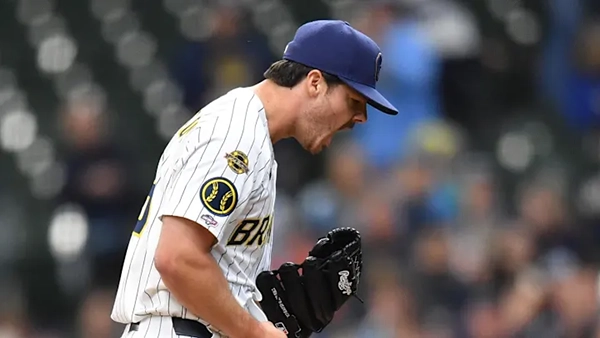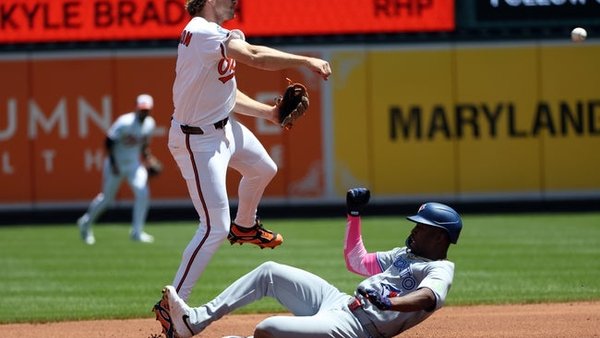
Chris Sale carries a 2.01 ERA and 0.94 WHIP into a matchup where Toronto has yet to confirm a starter — and the total is priced at a flat -110 on both sides as if that asymmetry doesn’t exist. A neutral Truist Park offers no runway for run inflation, and the Blue Jays’ .689 OPS against a three-pitch arsenal with genuine whiff rates at every level of the zone makes the posted number harder to justify than the price implies.
TBD vs Chris Sale: Toronto Blue Jays at Atlanta Braves Betting Preview
Chris Sale takes the ball for Atlanta with a 2.01 ERA and 0.94 WHIP through 67 innings, one of the clearest pitching edges the market has offered this week. On the other side, Toronto has not confirmed a starter. That’s not a minor detail — it’s the structural foundation of this bet. The question today isn’t who wins. It’s how many runs actually score — and the case for fewer than 7.5 is more convincing than the flat -110 price suggests.
The total of 7.5 at flat -110 juice implies the books see this as an even proposition. The numbers project a combined 8.6 runs — and to be transparent, that raw figure technically points to the over, not the under. But here’s why I’m not following it blindly: Sale has consistently outperformed his projections all season, the TBD starter limits Atlanta’s ceiling to the 4-5 run range rather than a blowup number, and that 1.1-run margin is razor-thin. One fewer Toronto baserunner, one fewer Atlanta rally, and you’re at 7 or under. The projection already bakes in Atlanta’s dangerous lineup generating 4.7 runs against a replacement-level arm. Sale’s job is simpler: keep a below-average Toronto offense — .689 OPS, 247 runs in 62 games, negative run differential at -12 — from reaching 4 runs. He’s done that consistently all season.
Toronto has scored exactly 3 runs in each of their last two games at Truist Park against Atlanta pitching. That’s not coincidence — it’s a reflection of what quality arms do to this lineup. The under thesis starts with Sale and gets reinforced by everything Toronto brings to the plate.
Game Info & Betting Lines
- Date/Time: Thursday, June 4, 2026 — 7:15 PM ET
- Venue: Truist Park | Park Factor: 1.01 (essentially neutral)
- TV: MLB.TV, BravesVision, Sportsnet One
- Probable Starters: TBD (Toronto Blue Jays) vs. Chris Sale (Atlanta Braves, 8-3, 2.01 ERA)
- Moneyline: Toronto Blue Jays +172 / Atlanta Braves -205
- Run Line: Atlanta Braves -1.5 (+102) / Toronto Blue Jays +1.5 (-122)
- Total: 7.5 — Over -110 / Under -110
Why This Number Is Off
The legitimate case for the over is straightforward: Toronto is sending a TBD arm into one of baseball’s most dangerous lineups. Atlanta’s offense ranks among the NL’s best — .759 OPS, 85 home runs, 320 runs scored. Acuña, Olson, and Harris are capable of hanging a five-spot on any pitcher on any given night. If Toronto cobbles together a bullpen game, the early innings against fresh arms are where Atlanta’s lineup does its most damage. The over backers aren’t wrong to see the ceiling.
But here’s the problem with that logic: the under doesn’t need Atlanta to go quiet. It needs Sale to hold Toronto to 3-4 runs — which he does routinely — while Atlanta scores in the 4-5 range. The numbers say 4.7 for Atlanta and 3.9 for Toronto. That’s 8.6 combined, which clears 7.5 by barely more than a run. One fewer Toronto baserunner, one fewer Atlanta rally, and you’re at 7 or under.
The market is balancing Sale’s dominance against the TBD variable on the other side. But that balance is imprecise. A TBD starter suppresses Toronto’s opponent scoring ceiling — Atlanta probably hits 4-5, not 7-8. And Sale suppresses Toronto’s scoring floor. Both forces push toward a lower combined number, not a higher one. The -110 price doesn’t adequately reflect that convergence.
What Separates the Pitching
The gap between these two pitching situations is as wide as you’ll find in a regular-season game. Chris Sale is operating at an elite level in 2026: 2.01 ERA, 0.94 WHIP, 10.75 K/9 through 67 innings, with just 17 walks and 6 home runs allowed all season. His slider is the anchor — used 39.9% of the time, generating a 37.9% whiff rate and an xwOBA of just .231 against. His four-seamer sits at 95.4 mph and is deployed nearly as often (39.5%), though hitters make more contact on it (.335 xwOBA). The changeup at 12.6% usage pulls an additional 31.8% whiff rate. This is a three-pitch arsenal with genuine swing-and-miss at multiple levels of the zone.
Now look at what Sale is facing. The Toronto lineup has some functional pieces — Jesús Sánchez (.413 xwOBA overall) is a legitimate threat, and the Statcast splits deal him a brutal hand against left-handed pitching specifically: his vsLHP xwOBA craters to .173. Nathan Lukes sits at a .214 xwOBA versus lefties. Sale is left-handed, and those numbers represent real damage to Toronto’s middle-order production.
Here’s where I have to give the counter-data its due: Vladimir Guerrero Jr. (.776 OPS, .356 xwOBA overall) is not neutralized by Sale. His vsLHP xwOBA is actually .461 — significantly higher than his .332 mark against right-handers. Guerrero hits lefties well, Sale included. He is a genuine threat in this matchup and the honest version of the under case has to account for that. What keeps the under intact despite Guerrero’s split is the weakness everywhere around him — Lukes, Sánchez, and the bottom of this order collectively get eaten alive by elite left-handed pitching, and Sale’s slider at .231 xwOBA limits even Guerrero’s ability to do sustained damage. One dangerous bat in a lineup of .214 and .173 vsLHP hitters doesn’t flip the script.
On the other side, Toronto’s TBD situation is not just an unknown — it’s a structural disadvantage. Atlanta’s top three hitters (Acuña at .448 xwOBA, Harris at .457, Olson at .460) are all posting elite contact quality metrics, and their splits against right-handed pitching are even better. Harris hits .514 xwOBA versus righties. Olson checks in at .477. If Toronto rolls out a right-handed bullpen arm or a replacement-level starter, those numbers become relevant immediately. The pitching gap here isn’t close — it’s categorical.
The Pushback
The most legitimate concern with this under is Atlanta’s offense doing too much damage on its own. The Braves are averaging 5.25 runs per game this season. Against a TBD arm — likely a bullpen game or a spot starter — the early innings become a minefield. If Atlanta’s lineup erupts for 6 or 7, the under is cooked regardless of what Sale does. That’s the real over scenario, and it’s not implausible.
Drake Baldwin is on the IL with an oblique issue, which is worth noting. He was their hottest bat — .931 OPS, 13 home runs — and his absence reduces Atlanta’s run-scoring ceiling modestly. That absence leans under rather than over. Sean Murphy is also out with a finger injury, thinning the catcher depth further. These aren’t lineup-destroying losses, but they trim the high-end run-scoring variance that would doom this bet.
The other concern is the Guerrero wildcard. As noted above, he genuinely hits lefties — .461 xwOBA against them. A Guerrero home run off Sale in the middle innings keeps the game competitive and gives Toronto a plausible path to 4-5 runs. I’m not dismissing that. But Sale’s track record of limiting damage even to dangerous individual hitters — six home runs allowed in 67 innings — makes a Guerrero explosion more exception than rule.
Angles Considered & Rejected
Atlanta Moneyline (-205): Atlanta wins this game at a very high rate — nearly 80% implied probability from the numbers — and the pitching edge is real. But -205 is a steep price that caps your return and requires a large outlay to generate meaningful profit. I don’t chase moneylines at this juice when there’s a cleaner angle at flat money on the total.
Atlanta Run Line (-1.5, +102): The positive juice is interesting, and Atlanta covering 1.5 is plausible given Sale’s dominance. But TBD starters add variance in both directions — sometimes they get lit up early and the game becomes a blowout cover, but sometimes a bullpen arm throws three scoreless innings and keeps it a one-run game. The run line introduces too much binary variance for the edge it offers.
Run Environment & Game Shape
Truist Park carries a 1.01 park factor — essentially neutral, neither inflating nor deflating run totals meaningfully. The weather and playing conditions aren’t a material factor here. What shapes this game is the structural asymmetry in the pitching matchup and the respective offensive ceilings.
The scoring range most likely falls between 6 and 8 combined runs. Sale keeps Toronto in the 2-4 run band with high probability based on his season-long performance, and a TBD arm keeps Atlanta from going nuclear — think 4-5, not 7-8. The 8.6 raw projection technically leans over, but the post-projection reasoning — Sale outperforming his numbers, Baldwin off the lineup, and the lineup-wide vulnerability to elite left-handed pitching outside of Guerrero — compresses that range downward. The under at 7.5 sits just above that central projection band, giving this bet a meaningful cushion. When Sale is healthy, locked in, and facing a lineup with structural left-handed pitching vulnerabilities, he consistently outperforms raw ERA projections. Tonight is the kind of spot he was built for.
The Pick: Under 7.5 (-110), 2 units — moderate confidence. The raw numbers technically point over by 1.1 runs, but Sale’s track record, the Baldwin IL absence, and the left-handed split damage throughout Toronto’s order make the under the right side. Guerrero is a real threat and I’m not pretending otherwise — but one dangerous bat doesn’t reverse what Sale does to the hitters around him.