The projection lands at 9.2 combined runs against a posted total of 10.5 — a 1.3-run gap that two cold offenses and a pair of starters with legitimate process metrics don’t come close to bridging. Wrigley’s near-neutral park factor does nothing to justify the number, and the book is already shading toward the under at -120 without fully accounting for how suppressed this run environment has been all series.
J.T. Ginn vs. Shota Imanaga: Athletics at Chicago Cubs Betting Preview
After yesterday’s Cubs ML loss — a 5-4 extra-innings gut punch where Chicago squandered a two-run eighth-inning lead — today’s matchup shifts the focus entirely away from who wins this game and toward how many runs actually score. The Cubs have now dropped 18 of their last 23 games, and both of this series’ prior contests finished at 2-1 and 5-4. Low-scoring baseball has been the theme on the North Side this week.
The market has this total posted at 10.5, with the over at -102 and the under at -120. That’s the tell — the book is already shading toward the under, which limits the value but doesn’t erase it. The projection lands at 9.2 combined runs, a meaningful gap against an inflated line. When two capable starters face two mediocre offenses in a near-neutral park, 10.5 is simply too many runs to ask for.
The Cubs ML at -134 fails any reasonable juice ceiling threshold — that price alone kills the moneyline market regardless of what Imanaga does. The cleaner expression of this pitching thesis runs straight through the total.
Game Info & Betting Lines
- Date/Time: Thursday, June 4, 2026 — 8:05 PM ET
- Venue: Wrigley Field | Park Factor: 1.02 (nearly neutral, marginal hitter lean)
- TV: MLB.TV, Marquee Sports Net, NBC Sports CA
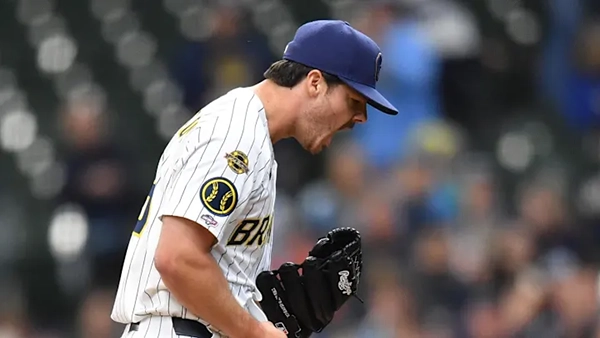
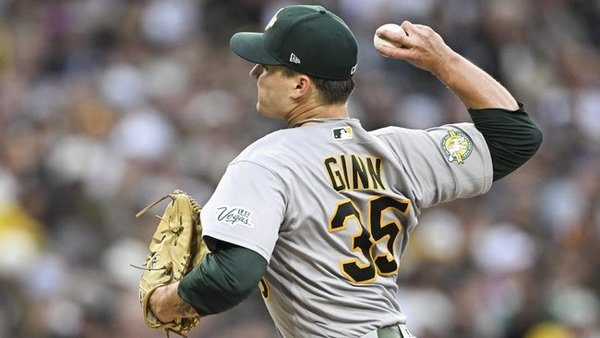
- Probable Starters: J.T. Ginn (Athletics, 3-3, 2.87 ERA, 1.14 WHIP) vs. Shota Imanaga (Cubs, 4-6, 4.37 ERA, 1.07 WHIP)
- Moneyline: Athletics +114 / Chicago Cubs -134
- Run Line: Chicago Cubs -1.5 (+146) / Athletics +1.5 (-176)
- Total: 10.5 (Over -102 / Under -120)
Why This Number Is Off
The market is doing real work to justify 10.5. Wrigley has a park factor of 1.02 — barely above neutral, but it’s not Oracle Park suppressing everything. The Cubs rank modestly in runs scored this season (4.67 per game), and the Athletics are right behind them at 4.23. Add in two bullpens that have been taxed in this series, and the sportsbook can make a reasonable case that run totals balloon when starters exit early and tired relievers inherit messes.
The other side of the ledger is where this number looks genuinely inflated. Neither offense is doing damage right now — both are operating off season-baseline profiles with cold recent stretches. The Cubs are 3-7 in their last 10, and the Athletics have now won this series 2-1 and 5-4 in consecutive games. Four of those nine combined runs came in extra innings Wednesday. The organic run environment this week has been firmly under.
The projection lands at Cubs 4.7, Athletics 4.5 — 9.2 total. That’s not a marginal miss on the total; it’s a 1.3-run gap. Yes, the under is priced at -120, which takes some edge off. But you’re still buying a projection gap of more than a full run at reasonable juice. The number is off.
What Separates the Pitching
J.T. Ginn is the more legitimate arm here, and the ERA backs that up without needing any caveats. In 59.2 innings, he carries a 2.87 ERA, 1.14 WHIP, and 1.97 WAR — that’s a mid-rotation arm who has sustained performance over a real sample. His 7.84 K/9 won’t blow lineups away, but his 26 walks and only 6 home runs allowed in nearly 60 innings tell you he’s keeping the ball in the yard and limiting free passes. Against a Cubs offense sitting at .238/.333/.384 with an OPS of .718, Ginn’s profile sets up cleanly. He doesn’t need to dominate; he just needs to keep the Cubs lineup from generating crooked numbers.
Shota Imanaga is a more complicated read. The 4.37 ERA looks ugly at first pass, but his 1.07 WHIP and only 18 walks in 70 innings tell a process story that’s better than the surface. His 8.87 K/9 is sharper than Ginn’s, and his walk rate is elite — he’s not falling behind hitters or pitching from weak counts. The problem that won’t go away: 13 home runs allowed in 70 innings, a rate of 1.67 per nine innings. That’s where his ERA gets inflated, and that’s exactly where the Athletics have leverage. Shea Langeliers has 14 home runs this season with an .893 OPS. Nick Kurtz is hitting .289 AVG / .952 OPS with 11 HR. Those two sit at the top of the genuine power tier in this lineup. Carlos Cortes is hitting .321 with a .915 OPS, and while his 5 HR in 140 at-bats represents a different power tier than Langeliers and Kurtz, he’s a contact threat who punishes mistakes in his own right. The Athletics have real pop at the top of their order, and Imanaga has been serving up home runs at an above-average rate.
The gap between these two starters is real but not massive. Ginn’s cleaner ERA versus Imanaga’s better strikeout and walk rates make this a wash on most nights — which is exactly why the pitching argument for the under doesn’t require one starter to dominate. It requires both starters to pitch like their process metrics suggest, with a moderate number of runs scored on both sides.
The Pushback
Here’s the problem: Imanaga’s home run rate is a legitimate under-killer, not a footnote. The Athletics have Langeliers and Kurtz sitting at the top of their order as genuine over-the-fence threats, and even Cortes — with 5 HR in limited time — can punish a hanging breaking ball. One crooked inning from Imanaga, say a two-run shot followed by a bases-clearing double, and this game is threatening the total by the fifth inning. You don’t need a meltdown. You just need two bad pitches in the wrong sequence.
The bullpen situation cuts both ways, too. The Cubs have been running through relievers in this series, and names like Alzolay (day-to-day) and Merryweather (day-to-day) showing up on the injury report doesn’t inspire confidence in their late-game depth. But the Athletics’ pen isn’t a secret weapon either — they’ve used five and six relievers in consecutive games. When both bullpens are this taxed and neither closer is fully trustworthy, the run environment can expand fast in the middle innings. You’re not stealing value here at -120; you’re making a calculated bet that the starters hold up long enough and the bullpens don’t implode on the same night.
Run Environment & Game Shape
Wrigley’s 1.02 park factor is essentially a non-factor in this analysis — it’s the kind of marginal number that shows up in the math but doesn’t move the needle. I’m not leaning on park suppression to make this under work; the pitching profiles and the offensive baselines are doing the heavy lifting.
The projected 9.2 total represents a 1.3-run gap against the posted 10.5, and that gap is driven by two things: starter quality that’s being undervalued by a market still anchoring to team-level run averages, and two offenses that are both running cold over their last ten games. The Cubs are 3-7 in their last ten. The Athletics are 4-6. Neither club is in a hot-hitting stretch that would justify a number north of 10.
Game shape matters here too. The series results — 2-1 and 5-4 — both cleared 10.5 only in the second game, and that game required a two-run eighth and a walk-off single in the tenth to get there. The organic scoring environment in this series hasn’t been a 10-plus run affair; it’s been tight games decided late. That context supports a lean toward the under even before you account for the starter quality advantage.
Angles I’m Rejecting
The Cubs ML at -134 is a hard pass. Even if Imanaga bounces back and Ginn has an off night, laying -134 on a team that’s gone 3-7 in its last ten and lost 18 of 23 puts you in a position where you need a lot to go right just to break even on the juice. The implied probability at -134 is around 57.3%, and the projected win probability for the Cubs sits at 58.8% — that’s essentially no edge. I’m not paying -134 for a coin flip with extra steps.
The run line is the other tempting angle, and I understand the appeal. The Athletics +1.5 at -176 feels like a trap disguised as a sure thing after back-to-back wins. But the projected margin here is only 0.2 runs in favor of the Cubs — that’s not a number that justifies laying -176 on a 1.5-run spread. You’d need the Cubs to reliably win by 2+ in a game where the projected score is essentially a coin flip. The juice makes it a bad number even if the Cubs win.
Both of those angles require you to be right about more than the total does. The under at -120 is the cleanest expression of what the numbers are telling me.
Joe Jensen’s Pick
Bet: Under 10.5 | -120 | 2 Units | Moderate Confidence
The 1.3-run gap between the posted total and the projected 9.2 is enough to play through the -120 juice. Ginn’s 2.87 ERA over nearly 60 innings is the kind of sustained performance that keeps games manageable, and Imanaga’s process metrics — elite walk rate, sharp K/9 — suggest the surface ERA overstates his true run-prevention risk against an Athletics offense that isn’t exactly raking. Two units at moderate confidence reflects the real friction here: Imanaga’s home run rate could blow this up in one bad inning, and the -120 price means you’re not getting a bargain. But when the projection gap is this wide and both offenses are this cold, the under is the right side of this number.