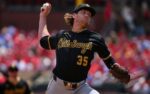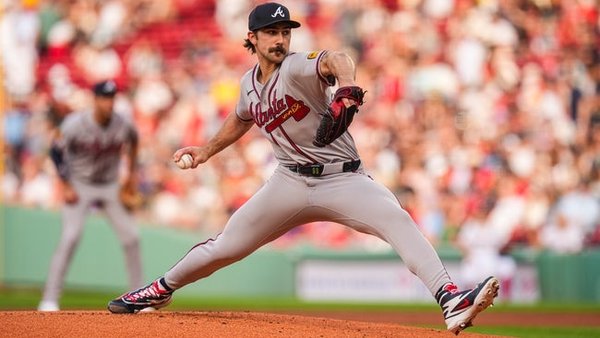
Braxton Ashcraft brings a 2.77 ERA and 1.03 WHIP into a matchup against a Spencer Strider still managing command issues — 17 walks and 6 home runs in just 31 innings since returning from injury. The Braves open at -112 despite a fastball-heavy starter posting a .379 xwOBA against on his most-used pitch, and a lineup that lost its most dangerous bat in Drake Baldwin to the IL.
Braxton Ashcraft vs Spencer Strider: Pittsburgh Pirates at Atlanta Braves Betting Preview
Atlanta won Game 1 of this series 6-3 on Friday night, and the Braves are the better team on paper — 43-21 with a +112 run differential versus Pittsburgh’s +34. The market has priced this game accordingly, opening the Braves as a modest moneyline favorite at -112. That’s a fair starting point. But fair starting points aren’t where the value lives.
The value lives in the gap between Braxton Ashcraft‘s actual performance level and what Spencer Strider is right now — not what Strider was before his injury. That gap is wider than a five-cent moneyline spread reflects. Layer in the absence of Drake Baldwin (10-Day IL, oblique), who was Atlanta’s most dangerous bat at a .931 OPS and 13 HR, and the Braves’ lineup looks measurably less threatening than the record suggests.
Pittsburgh is not a pushover. They rank 4th in MLB in runs scored, carry a legitimate winning record at 34-30, and are sending out a starter in dominant form. At -104, the market is essentially calling this a coin flip. The pitching data says it’s not quite that even.
Game Info & Betting Lines
- Date/Time: Saturday, June 6, 2026 | 4:10 PM ET
- Venue: Truist Park (Park Factor: 1.01 — essentially neutral)
- TV: MLB.TV, BravesVision
- Probable Starters: Braxton Ashcraft (PIT) vs Spencer Strider (ATL)
- Moneyline: Pittsburgh Pirates -104 / Atlanta Braves -112
- Run Line: Pittsburgh Pirates -1.5 (+162) / Atlanta Braves +1.5 (-196)
- Total: 8.5 (Over -102 / Under -120)
Why This Number Is Close
The market is doing real work here. Atlanta is one of the best home teams in baseball — they’ve won nine of ten home series openers, and their overall roster quality reflects a team built to win now. Strider carries a 3-1 record, and even in a limited 31-inning sample, his 11.6 K/9 reminds you why he’s a top-of-rotation arm when healthy. Sportsbooks know bettors instinctively fade injury-return narratives, so there’s probably some overpricing of Strider’s upside baked into Atlanta’s number.
The case for the Braves at -112 isn’t wrong. Matt Olson (.898 OPS, 17 HR) is still in the lineup. Ronald Acuña Jr. carries a .439 xwOBA overall — a legitimate elite-hitter baseline. Atlanta’s bullpen held Pittsburgh scoreless for four innings on Friday night after Martín Pérez exited, and Raisel Iglesias sits at a 0.92 ERA.
Where the market is slightly off is in treating this as a coin flip when Ashcraft is genuinely one of the better starters in baseball right now and Strider is demonstrably not the Strider of two years ago — at least not yet. The numbers project a 0.3-run separation in favor of Atlanta (4.5 to 4.2), but at -104 on Pittsburgh, you’re getting compensated for that gap. The price almost perfectly reflects a push toward Pittsburgh value.
What Separates the Pitching
Braxton Ashcraft has been the Pirates’ most consistent arm this season — 2.77 ERA, 1.03 WHIP, 2.09 WAR over 74.2 innings. That’s not a hot streak; that’s a legitimate workload at an elite suppression rate. His arsenal tells you why: his curveball generates a 40.7% whiff rate with an xwOBA against of .205, and his slider sits at 91.9 mph with a 33.1% whiff rate and .260 xwOBA. His four-seam fastball sits at 97.0 mph and holds hitters to a .296 xwOBA — above-average suppression for a pitch that hard. These are legitimate put-away weapons, not profile numbers inflated by soft matchups.
Against Atlanta’s lineup, the matchups are manageable. Acuña sits at a .460 xwOBA vs RHP — the biggest mismatch in this order — but Olson’s .471 xwOBA vs RHP is the more dangerous number given his power (7.6% barrel rate, 33.2% hard-hit). The rest of the Braves order drops off considerably without Baldwin: Albies posts only a .309 xwOBA, and Dubón, for all his recent home run noise, carries a .332 xwOBA with just a 2.8% barrel rate.
Spencer Strider is the sharper contrast. His slider and curveball are still elite — a .196 xwOBA against on the slider and a jaw-dropping .113 xwOBA against on his curveball with a 42.4% whiff rate. When those pitches are on, the strikeout ceiling (40 K in 31 IP) is real. The problem is his four-seam fastball: 48.5% of his pitches, sitting at 95.3 mph with a .379 xwOBA against — that’s a hittable number, and it’s the pitch he leans on most. Combined with 17 walks in 31 innings (implying roughly 4.9 BB/9) and 6 HR allowed, the command picture shows a pitcher who isn’t yet operating at his peak. Brandon Lowe’s .466 xwOBA vs RHP and Oneil Cruz’s .503 xwOBA vs RHP — the highest splits in Pittsburgh’s order against right-handed pitching — are legitimate threats against a fastball-heavy arm with elevated walk and homer rates.
The Pushback
Here’s the problem with the Pittsburgh side: Atlanta is 43-21 for a reason. Their pitching staff carries a 3.22 ERA and 1.171 WHIP as a unit — that’s a real structural advantage. The home field matters too. Truist Park plays essentially neutral at a 1.01 park factor, but Atlanta has won nine of ten home series openers, and that trend doesn’t happen by accident. Strider’s secondary stuff is genuinely elite, and on a night where his command clicks, this lineup doesn’t have the ceiling to hang five or six runs on him. This is a 1-unit play precisely because Strider can still dominate when he’s locked in.
Run Environment & Game Shape
The total is set at 8.5 with the under priced at -120, which tells you the market leans toward a lower-scoring game. That instinct is right. Ashcraft’s 2.77 ERA and elite secondary stuff suppresses run scoring from the jump, and Strider’s curveball and slider — even with fastball command concerns — keep Pittsburgh from running up the score. The numbers project a combined 8.7 runs, essentially right at the total, with Atlanta edging Pittsburgh 4.5 to 4.2. That 0.3-run separation is marginal, and it reflects what the pitching data already shows: two starters capable of keeping this game tight, with Atlanta’s roster depth and bullpen (Iglesias at 0.92 ERA) providing a real late-game edge if things stay close.
The game shape here favors a competitive, low-to-mid scoring affair that could go either way into the seventh inning. That’s exactly the environment where getting Ashcraft at -104 makes sense — you’re not asking Pittsburgh to win a slugfest, you’re asking a legitimately elite starter to outpitch a pitcher still finding his footing post-injury against a lineup that just lost its best hitter. That’s a defensible ask at near-even money.
The play: Pittsburgh Pirates moneyline at -104, 1 unit, lean confidence. The pitching edge is real, the lineup gap narrows significantly without Baldwin, and the price almost perfectly compensates for Atlanta’s home field and roster quality advantages. Take the Pirates.
Bet: Pittsburgh Pirates Moneyline -104 | 1 Unit | Lean